 Lynden Siding
 Why Kendall Roofs Wear Differently Than Roofs in Town
Kendall sits out in the timber and river-bottom country northeast of Lynden, where the land starts climbing into the foothills toward Mount Baker. That setting changes what a roof has to deal with. Properties here tend to have more tree cover, more shaded rooflines, and more exposure to the damp, slow-drying air that settles into the Nooksack valley — a different set of conditions than a roof out on open farmland closer to town. A shingle roof that holds up fine in a sunny, wind-exposed spot can wear out early in a shaded Kendall yard if it wasn't built for the difference.
Add in the driving rain and long wet stretches that define a Whatcom County winter, plus marine air that pushes in off the Sound during storm systems, and you've got a roof fighting moisture pressure from more directions than most homeowners realize. None of this means asphalt shingles are the wrong material — they're still the most practical option for the large majority of homes out here. It means the install has to be done with Kendall's specific conditions in mind, not treated like a generic re-roof.
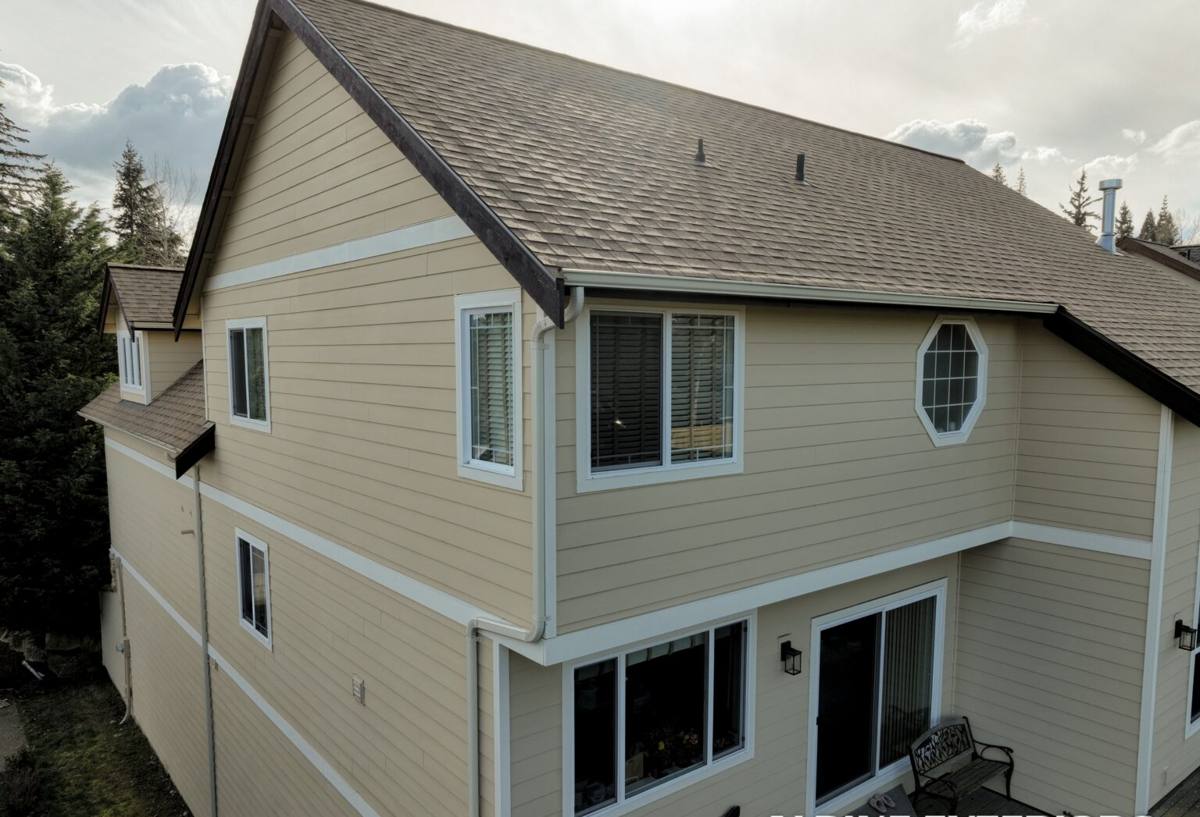
What This Climate Actually Does to a Shingle Roof
Moss and Algae Pressure
Shaded, tree-lined lots hold moisture on the roof surface far longer than open ones. That extended dampness is exactly what moss and algae need to get a foothold. Once moss roots into a shingle mat, it lifts tabs, traps water underneath, and speeds up granule loss years before the shingle would otherwise be due for replacement.
Wind-Driven, Sideways Rain
Storms coming through this part of the county rarely fall straight down. Rain gets pushed sideways under eaves, into valleys, and up against flashing at an angle. A roof that would stay dry under a light vertical rain can still leak under wind-driven rain if the underlayment and flashing weren't detailed for it.
A Long Wet Season
The stretch of time between "it rained" and "the roof actually dried out" runs longer here than in a dry climate. Fasteners, flashing, and underlayment that aren't built for near-constant moisture exposure corrode or fail well before their expected lifespan.
What a Correctly Built Roof Needs Out Here
A shingle roof is a system, not just a layer of shingles nailed to plywood. In a climate like Kendall's, every layer underneath the shingle earns its keep:
- Ice-and-water shield at eaves, valleys, and around every penetration — the spots most likely to see standing water or wind-driven rain intrusion.
- Synthetic underlayment across the full deck, which handles prolonged moisture exposure better than older felt products and gives the roof a reliable second line of defense.
- Balanced ventilation — intake at the eaves and exhaust at the ridge, sized to match the attic. Without this, moisture gets trapped under the deck instead of escaping, which rots sheathing from the inside even while the shingles look fine.
- Properly lapped step and counter flashing at every wall intersection, chimney, and skylight — flashing failures, not worn-out shingle fields, cause most of the leaks we get called out for.
- Algae-resistant shingles on shaded slopes, which use copper- or zinc-infused granules to slow algae growth on roofs that don't get much direct sun.
- Correct nailing pattern — six nails per shingle in high-wind zones instead of four, placed exactly where the manufacturer specifies. Under-nailing is one of the most common causes of early wind damage, and it's invisible until a storm finds it.
Skip any one of these and the roof might look fine for a season or two. In this climate, the shortcuts show up as leaks, premature moss, or soft decking within a few years — not decades.
Signs a Kendall Roof Needs a Closer Look
Most roof problems out here start small and stay hidden until they're not. Worth checking for:
- Moss growth on shaded or north-facing slopes, especially anywhere it's thick enough to hold a shingle tab up off the surface.
- Granules collecting in gutters or at downspout outlets — a sign the shingle surface is wearing down.
- Dark streaking or a green tint on the roof field, which is algae, not just dirt.
- Curling, cupping, or lifted shingle edges, particularly on slopes that get the most wind exposure.
- Soft spots, sagging, or discoloration on the underside of roof decking visible from the attic.
- Water stains on interior ceilings or exterior fascia boards after a heavy rain.
- Daylight visible through the roof deck at eaves or ridge vents.
Any one of these on its own isn't necessarily an emergency. Several at once, or moss that's been left to build up for a couple of seasons, usually means the roof needs more than a surface cleaning.
Choosing a Shingle for This Climate
Not every shingle tier makes sense for a shaded, damp Kendall roof. Here's how the common options compare for this specific environment:
| Shingle Type | Moss/Algae Resistance | Wind Rating | Typical Lifespan Here | Best Fit |
|---|---|---|---|---|
| Standard 3-tab | Low unless algae-resistant granules added | Lower | Shortened in heavy shade | Budget re-roofs on open, sunny lots |
| Architectural / dimensional | Moderate; better with algae-resistant option | Higher, thicker mat | Solid all-around performance | Most Kendall homes, shaded or open |
| Algae-resistant premium | High — copper/zinc granules built in | High | Longest before moss becomes an issue | Heavily shaded, tree-covered lots |
| Impact-rated | Depends on line — often paired with algae resistance | Highest | Strong long-term performer | Properties with storm/debris exposure |
For most Kendall properties with real tree cover, we steer people toward an architectural shingle with algae-resistant granules rather than a basic 3-tab. It costs more up front, but it's the difference between fighting moss every couple of years and mostly forgetting about it.
Our Asphalt Shingle Roofing Process
- On-site inspection and honest estimate. We walk the roof, check the attic for ventilation and moisture issues, and give you a written scope — no guessing from the ground.
- Tear-off and deck inspection. Old material comes off completely so we can see the actual condition of the decking underneath, not just what's visible from outside.
- Deck repair as needed. Any soft, rotted, or delaminated sheathing gets replaced before anything new goes down — covering over bad decking just hides the problem.
- Ice-and-water shield and underlayment. Installed at all vulnerable points first, then across the full roof.
- Flashing. New step, counter, and valley flashing at every wall, chimney, and penetration — reused old flashing is a common source of future leaks.
- Shingle installation. Installed to manufacturer spec for nailing pattern and exposure, with attention to how each slope's exposure and shade will affect long-term performance.
- Ventilation check and correction. We confirm intake and exhaust are balanced, adding or adjusting vents if the attic isn't breathing correctly.
- Cleanup and magnetic sweep. Job site and yard cleared of debris and stray nails.
- Final walkthrough. We go over the finished roof with you before calling the job done.
Cost Factors for a Kendall Re-Roof
| Factor | Why It Matters Here |
|---|---|
| Roof size and pitch | More square footage and steeper pitches mean more material and labor time. |
| Layers to remove | Tearing off multiple existing layers costs more than a single-layer tear-off. |
| Deck condition | Rot from long-term moisture exposure — more common on shaded Kendall roofs — adds sheathing replacement cost. |
| Tree cover and access | Heavily wooded lots can mean more setup, protection, and cleanup work around the property. |
| Shingle tier chosen | Algae-resistant and impact-rated shingles cost more per square than basic options but reduce moss-related maintenance. |
| Ventilation upgrades | Adding proper intake/exhaust venting where it's missing is a smaller add-on than dealing with trapped moisture damage later. |
We don't quote a number without seeing the roof — pitch, access, decking condition, and shingle choice all move the price, and giving a ballpark over the phone usually does homeowners a disservice.
Why a Crew That Already Works Kendall Matters
A lot of roofing problems out here aren't material failures — they're mismatches between the install and the actual site conditions. A crew that regularly works properties around Kendall and the rest of Whatcom County knows which slopes on a shaded, tree-lined lot need algae-resistant shingles versus which get enough sun to skip the upcharge. They know how driving rain off the valley behaves at valleys and wall intersections, and they don't treat every job like it's going in a dry, wide-open subdivision. That local pattern recognition is the difference between a roof that's still doing its job in twenty years and one that needs moss treatment and leak repairs inside of five.
There's also the practical side: rural driveways, longer tree-lined access, and septic or well locations that need to be worked around during material staging. A crew that's done this before in Kendall plans for it instead of running into it mid-job.
Maintenance That Extends Roof Life Here
A well-built roof still needs upkeep in this climate. What actually moves the needle:
- Keep gutters clear so water isn't backing up under the shingle edge, especially heading into the wet season.
- Address moss while it's light — a soft wash or approved treatment, not pressure washing, which strips granules and shortens shingle life.
- Trim back overhanging limbs to cut down on shade, debris buildup, and the physical abrasion branches cause in wind.
- Have the roof looked at after any major windstorm, not just on a routine schedule.
- Check attic ventilation periodically — a vent that's been blocked by insulation or debris undoes the benefit of a correctly built roof system.
If you're seeing moss, granule loss, or you're just not sure how much life is left in the roof on your Kendall property, we're happy to take a look. A free, no-pressure estimate gets you a straight answer on condition and options — use the form below to get started.