 Lynden Siding
 Salt Air, Rain, and Moss: The Three Things Wearing Out Bellingham Roofs
Bellingham sits close enough to the water that salt-laden air is a real factor in how fast roofing materials age, especially on homes with western or northern exposure that catch wind straight off the bay. Add in Whatcom County's long, wet fall-through-spring stretch of driving rain, and a roof here spends a large part of the year saturated rather than drying out between storms. That combination shortens the useful life of a poorly installed roof and speeds up granule loss, flashing corrosion, and sealant breakdown on any shingle that wasn't detailed correctly the first time.
Then there's moss. Shaded roof planes, north-facing slopes, and the tree cover common around Bellingham and Lynden properties create the cool, damp conditions moss needs to take hold. Once moss establishes itself under shingle tabs, it holds moisture against the roof deck long after the rain has stopped, which is a much bigger problem than the cosmetic green tint most homeowners notice first. A roofing job done right in this climate has to account for all three of these stressors from the start, not patch for them later.
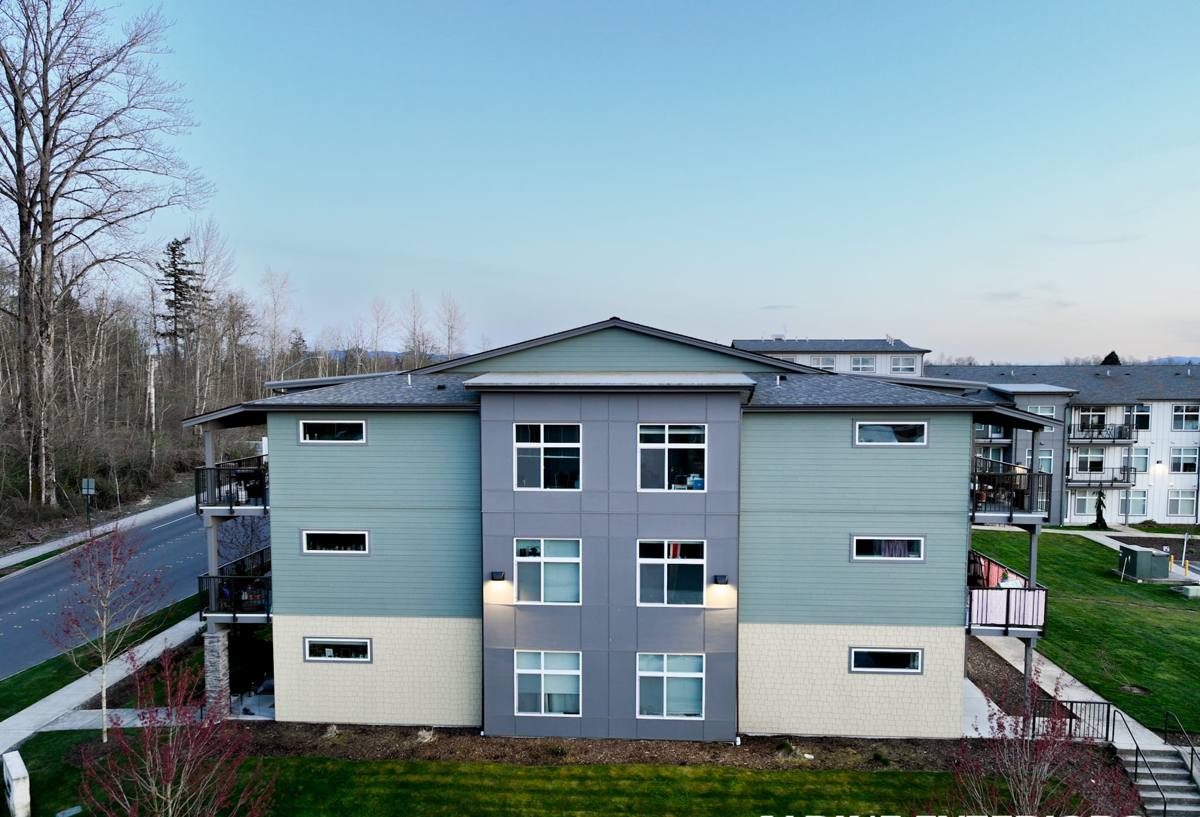
What a Correctly Installed Asphalt Shingle Roof Actually Includes
Asphalt shingles look like a simple product, but the roof system underneath them is what actually determines whether the roof performs for its full service life in a wet coastal climate. A shingle roof is only as good as the layers most people never see once the job is finished.
Underlayment and Ice-and-Water Barrier
A synthetic underlayment goes down over the entire deck as the primary backup water barrier, but the areas that matter most in Bellingham's climate are the eaves, valleys, and any low-slope transitions, where self-adhered ice-and-water membrane belongs regardless of how cold winters actually get here. That membrane is really about wind-driven rain protection as much as ice, and it's one of the details that separates a roof that stays dry in a sideways November storm from one that doesn't.
Flashing at Every Penetration
Chimneys, skylights, vent pipes, and roof-to-wall transitions all need step flashing, counterflashing, or pipe boots that are installed correctly and sealed with materials rated for long-term UV and moisture exposure. Reused or reglazed old flashing is one of the most common shortcuts that leads to slow, hidden leaks — the kind that show up as a stain on an interior ceiling months after the actual failure happened on the roof.
Nailing Pattern and Fastening
Manufacturer nailing patterns exist for a reason, and in an area that sees real wind gusts off the water, under-driven or misplaced nails are a direct cause of blow-offs and shingle lifting. Hand-nailing or careful pneumatic gun calibration in the field, rather than rushing the pattern, is a basic but frequently skipped step.
Choosing the Right Shingle for This Climate
Not every asphalt shingle product is built the same way, and the differences matter more in a wet, moss-prone climate than they would somewhere dry. The table below breaks down the general tiers of asphalt shingle available and how each one tends to perform under Bellingham conditions.
| Shingle Type | Typical Lifespan | How It Handles This Climate |
|---|---|---|
| 3-Tab (economy) | 15-20 years | Lower wind rating and thinner profile; moss and algae staining show faster |
| Architectural / Dimensional | 25-30 years | Heavier mat, better wind resistance, more common choice for this region |
| Algae-Resistant (AR) granules | Same as base shingle, plus stain resistance | Copper- or zinc-infused granules slow the dark streaking common on shaded, damp roofs |
| Premium / Designer | 30-50 years (varies by manufacturer) | Best wind and impact ratings; worth it on complex rooflines or long-term hold properties |
For most Bellingham and Lynden homes, an architectural shingle with algae-resistant granules is the practical middle ground: it costs more than a basic 3-tab up front but resists the staining and granule loss that this climate accelerates, which matters far more here than in a drier part of the state.
Ventilation: The Difference Between a Roof That Lasts and One That Doesn't
Attic ventilation doesn't get much attention from homeowners, but it's one of the biggest factors in how long a shingle roof actually lasts in a wet climate. Without a balanced system of intake vents at the eaves and exhaust at the ridge, warm moist air gets trapped in the attic, condenses against the underside of the roof deck, and creates the damp conditions that feed both wood rot and moss growth from the inside out. Overheating attics in summer bake shingles from underneath, which accelerates granule loss and premature aging even on a well-made product.
A correct reroof always includes a ventilation check, not just a shingle swap. That means confirming intake at the soffits isn't blocked by insulation, and that ridge or box vents provide enough net free area for the size of the attic. Skipping this step is one of the most common reasons a roof underperforms its rated lifespan, and it's invisible from the ground, which is exactly why it gets missed by crews that aren't looking for it.
Our Process, Start to Finish
A shingle roof replacement should be predictable, not a surprise. Here's how we approach it on Bellingham-area homes:
- On-site inspection of the existing roof, decking, flashing, and attic ventilation before any pricing is given.
- A written estimate that spells out shingle type, underlayment, flashing scope, and ventilation work — no vague allowances.
- Deck inspection once the old roofing is stripped, with any soft or rotted sheathing replaced before anything new goes down.
- Ice-and-water membrane at eaves and valleys, synthetic underlayment across the field, and new flashing at every penetration.
- Shingle installation to manufacturer specification, including nailing pattern and exposure.
- Ridge and soffit ventilation confirmed or corrected as part of the same job, not billed as a surprise add-on.
- Full site cleanup, including a magnetic sweep for stray nails around the property.
Tearing off down to the deck rather than layering over old shingles is standard practice on our jobs, because it's the only way to actually inspect the sheathing underneath — and in a climate where hidden moisture damage is common, that inspection is not optional.
Signs Your Bellingham Roof Needs a Look
Most roof failures don't happen suddenly — they show warning signs for months or years before a leak actually appears indoors. Worth checking for, especially after a hard winter of rain and wind:
- Dark streaking or green/black patches on shaded or north-facing roof slopes
- Granules collecting in gutters or at the base of downspouts
- Shingle edges that look curled, cupped, or lifted at the tabs
- Visible daylight or staining in the attic around vent pipes or chimneys
- Moss growth thick enough to hold visible moisture after a dry day or two
- Sagging along the ridge line or in the middle of a roof plane
- Missing or exposed nail heads on shingle surfaces
Any one of these is worth a professional look before it turns into a deck repair or interior damage, which almost always costs more than addressing the roof itself.
Living With Moss: Realistic Maintenance
No shingle roof in Whatcom County is completely moss-proof, and it's honest to say so rather than oversell a product. What actually helps is a combination of the right granule technology at install, trimmed tree cover where practical, and periodic soft washing rather than aggressive pressure washing, which can strip granules and shorten the roof's life faster than the moss itself would have. Zinc or copper strips installed near the ridge can help slow regrowth on shaded slopes, and they're a reasonable add-on for roofs that see heavy shade for most of the day.
The goal with moss isn't total elimination — it's management that doesn't damage the roof in the process. A roof installed with proper ventilation and algae-resistant shingles will need far less aggressive intervention over its lifespan than one that wasn't.
Cost Factors for a Bellingham Reroof
Pricing on any roof depends on specifics we'd only quote after seeing the property, but the general factors that move a bid up or down are consistent from job to job.
| Factor | Why It Matters Here |
|---|---|
| Roof pitch and complexity | Steep or cut-up rooflines take longer and need more flashing detail |
| Number of layers to remove | Tear-off of multiple old layers adds labor and disposal cost |
| Deck condition | Rotted sheathing from long-term moisture exposure adds repair cost before shingles go on |
| Shingle tier selected | Architectural and algae-resistant products cost more than basic 3-tab but hold up better locally |
| Ventilation upgrades needed | Adding or correcting ridge/soffit venting is a smaller add during a reroof than as a standalone job |
| Access and site conditions | Tree cover, steep lots, and limited staging area common in this region can affect labor time |
The honest answer to "what will this cost" is always "it depends on what we find," which is exactly why we inspect before we quote instead of pricing off a phone description.
Why Hire a Crew That Already Works This Area
A roofing crew that works Bellingham and Lynden regularly knows which details actually matter here — where moss tends to establish first, which roof orientations take the worst of the wind and salt air, and what ventilation setups tend to be undersized on older homes in this area. That local pattern recognition is different from general roofing knowledge, and it shows up in fewer callbacks and roofs that perform the way they're supposed to for their full rated lifespan.
It also matters for the practical side of the job — knowing local permitting requirements, understanding how weather windows work for scheduling tear-offs, and having a crew that isn't learning this climate's quirks on your roof for the first time.
Get a Straight Answer About Your Roof
If your roof is showing moss, staining, or you're just not sure how much life it has left, we're happy to take a look and give you an honest assessment — no pressure, no inflated estimate to scare you into a bigger job than you need. Use the form below to request a free estimate for asphalt shingle roofing in Bellingham or the surrounding Lynden area.