 Lynden Siding
 Window Installation for Aldergrove, BC Homes
Aldergrove sits just north of the border crossing that connects it to Lynden and the rest of Whatcom County, and the homes on both sides of that line deal with the same weather. Moist Pacific air moves in off the water, rain falls sideways more often than people from drier climates expect, and shaded rooflines and siding stay damp long enough to grow moss for a good chunk of the year. Windows take the brunt of that. A window that's a few degrees off level, or sealed with the wrong product, doesn't fail right away — it fails slowly, over two or three wet seasons, and by the time you see it on the inside, the sheathing behind it has usually already taken damage.
We're a Lynden-based crew and we treat Aldergrove as part of our regular service area, not a special trip. That matters more than it sounds like it should — a crew that's used to this specific stretch of the Fraser Valley and Whatcom County border region already knows what the local moisture load does to a window opening, and doesn't have to learn it on your house.
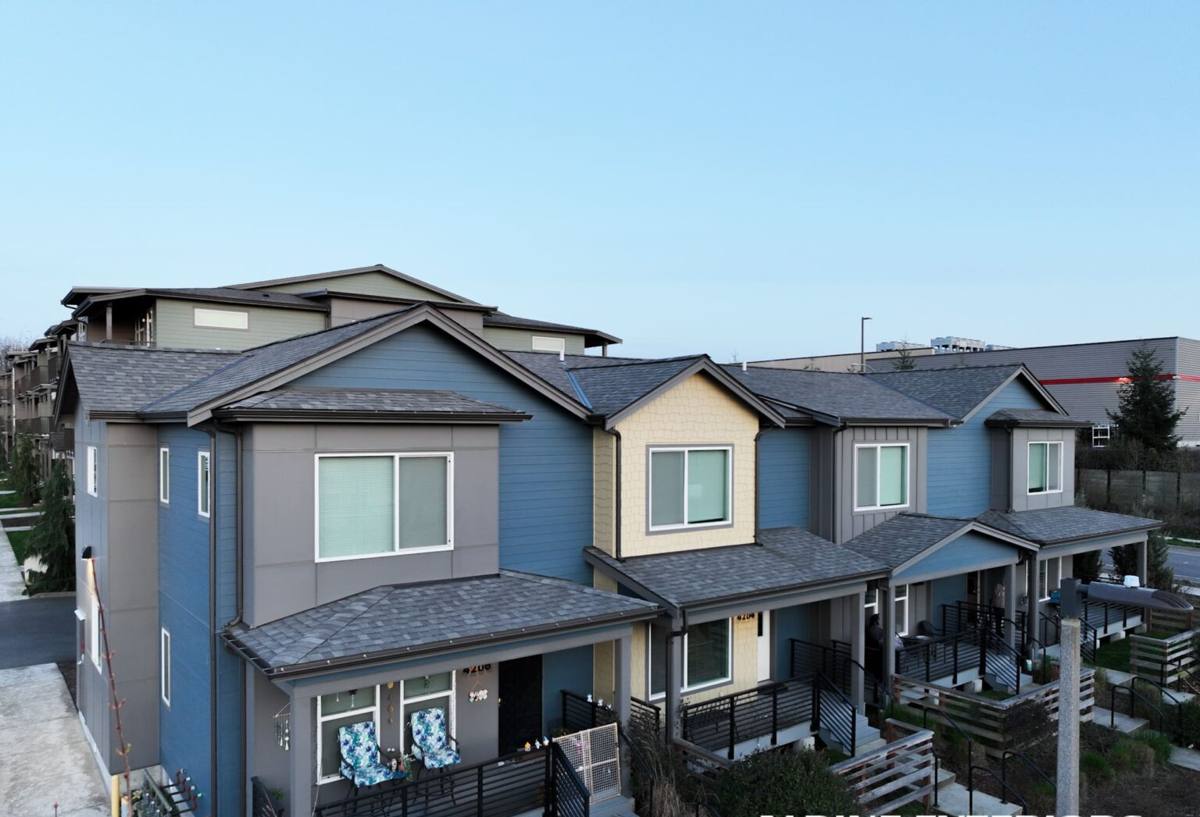
What This Climate Does to Windows Over Time
Driving rain and wind-driven moisture
Standard window flashing details are built assuming rain falls mostly straight down. In a marine climate with regular wind-driven rain, water gets pushed sideways and upward under trim and behind flanges that weren't lapped correctly. Over time that shows up as soft trim, stained drywall below a sill, or a musty smell in a room that never had one before.
Salt-laden air
Proximity to the Strait of Georgia and the broader Salish Sea airshed means the air carries a fine salt content that settles on hardware, fasteners, and any exposed metal. Cheaper hinges, cranks, and screws corrode faster here than they would inland. It's a slow process, but it's steady, and it's one of the reasons hardware quality matters more here than a spec sheet might suggest.
The long moss season
Shaded north- and east-facing walls in this region can stay damp for months at a time, which is exactly what moss needs. Moss holding moisture against a window frame or the trim around it keeps that wood or composite wet far longer than open sun exposure would, accelerating rot at the corners and joints where water already wants to collect.
Signs Your Windows Are Overdue
Most homeowners don't replace windows because they woke up one day and decided to — they replace them because something finally became impossible to ignore. Here's what we're actually looking for during an assessment:
- Visible daylight or a draft around the frame when the window is closed and locked
- Fogging or a permanent haze between the panes (a sign the seal has failed)
- Wood trim that's soft, spongy, or stained at the bottom corners
- Difficulty opening, closing, or locking that's gotten worse over a year or two
- Moss or dark streaking on the siding directly above or beside the window
- Higher heating bills without any other explanation
- Condensation forming on the inside of the glass regularly through fall and winter
One or two of these on their own might just mean a caulking touch-up. Several together, especially on the same wall, usually mean the installation detailing has been letting moisture in for a while.
What a Correct Installation Actually Involves
Window installation gets sold as if the window itself is the whole job. It isn't. The window is a manufactured product built to a consistent standard; what varies — and what determines whether it lasts — is everything around it.
The opening comes first
Before a new window goes in, the opening gets checked for square, level, and soundness. Any rot in the surrounding framing gets addressed at this stage, not covered over. Skipping this step is the single most common reason a replacement window fails early in a wet climate.
The sill pan and flashing sequence
A sloped sill pan under the window gives any water that does get past the sash somewhere to go — out, not into the wall cavity. Flashing tape and building paper get layered in the correct shingle-lap order so water sheds down and over each layer, never up underneath it. This detail is invisible once the trim goes back on, which is exactly why it's the detail that gets skipped by crews trying to move fast.
Sealant selection and placement
Not every sealant is meant for constant exposure to driving rain and salt air. We use products rated for this kind of climate, and we don't rely on caulk alone to do a flashing detail's job — caulk is a backup, not the primary defense.
Fastening and hardware
Corrosion-resistant fasteners and hardware cost a little more up front and matter a lot over a decade of salt air exposure. It's a small line item that has an outsized effect on how the window operates five and ten years down the road.
Choosing the Right Window for an Aldergrove Home
There isn't one universally "best" window material — there's a best fit for your home's exposure, your budget, and how much upkeep you want to take on. Here's how the common options compare for a marine climate like this one:
| Frame Material | Moisture & Salt-Air Behavior | Maintenance | Best Fit |
|---|---|---|---|
| Vinyl | Doesn't rot or corrode; performs consistently in damp conditions | Low — occasional cleaning | Most homes prioritizing value and low upkeep |
| Fiberglass | Very stable in moisture and temperature swings; holds paint well if color changes are wanted later | Low to moderate | Homeowners wanting extra rigidity and a longer-term product |
| Wood-clad | Needs correctly detailed cladding and sealing to keep moisture off the wood core | Higher — finish and joints need periodic checks | Homeowners set on a wood interior look who accept the upkeep |
| Aluminum-clad | Durable exterior, but bare aluminum hardware and trim are more exposed to salt-air corrosion over time | Moderate | Specific architectural styles where the look is a priority |
We don't push one material across every job. We'll tell you honestly which option fits your exposure — a shaded, wind-facing wall gets a different recommendation than a sheltered, south-facing one.
Our Process, Start to Finish
- Walkthrough and assessment — we look at every window being discussed, check the framing where accessible, and note exposure differences wall by wall.
- Honest scope and estimate — you get a clear breakdown of what's being replaced, what materials we're recommending and why, and a straightforward number, not a lowball that grows once work starts.
- Scheduling around the weather — in a climate with a long wet season, we plan installation days around forecasts so openings aren't sitting exposed longer than necessary.
- Removal and opening inspection — old windows come out, and the framing gets a real look before anything new goes in.
- Correct flashing, sill pan, and sealant installation — the part that doesn't show, done in the right order, every time.
- Window setting, shimming, and fastening — set plumb, level, and square, with corrosion-resistant hardware.
- Interior and exterior trim, finish work, and cleanup — the site gets left the way we found it, minus the old windows.
Why a Crew That Already Works Aldergrove, BC Matters
The Aldergrove–Lynden border crossing means this community and Whatcom County share more than a highway — they share weather, building stock from similar eras, and the same set of moisture problems. A crew that already does regular work in this stretch isn't guessing at what your walls have been dealing with; we've seen the same rot patterns, the same moss buildup, and the same failed flashing jobs on houses just like yours, on both sides of that line.
That familiarity shows up in small but real ways: knowing which wall orientations tend to need extra attention, not being surprised by how long moss season actually runs here, and scheduling installation work with this region's rain patterns in mind rather than a generic calendar. It also means we're a known, reachable local crew if a question comes up two years after the job is done — not a company that did one job in the area and moved on.
Simple Maintenance That Extends the Life of New Windows
A correct installation gets you most of the way to a window that lasts. A little seasonal attention gets you the rest of the way:
- Rinse accumulated salt film off glass and frames periodically, especially on wind-exposed walls
- Clear moss and debris from anywhere it collects against a frame or the trim above a window
- Check that exterior caulking lines stay intact each fall before the wet season sets in
- Operate hardware — cranks, locks, hinges — a few times through the year so moving parts don't seize
- Keep gutters and downspouts clear so water isn't sheeting down past window heads
None of this is complicated, but skipping it for a few years in a row is how a well-installed window ends up with a preventable problem anyway.
Get a Straightforward Estimate
If you're dealing with drafty windows, fogged glass, or trim that's starting to show what a few wet seasons can do, we're glad to take a look. Fill out the form below for a free, no-pressure estimate — we'll tell you honestly what your windows need and what they don't.