 Lynden Siding
 Building Decks That Hold Up in Aldergrove's Climate
Aldergrove sits in that stretch of the Pacific Northwest where a deck project has to answer to more than just looks. Between the salt-laden air drifting in off the Strait of Georgia and Puget Sound, the long stretches of driving rain through fall and winter, and a moss season that can run from October clear through April, an outdoor deck here takes a beating most of the year. A deck built the way it might be built in a drier inland climate — standard fasteners, minimal drainage planning, decking laid tight to the frame — will show problems within a few seasons: soft spots, rust streaks, slick green boards, and fasteners that back out or corrode.
We're a Lynden-based crew that also works the Aldergrove side of the border regularly, so this isn't a one-off job for us — it's the same climate and the same soil and moisture conditions we deal with on every deck we build. That matters more than it sounds like it should, because a deck is one of the exterior projects where local experience actually changes the build decisions, not just the finish work.
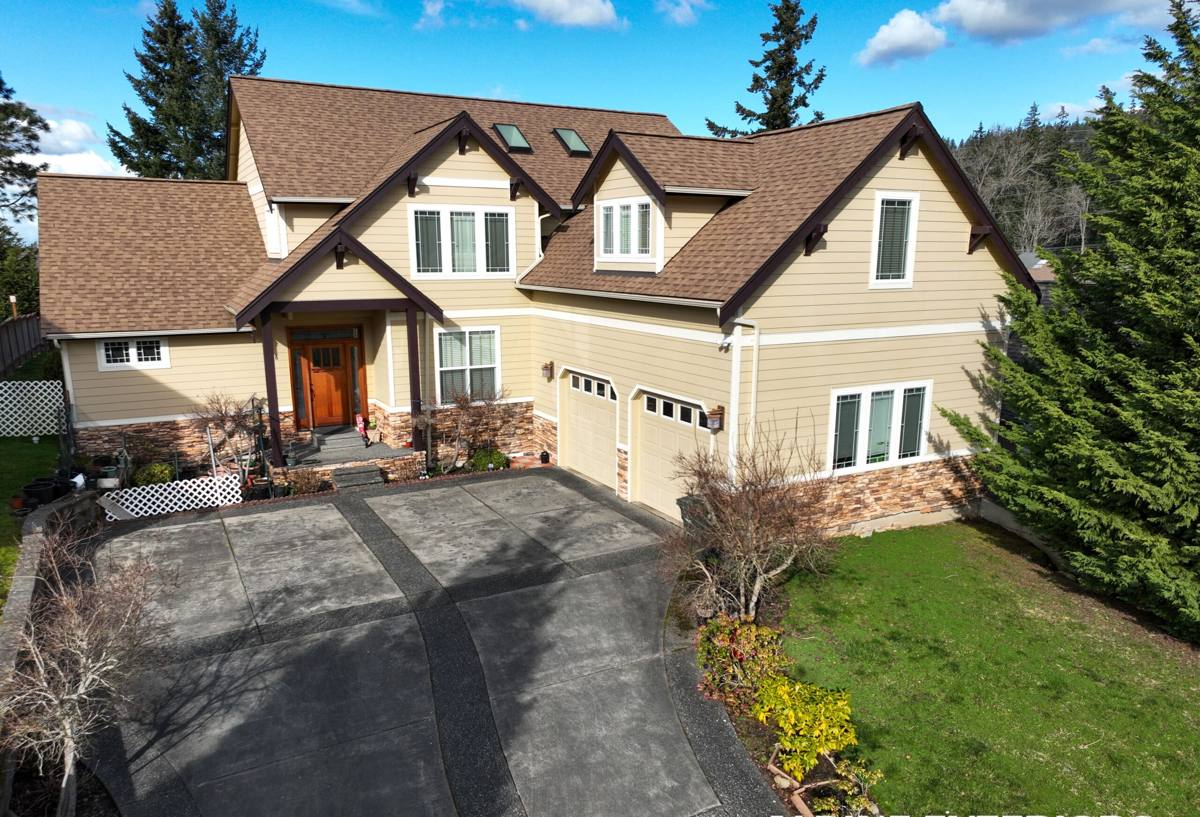
What Local Homes Need From a Deck Here
Moisture Management First
Whatcom County and the Fraser Valley get a lot of slow, soaking rain rather than short heavy downpours. That means moisture has time to work into end grain, fastener holes, and any spot where two boards meet without a gap. A deck built here needs consistent spacing for drainage, proper slope away from the house on any attached structure, and flashing details at the ledger board that actually shed water instead of trapping it against the framing.
Salt Air and Corrosion
Even well inland from the water, salt-laden air moves through this region and accelerates corrosion on anything less than a properly rated fastener or connector. Standard interior-grade screws and joist hangers will rust and stain the decking within a couple of years. Everything structural on a deck we build — hangers, screws, bolts, post bases — is rated for exterior, corrosive-environment use.
Moss and Algae
Shaded decks, north-facing decks, and anything under tree cover in this area will grow moss and algae if the surface stays damp too long. That's a function of board spacing, airflow underneath the deck, and how much direct sun the space gets — not just a cleaning problem you deal with after the fact. We factor this into layout and material choice up front rather than leaving it as ongoing maintenance the homeowner has to fight every spring.
Choosing the Right Decking Material
There's no single "best" decking material — there's a best material for a given deck's sun exposure, budget, and how much upkeep the homeowner actually wants to do. We walk through the honest trade-offs rather than pushing one option.
| Material | How It Handles This Climate | Maintenance | Typical Lifespan |
|---|---|---|---|
| Pressure-treated lumber | Good rot resistance when properly sealed; needs re-staining to shed water well | Annual cleaning, re-seal every 2-3 years | 15-20+ years with upkeep |
| Cedar | Naturally rot- and insect-resistant, ages gracefully if maintained, but softer and shows wear faster in constant damp | Regular cleaning, periodic oil or stain | 15-25 years with upkeep |
| Composite decking | Doesn't absorb water like wood, resists rot and won't splinter, but can still grow surface algae if shaded and damp | Periodic washing, no staining/sealing | 25-30+ years |
| PVC decking | Fully synthetic, best moisture resistance of the group, holds color well | Occasional washing | 25-30+ years |
Composite and PVC decking generally cost more upfront but less in labor and materials over the deck's life, since there's no annual sealing or staining. Wood costs less to install but the ongoing maintenance is real — skipping a season or two of sealing in this climate shows up fast as graying, checking, and softened end grain. Neither choice is wrong; it depends on whether the homeowner would rather pay more now or spend a weekend a year maintaining it.
What a Correctly Built Deck Involves
A deck that lasts in this climate comes down to what's underneath the boards as much as the boards themselves.
- Footings sized and set to local frost depth and soil conditions — undersized or shallow footings are the most common cause of a deck that starts to shift or sag within a few years
- Ledger board flashing that properly integrates with the house's existing siding and weather barrier, so water is directed away from the wall assembly instead of behind it
- Joist spacing and hardware matched to the decking material's span rating — composite and PVC often need tighter joist spacing than solid wood
- Corrosion-resistant fasteners and connectors throughout, not just on visible surfaces
- Consistent board gapping for drainage and airflow underneath
- Ground clearance and ventilation under the deck to keep the framing from sitting in damp, stagnant air
Any one of these done wrong doesn't usually cause an immediate problem — decks that fail early almost always fail slowly, from moisture finding the one weak point in the assembly. That's why the framing and flashing details matter as much as the decking material the homeowner sees.
Our Deck Building Process
1. On-Site Assessment
We walk the site, look at sun exposure, drainage patterns, existing grade, and how the deck will connect to the house, and talk through what the homeowner actually wants to use the space for.
2. Design and Material Selection
We lay out size, footing locations, and railing/stair requirements, and go over material options honestly — including what each one will actually look like and cost to maintain five and ten years out, not just on install day.
3. Permitting
We handle the permit process for the applicable jurisdiction, since deck permits are required in most cases once you're above a certain height or attached to the house.
4. Build
Footings, framing, ledger flashing, decking, and railings, in that order, with each stage built to hold up specifically to this region's rain and moisture load — not a generic build.
5. Walkthrough
We go over the finished deck with the homeowner, including what maintenance (if any) the chosen material needs going forward.
Permits and Cross-Border Considerations
Aldergrove sits on the Canadian side of the border, which means deck construction there falls under British Columbia building code and local municipal permitting rather than Washington State requirements. Requirements around footing depth, guard rail height, and stair geometry aren't identical on both sides of the line, and permit offices differ. Because we work regularly on both sides of the border, we're used to tracking which code applies to a given job and pulling the correct permit for the property's actual jurisdiction — homeowners don't have to sort that out themselves or hope their contractor knows the difference.
Deck Maintenance Checklist for This Climate
Whatever material a deck is built from, a few habits go a long way toward getting the full lifespan out of it in a wet, moss-prone climate:
- Sweep debris (leaves, needles, seed pods) off the deck regularly through fall — trapped organic matter holds moisture and feeds moss
- Check that gaps between boards haven't filled in with debris, blocking drainage
- Look at ledger board flashing and the house-deck connection once a year for any sign of water staining
- Re-seal or re-stain wood decking on schedule — don't let it go past what the product calls for in this climate
- Wash composite or PVC decking periodically to clear surface algae in shaded areas
- Confirm underdeck ventilation isn't blocked by stored items or overgrown landscaping
- Watch for soft spots or give underfoot near stairs and railing posts, which can signal a footing or framing issue
Why a Crew That Already Works Aldergrove Matters
A deck built by someone unfamiliar with this specific climate tends to get the visible parts right and the hidden parts wrong — the flashing detail, the fastener grade, the footing depth for local soil. Those are the parts that determine whether a deck is still solid in fifteen years or needs major repair in five. Working this area regularly means we're not guessing at what the salt air, the rain pattern, or the moss season will do to a given material or detail — we've already seen how decks in Whatcom County and the surrounding Fraser Valley communities age, and we build accordingly from the start.
If you're planning a new deck or replacing one that hasn't held up, we're happy to come take a look and walk through honest options for your specific site. Use the form below to request a free, no-pressure estimate.