 Lynden Siding
 Board & Batten Siding Built for the Acme Area's Climate
The stretch of Whatcom County around Acme and Lynden sees a particular mix of weather that's harder on a house than most homeowners realize until something starts to fail. Damp, salt-tinged marine air moves in off the Sound and settles into the foothills. Driving rain comes sideways during winter storm systems, not just straight down. And the heavy tree cover and persistent shade that make this area beautiful also mean a long moss season that can run eight or nine months out of the year. Board and batten siding, done right, holds up well against all of that — but "done right" is doing a lot of work in that sentence, and it's worth understanding what separates a board and batten job that lasts twenty-plus years from one that starts showing problems in five.
This page focuses specifically on board and batten siding for homes in and around Acme, using James Hardie fiber cement — the only siding system we install. We'll cover what the local climate demands from this particular siding style, what correct installation actually involves, and why it matters that the crew on your roofline has already worked houses in this area.
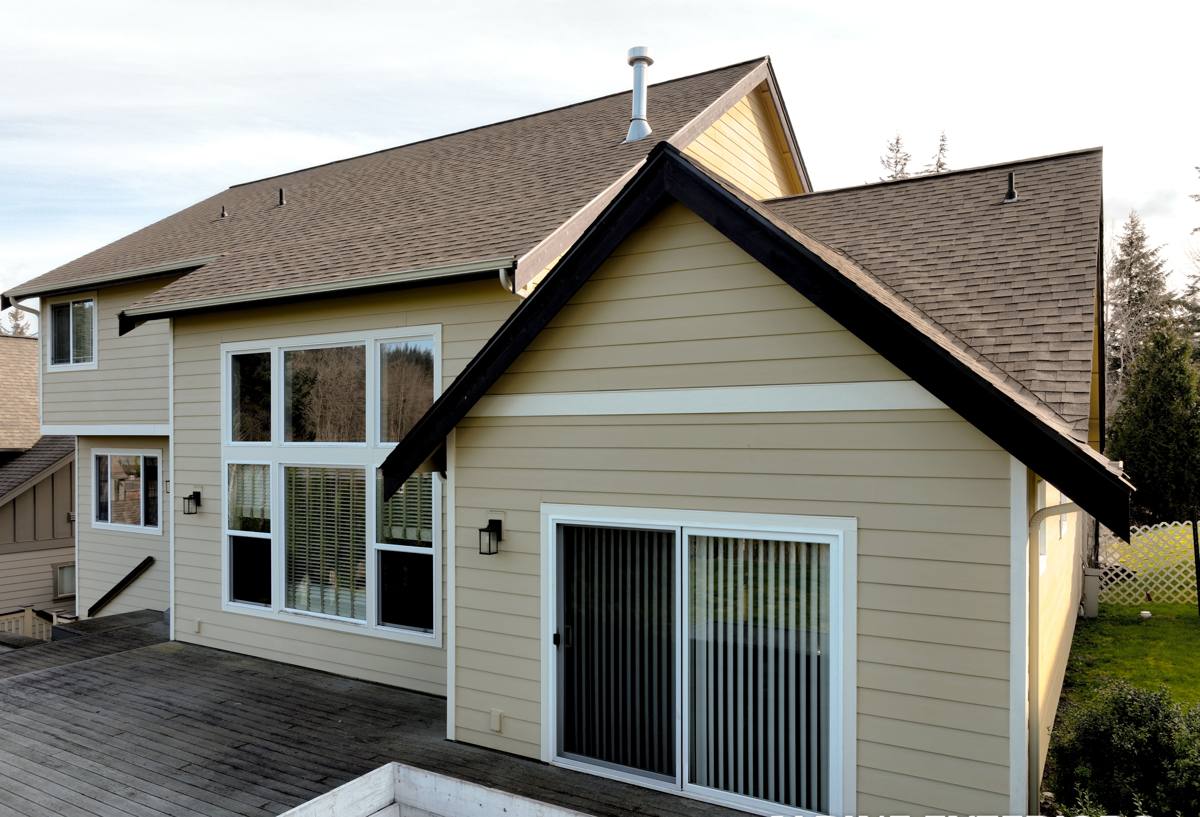
Why Board and Batten Fits Acme Homes
Board and batten has deep roots in rural and small-town Pacific Northwest architecture — barns, farmhouses, and the simple working homes that were common throughout Whatcom County before mass-produced lap siding took over. It's a natural fit for the Acme area's mix of farmhouse-style homes, newer builds going for a modern-rustic look, and cabins and outbuildings tucked into the tree line. The vertical lines read as tall and clean against the backdrop of fir and cedar, and it pairs well with the kind of covered porches and simple rooflines common in this part of the county.
Beyond looks, the vertical profile has a practical upside in a wet climate: when it's installed with a proper drainage plane behind it, water has a clear, uninterrupted path down and out, rather than resting in horizontal laps the way it can on some lap siding profiles.
Where It Works Best
- Full exteriors on farmhouse or modern-farmhouse style homes
- Accent gables, dormers, and entry features paired with lap siding elsewhere on the house
- Detached garages, shops, and outbuildings where a simpler, bolder line reads well from a distance
- Additions where you want a deliberate material break from the original siding
What the Local Climate Actually Does to Board and Batten Siding
Driving Rain and Wind-Driven Moisture
Storms coming through Whatcom County frequently push rain sideways into exposed walls, especially on homes without deep eave overhangs. Board and batten's vertical battens create channels — and if those channels aren't detailed correctly at the top, bottom, and around penetrations, wind-driven rain can find its way behind the boards instead of running off them. This is the single most common failure point we see on board and batten homes that were installed without a rainscreen gap or proper flashing.
Moss and Persistent Shade
Wherever tree cover keeps a wall shaded and slow to dry, moss and algae get a foothold. On some siding materials that means ongoing staining, softening, or rot at the base courses. Fiber cement doesn't feed moss growth the way wood-based products can, but moss and organic debris still need to be kept off the surface and out of the drainage gap so moisture isn't held against the wall longer than it should be.
Freeze-Thaw and Seasonal Swings
Whatcom County doesn't see extreme cold often, but it does see enough freeze-thaw cycling each winter to stress any siding material that expands and contracts with moisture content — which is exactly the failure mode that causes swelling, cupping, and paint failure on wood and some composite sidings over time.
What a Correct Board and Batten Installation Involves
Board and batten looks simple — vertical boards, battens over the seams — but the details that keep water out are almost entirely hidden once the job is done. A correct installation on a home in this climate includes:
- A weather-resistant barrier installed and lapped correctly behind the panels
- A rainscreen gap (typically furring strips) that lets any moisture that does get behind the siding drain and dry instead of sitting against the wall sheathing
- Properly flashed window and door openings, with head flashing that actually sheds water away from the frame
- Correct fastener placement and spacing per the manufacturer's installation specifications — not just "close enough"
- Battens fastened so they cover the panel seams fully without trapping water at the top or bottom
- A gap at grade and proper clearance from decks, patios, and soil so the bottom course isn't sitting in standing moisture
- Factory-finished, pre-caulked panel joints where possible, minimizing field caulking that will eventually need maintenance
Skip the rainscreen gap or get the flashing sequence wrong, and the siding can look perfect for a couple of years while moisture quietly does damage behind it. This is the part of the job that separates a crew that understands Pacific Northwest wall assemblies from one that's just used to installing siding in a drier climate.
Our Process for an Acme-Area Board and Batten Project
1. On-Site Assessment
We walk the exterior, check the current siding and sheathing condition, look at drainage around the foundation, and identify problem areas — shaded walls, poor overhangs, existing moisture damage — before we talk about materials.
2. Tear-Off and Sheathing Check
Old siding comes off and we inspect the sheathing underneath. Any soft or water-damaged sheathing gets repaired before anything new goes up — covering a problem with new siding just delays and hides it.
3. Weather Barrier and Rainscreen Installation
This is the step that matters most in this climate and gets skipped most often by crews trying to save time. We install the water-resistive barrier, flashing, and furring strips correctly the first time.
4. Hardie Panel and Batten Installation
Panels and battens go up to manufacturer spec — fastener type, spacing, and clearances all follow James Hardie's published installation requirements for this product line.
5. Final Walkthrough
We walk the finished job with you, check all trim, caulking, and flashing details, and answer questions about care and maintenance going forward.
Why We Install James Hardie for Board and Batten — and Nothing Else
We standardized on James Hardie fiber cement across every job we do, including board and batten, because it's engineered for exactly the conditions Acme and the rest of Whatcom County deal with every year.
| What Homes Here Need | How Hardie's Board and Batten System Delivers It |
|---|---|
| Resistance to moisture-driven swelling and warping | Fiber cement doesn't absorb and expand like wood-based panel products |
| Finish that holds up to damp shade and moss exposure | ColorPlus factory-applied finish resists fading and doesn't rely on field-applied paint as the only moisture barrier |
| Long-term durability without constant repainting | Baked-on finish is substantially more durable than site-applied paint on wood or primed panel products |
| Product actually engineered for this climate | HZ5 formulation is built for wet, humid, freeze-thaw climates like the Pacific Northwest |
| Non-combustible material | Fiber cement doesn't burn, unlike wood and some composite sidings |
| Warranty backing that means something | Strong transferable manufacturer warranty on both the substrate and the factory finish |
We don't install LP SmartSide, vinyl, Cemplank, Allura, primed spruce, or cedar board and batten. Some of those products have their place, but between moisture sensitivity, finish durability, and long-term maintenance burden in a climate like this one, they're not what we're willing to put our name behind. Hardie's board and batten system, installed correctly, is the product we trust to actually perform here for decades, not just look good on installation day.
Why a Crew That Already Works the Acme Area Matters
Board and batten installation quality comes down to details that aren't visible in a photo — the rainscreen gap, the flashing sequence, the fastener schedule. A crew that's worked houses throughout the Lynden and greater Whatcom County area already understands the wall assemblies common to this region, knows what the moss season does to shaded elevations over a few winters, and isn't guessing at how much rain exposure a given wall orientation actually sees. That local pattern recognition shows up in fewer callbacks and a job that's built for the specific conditions your house sits in, not a generic install pulled from a different climate.
It also means faster response if you ever have a question or concern after the job is done — a local crew doesn't disappear once the invoice is paid.
Cost Factors for Board and Batten Projects in This Area
| Factor | Why It Affects Price |
|---|---|
| Full exterior vs. accent areas | Whole-house installs cost more upfront but avoid a patchwork of material transitions |
| Existing siding removal and sheathing condition | Rot repair from prior moisture intrusion adds labor and material |
| Home height and roofline complexity | Gables, dormers, and multi-story walls take more time and equipment |
| Trim and corner detailing | Board and batten's clean look depends on precise trim work at corners and openings |
| Access and site conditions | Tree cover, slope, and driveway access affect staging and labor time |
We don't quote firm numbers without seeing the house — every wall is different — but these are the variables that move the estimate up or down.
Maintaining Board and Batten Siding Through Moss Season
- Rinse siding annually, focusing on shaded, tree-covered walls where moss and organic buildup collect fastest
- Keep gutters clear so overflow isn't running down the wall behind the siding
- Trim back vegetation and tree limbs that keep a wall in constant shade and slow to dry
- Check caulking at trim and penetrations once a year and touch up before winter storms arrive
- Watch the bottom courses near grade for soil or mulch buildup that traps moisture against the siding
- Address any small chips or damage to the factory finish promptly to keep the moisture barrier intact
Get a Free Estimate for Your Acme-Area Home
If you're weighing board and batten siding for a home in the Acme area, we're glad to come take a look, talk through what your specific walls and exposure need, and give you a straightforward, no-pressure estimate. Use the form below to get started.