 Lynden Siding
 Metal Roofing Built for Abbotsford's Climate
Abbotsford sits in the Fraser Valley just north of the Lynden border crossing, and it shares almost the exact same weather pattern we deal with every day on the Washington side: long, wet winters, a steady pull of marine air off the Salish Sea, and a moss season that can stretch from October well into spring. Roofs here don't fail because of one big storm. They fail slowly, from months of standing moisture, shaded north-facing slopes that never fully dry out, and moss and algae working their way under shingle tabs. Metal roofing handles that kind of climate better than almost anything else on the market, which is why we get regular calls from Abbotsford homeowners who are done re-roofing every 15-20 years and want something that will actually outlast the mortgage.
We're a Lynden-based crew, and Abbotsford is close enough that it's part of our regular service area, not a special trip. That matters more than it sounds like it should — a roof job goes better when the crew already understands the microclimate, the typical roof pitches and styles in the area, and how to schedule around Fraser Valley rain windows instead of learning it on your dime.
Why Homes in This Area Move to Metal
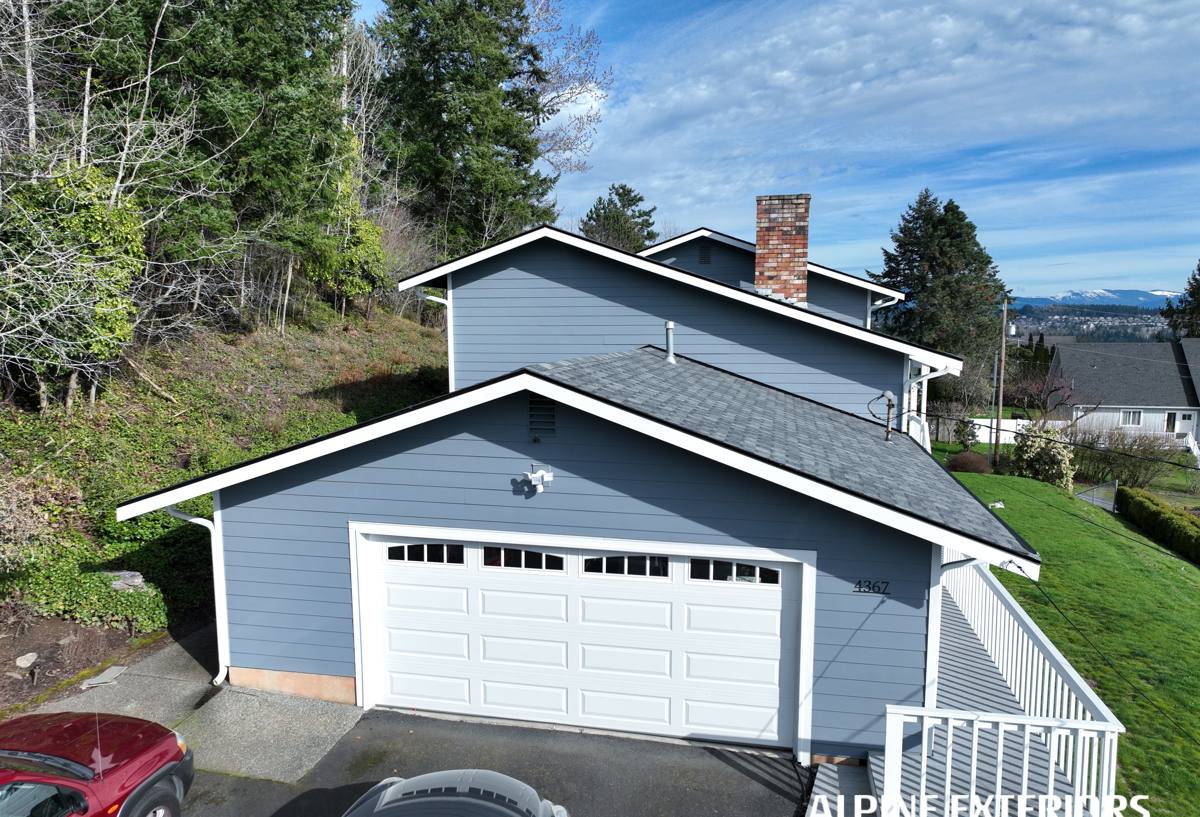
The driving rain that comes off the water doesn't fall straight down — it gets pushed sideways into fascia, valleys, and anywhere flashing is even slightly under-lapped. Combined with salt-tinged coastal air, that's a hard combination for asphalt shingles, which rely on granule coating and adhesive strip integrity that degrades faster in persistent damp. Metal roofing addresses the specific problems this climate creates:
- Moss resistance: smooth metal panels give moss and algae far less to grip than the textured surface of shingles, so the moss season that plagues asphalt roofs in this area is much less of an issue.
- Water shedding: steep-profile panels and standing seam systems move driving rain off the roof fast instead of letting it sit in shingle tabs or granule pockets.
- Longevity: a properly installed metal roof commonly outlasts two or three asphalt re-roofs, which matters on a coastal property where you're already budgeting for higher maintenance elsewhere on the exterior.
- Snow and ice shedding: the Fraser Valley gets occasional heavy wet snow events, and metal sheds that load instead of holding it against the deck.
None of that means asphalt shingles are a bad product everywhere — they're just working against the climate here more than metal does, and the maintenance burden shows up as moss treatments, granule loss, and shortened lifespan.
Where It Matters Most
Not every roof in the area needs metal to perform well, but a few conditions push the math strongly in metal's favor: north-facing slopes that stay shaded most of the day, roofs under mature tree cover, low-slope sections where water has more time to sit, and homes closer to open water where salt-laden air accelerates wear on lesser materials. If your roof has one or more of those conditions, metal is worth serious consideration even if cost is a concern.
What a Correct Metal Roof Installation Involves
Metal roofing rewards good installation and punishes shortcuts more than almost any other roofing material — a beautiful panel job with the wrong fastening pattern or missing underlayment will leak exactly where a shingle roof wouldn't have. A correct job includes:
- Full tear-off of the old roofing (metal-over-shingle is sometimes marketed as a shortcut, but it traps moisture and voids most manufacturer warranties)
- Deck inspection and repair of any rot or soft sheathing before anything new goes down — this is where hidden moisture damage from years of a marginal roof usually shows up
- A high-temp, self-adhering underlayment at eaves, valleys, and penetrations, not just standard felt
- Correct panel fastening — exposed-fastener systems and concealed-fastener standing seam use different screw patterns and spacing, and getting this wrong is the single most common cause of early metal roof leaks
- Properly formed flashing at every valley, chimney, skylight, and wall transition, custom-bent to the actual roof geometry rather than pulled from a generic stock profile
- Correct ridge and hip venting to keep the attic from trapping the moisture that metal roofing sheds so effectively off the outside
Choosing a Metal Roofing System
"Metal roofing" covers a range of products with real differences in cost, appearance, and how they hold up long-term. Here's how the common options compare for a property in this climate:
| System | Typical Cost Range | Best For | Trade-offs |
|---|---|---|---|
| Exposed-fastener panels (screw-down) | Lower end of metal pricing | Budget-conscious upgrades, outbuildings, simpler rooflines | Fasteners need periodic inspection/re-torquing over the roof's life |
| Standing seam (concealed fastener) | Mid to upper range | Primary residences, complex rooflines, best long-term performance | Higher upfront cost, requires experienced installers |
| Stone-coated steel | Upper range | Homeowners who want a traditional shake or tile look with metal's durability | More installation labor; heavier than bare panel systems |
| Aluminum panel systems | Comparable to steel, sometimes higher | Coastal properties closest to open water | Naturally corrosion-resistant, which is a real advantage in salt air |
For most Abbotsford-area homes, standing seam steel with a quality Kynar-based finish is the sweet spot: it handles the driving rain and moss exposure well, holds its finish in coastal air, and doesn't rely on exposed fasteners that need future maintenance. Aluminum is worth a closer look specifically for properties with the most direct salt air exposure, since it doesn't rust the way steel can if a coating is ever compromised.
Our Process for Abbotsford-Area Homes
1. On-Site Assessment
We walk the roof (weather permitting) or do a close inspection to check deck condition, existing ventilation, valley and flashing details, and any problem areas specific to your roof's orientation and tree cover. We'll tell you honestly if a full metal system makes sense or if a more targeted repair is the better call for your situation.
2. Straightforward Quote
You get a written quote that breaks out tear-off, deck repair allowance, underlayment, panel system, flashing, and ventilation work — not a single lump number you have to take on faith.
3. Scheduling Around Fraser Valley Weather
Metal roofing can be installed in cooler, damp conditions more forgivingly than some other materials, but we still plan tear-off and dry-in around the driest available windows so your deck isn't exposed longer than necessary.
4. Border Logistics
Working a job that crosses from Lynden into Abbotsford means coordinating material delivery, crew scheduling, and any necessary permitting on the Canadian side of the project. Because this is a routine part of how we operate — not an occasional exception — none of that adds surprise delay or cost to your timeline.
5. Walkthrough and Warranty Paperwork
Before we leave, we walk the finished roof with you, cover the manufacturer warranty terms, and go over the basic maintenance a metal roof actually needs, which is far less than most homeowners expect.
Maintenance: What a Metal Roof Actually Needs
One of the appeals of metal roofing in this climate is how little upkeep it requires compared to asphalt, but "low maintenance" isn't "no maintenance." A short annual checklist keeps a metal roof performing for decades:
- Clear debris and needle buildup from valleys, especially under overhanging trees
- Check that gutters and downspouts are flowing freely, since metal sheds water fast and undersized or clogged gutters get overwhelmed quicker than they would under shingles
- Look for any signs of scuffed or scratched finish near walked areas or after storms, and touch up promptly to prevent corrosion starting at bare metal
- Have flashing and sealant at penetrations (vents, chimneys, skylights) inspected every few years, since sealant is the one component that ages faster than the panels themselves
- After any major windstorm, a quick visual check for lifted panel edges or fastener issues is good practice
Why Hire a Crew That Already Works This Area
Metal roofing is unforgiving of installers who are still learning the material — panel expansion and contraction, correct seam engagement, and flashing details all behave differently than asphalt work. A crew that already installs metal roofing regularly in Whatcom County and the Fraser Valley has seen how these systems perform through several wet seasons in this specific climate, not just on a spec sheet. That experience shows up in the details: how valleys are formed, how much expansion allowance is built into long panel runs, and how ventilation is planned so the underside of the roof doesn't trap the same moisture the panels are designed to shed.
Being local also means straightforward warranty support and follow-up if you ever have a question about your roof years down the road — you're not trying to track down a crew that did one job in the area and moved on.
Get a Straightforward Estimate
If you're weighing metal roofing for your Abbotsford home, we're happy to take a look, walk you through what your specific roof needs, and put together a clear, no-pressure estimate. Use the form below to get started.