 Lynden Siding
 Abbotsford's Climate Is Tougher on Siding Than It Looks
Abbotsford sits in the Fraser Valley just north of the Whatcom County line, and the weather doesn't stop at the border. Homes here take on the same driving rain, damp marine air, and long gray stretches that define the Pacific Northwest, and siding pays the price for it. Wood-based products swell, crack, and rot faster than owners expect. Vinyl warps and fades under repeated wet-dry cycling. And almost every exterior surface in this region eventually deals with moss and algae staining, especially on north-facing walls and anywhere gutters overflow or splash back onto the wall below.
None of this means Abbotsford homes need exotic materials — it means they need siding that was engineered to handle sustained moisture exposure without babysitting. That's the whole reason this company installs one product system, James Hardie fiber cement, instead of offering a menu of options that all handle water differently.
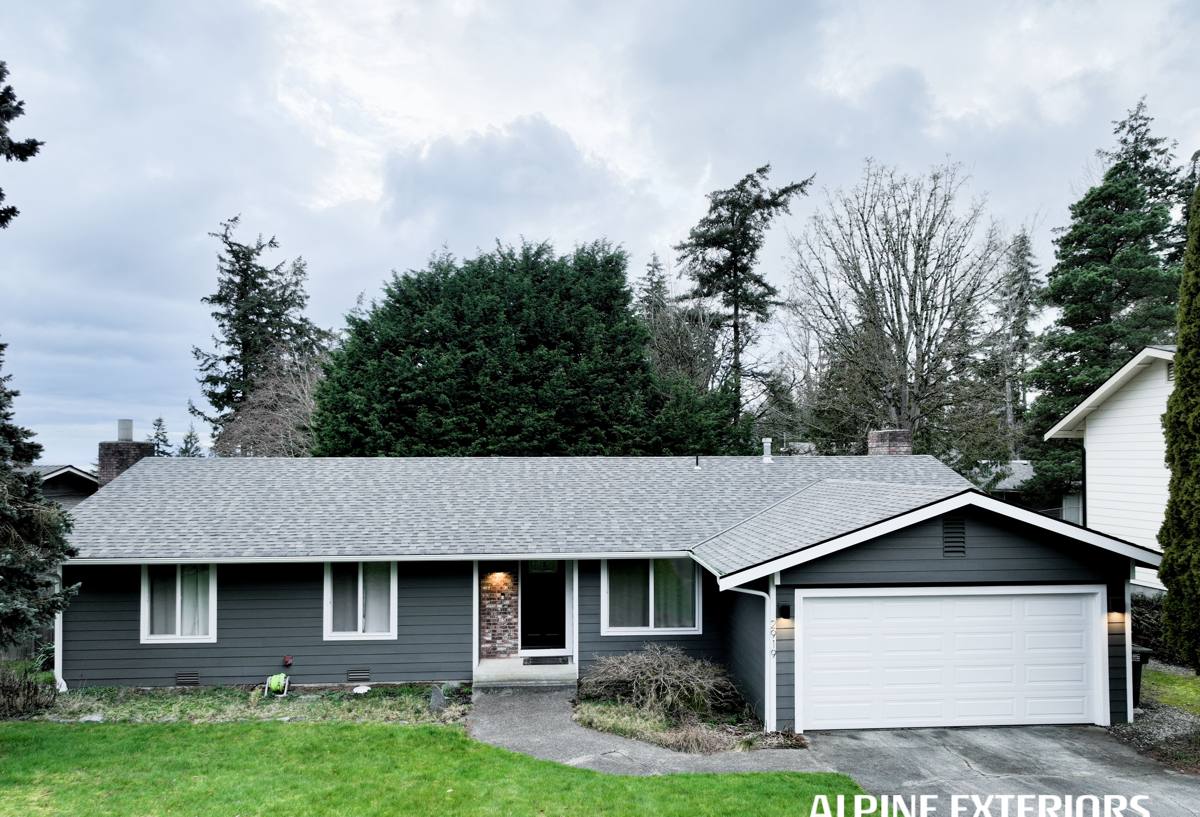
Why We Install Only James Hardie in This Region
We get asked regularly why we don't offer vinyl, LP SmartSide, or cedar alongside Hardie. The honest answer is that in a climate like this one, the differences between products aren't cosmetic — they show up in how the siding behaves after five, ten, and twenty years of rain.
James Hardie fiber cement is cement, sand, and cellulose fiber, not wood. It doesn't absorb water the way wood-based siding does, it won't feed rot the way an OSB-core product can if a seam fails, and it's non-combustible, which matters as much for insurance conversations as it does for safety. Hardie also finishes its boards at the factory with its ColorPlus coating, a baked-on finish that resists fading and cracking far better than field-applied paint, which means fewer repaint cycles over the life of the siding.
We're not saying every other product is unusable — plenty of homes around here were built with cedar or vinyl and are still standing. What we're saying is that after years of tear-offs and repairs, we stopped installing products that need more maintenance, more caulk, or more luck to perform well in a climate that gives siding no dry season to recover in.
Matching the Right Hardie Product to Your Home
Lap Siding, Panel, and Shingle Profiles
James Hardie makes several product lines, and picking the right one is about more than looks. HardiePlank lap siding is the most common choice for full re-sides and covers the widest range of architectural styles. HardieShingle gives homes a cedar-shake look without the maintenance cedar shakes demand, which is popular on gable ends and accent areas. HardiePanel is used for vertical board-and-batten looks, often mixed with lap siding to break up a facade. HardieTrim finishes out corners, window and door surrounds, and fascia in a material that matches the siding's water behavior instead of fighting it.
Comparing the Main Product Lines
| Product | Best Use | Look |
|---|---|---|
| HardiePlank Lap Siding | Full re-sides, most home styles | Traditional horizontal lap |
| HardieShingle | Accent walls, gables, craftsman details | Staggered or straight-edge shake |
| HardiePanel | Modern facades, accent sections | Vertical board-and-batten |
| HardieTrim | Corners, window/door surrounds, fascia | Smooth or woodgrain boards |
James Hardie also engineers its formulations for different climate exposures. For a region like ours, with sustained rainfall and moderate winter temperatures rather than deep hard freezes, the product formulation and installation details both matter — this is not a material where a generic, one-size approach holds up over time.
What a Correct Installation Actually Involves
Fiber cement siding is only as good as the install behind it. Most of the siding failures we get called out to inspect trace back to installation shortcuts, not the material itself. In a wet climate, the margin for error is smaller than in a dry one, because any gap or missed detail gets tested by rain almost immediately.
- A continuous weather-resistive barrier installed and lapped correctly behind the siding, not just stapled up and left
- Proper flashing above windows, doors, and any horizontal trim, so water is directed out and down, not behind the cladding
- Kick-out flashing where a roofline meets a wall, a detail that's frequently skipped and causes hidden rot over years
- Correct fastener type, placement, and depth — Hardie specifies this closely, and it affects both appearance and water resistance
- A minimum clearance between the bottom of the siding and grade, decking, or roofing, so the material isn't sitting in standing water or snow
- Factory-cut and factory-primed edges at every field cut, sealed per Hardie's application instructions
- Correct joint and butt-seam treatment, including the right sealant and gap spacing so the boards can handle seasonal movement
Any one of these done wrong can undercut everything else about the product's durability. This is also why James Hardie's warranty structure matters: installation that follows their specification keeps the manufacturer's warranty intact, while shortcuts can leave a homeowner without that protection even though the boards themselves are on the wall.
How the Project Works, Start to Finish
Assessment and Estimate
We walk the exterior, check for existing moisture damage, rot, or failed flashing, and talk through which Hardie product lines and colors fit the home. This is also when we flag anything unusual about the site — access, existing damage, or details specific to an Abbotsford property that could affect scope.
Prep and Tear-Off
Old siding comes off, sheathing gets inspected for hidden damage, and any rot or moisture issues are repaired before anything new goes up. Skipping this step is one of the most common ways a siding job fails early — new siding over damaged sheathing just hides the problem.
Weather Barrier and Installation
We install the weather-resistive barrier, flashing, and Hardie boards per manufacturer specification, with attention to every seam, corner, and penetration — the details that matter most in a climate that doesn't give siding much of a break between storms.
Final Walkthrough and Warranty Registration
We walk the finished job with the homeowner, and register the installation so the James Hardie warranty is properly in place, not left as an assumption.
Living With Hardie Siding in a Wet, Mossy Climate
ColorPlus-finished Hardie siding holds up well against the moss and algae staining that's common on north-facing and shaded walls throughout the Fraser Valley, but no exterior surface is completely immune to it. A periodic gentle wash — not pressure-washed at close range, which can force water behind boards or damage the finish — keeps the siding looking like it did on day one. Keeping gutters clear and downspouts directing water away from the wall also does more to prevent staining and long-term moisture problems than anything applied to the siding itself.
Why a Crew That Already Works Abbotsford Matters
Working on both sides of the border isn't just a matter of driving distance. Building permits, inspection processes, and code requirements differ between British Columbia and Washington State, and material and crew logistics need to account for the crossing itself, not just the job site. A crew that already handles Abbotsford projects regularly has that logistics and paperwork sorted out ahead of time, instead of figuring it out mid-project. That familiarity also extends to the practical stuff: how the housing stock in the area tends to be built, which wall orientations take the worst weather, and what kind of prep work older homes in the region typically need before new siding goes on.
What Affects the Cost of a Hardie Siding Project
| Factor | Why It Matters |
|---|---|
| Home size and wall complexity | More corners, gables, and trim details mean more labor and material |
| Condition of existing sheathing | Hidden rot or moisture damage found at tear-off adds repair scope |
| Product line and profile mix | Combining lap siding with shingle or panel accents changes material and labor cost |
| Trim and accessory detail | Custom corners, fascia, and window surrounds add time beyond flat wall coverage |
| Site access | Tight lots, multi-story walls, or limited staging area affect labor time |
| Cross-border logistics | Material delivery and crew scheduling across the border are planned into the timeline, not billed as a surprise |
We walk through all of this in plain terms during the estimate, so there are no surprises once work starts.
If you're weighing a siding replacement for an Abbotsford home and want a straight answer about what it actually needs, we're glad to take a look. There's no pressure and no upsell — just a real assessment and a written estimate you can use to make the decision on your own timeline. The form below gets you started.