 Lynden Siding
 Window Replacement Built for the Wiser Lake Microclimate
Homes around Wiser Lake sit in a slightly different weather pocket than the rest of Lynden. Being close to open water means more sustained humidity in the air, more condensation on cool mornings, and a longer stretch of the year where wood trim, seals, and frame joints stay damp instead of drying out between rain events. Add in the salt-tinged marine air that rolls through this part of Whatcom County off Puget Sound, plus driving rain that hits west- and south-facing walls hard during fall and winter storms, and you've got conditions that are genuinely harder on windows than a drier inland location would be.
None of this means Wiser Lake homes need exotic solutions. It means the basics — flashing, sealant choice, frame material, and installation sequencing — have to be done correctly every time, because the margin for a sloppy install is smaller here. A window that's "good enough" in a dry climate can start showing fogged glass, soft trim, or a stuck sash within a few seasons near the lake.
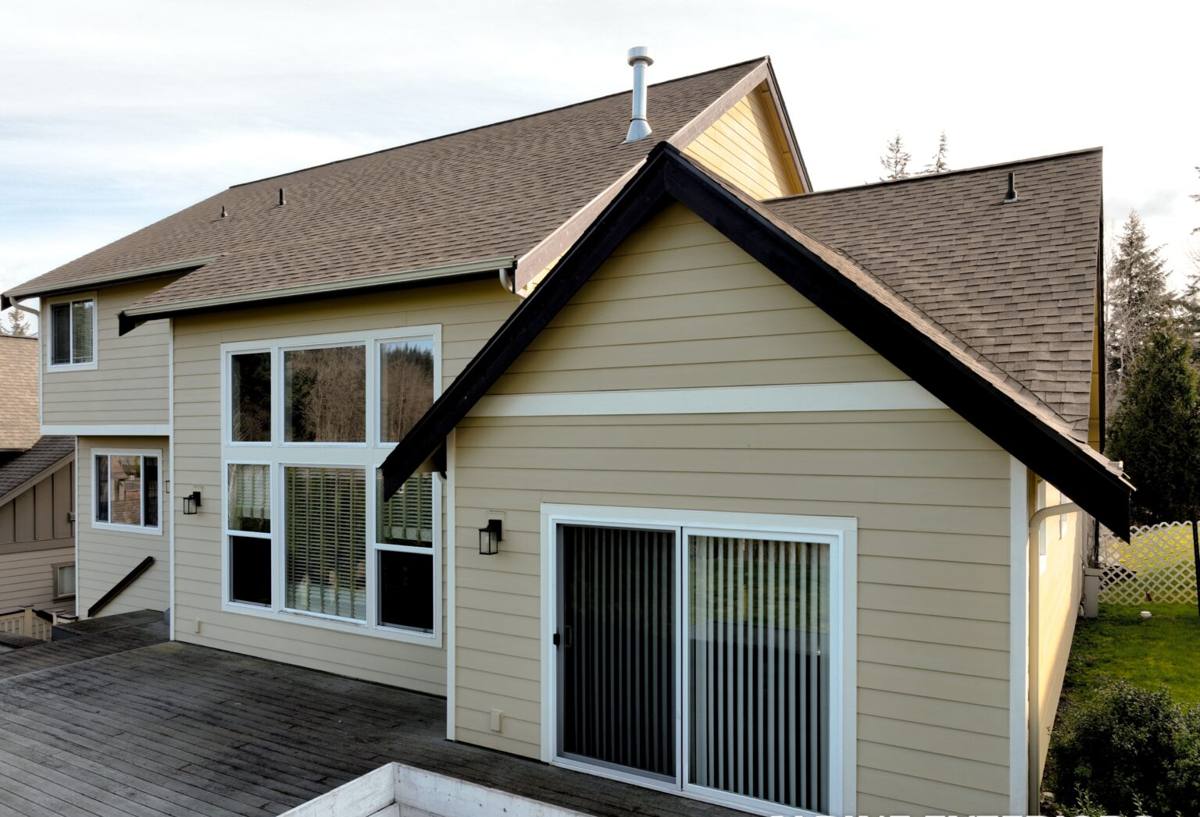
Signs a Wiser Lake Home Is Ready for New Windows
Most homeowners don't wake up one day and decide to replace windows — it's usually a slow accumulation of small annoyances that eventually add up. In this area, moisture-related symptoms tend to show up before anything else.
Moisture and Condensation Clues
Fogging or a milky haze between the panes of a double-pane window means the seal has failed and the gas fill (or just the dead air space) is gone — that window has lost most of its insulating value even if it still looks intact. Soft or discolored wood at the sill or bottom corners, paint that keeps bubbling in the same spot no matter how often it's touched up, and a persistent musty smell near a window opening are all signs that moisture is getting past the frame and into the wall assembly, not just condensing on the glass.
Drafts, Operation, and Energy Bills
Windows that are hard to open, don't stay up on their own, or let in a noticeable draft when the wind is blowing off the lake are telling you the frame has racked or the weatherstripping has given out. If heating bills climb every winter without an obvious cause, and the house has original or older aluminum-frame windows, the windows are often a bigger factor than people expect — aluminum conducts cold straight through the frame into the room.
- Visible fog, moisture, or mineral streaking between the glass panes
- Soft, spongy, or discolored wood at the sill, jamb, or bottom corners
- Windows that stick, won't stay open, or don't latch fully
- A noticeable draft near the frame on windy or stormy days
- Condensation forming on the inside of the glass regularly, even in mild weather
- Rising heating costs with no other explanation
- Single-pane or original aluminum-frame windows still in place
What a Correct Window Replacement Job Actually Involves
Window replacement looks simple from the outside — old window out, new window in — but the parts that determine whether it lasts happen where you can't see them.
Removal and Opening Prep
Once the old window is out, the opening gets inspected before anything new goes in. This is the point where hidden water damage, rot, or a previously botched flashing job gets caught. Skipping this step and just dropping a new window into a bad opening is one of the most common ways a "new" window ends up with the same moisture problems as the old one within a year or two.
Flashing and Water Management
Given how much driving rain this area sees, correct flashing sequencing matters more here than in a drier climate. Water-resistant barrier, sill pan flashing, and head flashing need to be layered so that any water that gets behind the siding sheds down and out, never behind the next layer. This is the single most common point of failure in bad window installs — not the window unit itself, but how it was integrated into the wall.
Insulation and Air Sealing
The gap between the new frame and the rough opening needs to be filled with a proper low-expansion foam or backer rod and sealant, not stuffed with fiberglass batt alone, which does little to stop air movement. Poor sealing here shows up later as drafts and higher energy bills even though the window itself is rated well.
Frame Material Choices
Material choice matters more near the lake because of the extra moisture and salt exposure. Below is a general comparison of the common frame options.
| Frame Material | Moisture & Salt Air Tolerance | Maintenance | Typical Lifespan |
|---|---|---|---|
| Vinyl | Very good — won't rot or corrode | Low, occasional cleaning | 20-30 years |
| Fiberglass | Excellent — dimensionally stable in wet/dry cycles | Low | 30-40 years |
| Wood, unclad | Poor without diligent upkeep | High — repainting, sealing | Varies widely with maintenance |
| Wood, clad (vinyl or aluminum exterior) | Good, if cladding and flashing are correct | Moderate | 25-35 years |
| Aluminum | Fair — can corrode near salt air over time | Low | 15-25 years |
We don't push unclad wood frames in this area as a first recommendation — not because wood is a bad material, but because the maintenance schedule needed to keep it sound near Wiser Lake's humidity is more demanding than most homeowners want to sign up for. If a homeowner wants the look of wood, a clad option gives most of the aesthetic with far less upkeep.
Choosing Glass and Style for Lake-Adjacent Exposure
Glass Packages
Dual-pane glass with a low-E coating and argon or krypton gas fill is the baseline we recommend for this area — it cuts down on both heat loss and the condensation that shows up on cooler, humid mornings near the lake. Triple-pane is worth discussing for north-facing rooms or homes with persistent condensation complaints, though it adds cost and weight that should be weighed against the actual benefit for that specific room.
Style Considerations
Casement windows seal tighter than double-hung windows because the sash compresses against the frame when closed, which helps in a wind-driven rain situation. Double-hung windows remain popular for their familiar look and easier cleaning, and they perform fine as long as the weatherstripping and lock hardware are good quality. The right choice usually comes down to the wall's sun and wind exposure as much as personal taste.
Our Process for Wiser Lake Homes
The process itself doesn't change dramatically by neighborhood, but the details we pay closer attention to do.
- On-site walkthrough of each window opening, checking for existing moisture damage or settling issues specific to the home
- Measurement and product selection based on the wall's sun, wind, and rain exposure
- Scheduling with an eye on the weather — installs are timed to avoid opening a wall during an active storm system
- Removal, opening inspection, and any necessary repair before the new unit goes in
- Correct flashing sequence, insulation, and sealing around every unit
- Final operation check, cleanup, and a walkthrough with the homeowner
Why Local Experience at Wiser Lake Matters
A crew that has already worked houses around Wiser Lake knows which wall orientations tend to take the worst of the driving rain, how long moss season really runs here, and how Whatcom County's permitting and inspection expectations apply to a straightforward replacement versus a job that also involves structural or siding work. That familiarity means fewer surprises mid-project and fewer callbacks for problems that a first-time-in-the-area crew might not anticipate — things like knowing to double-check flashing on a wall that's taken water damage before, or recognizing early signs of the same moisture pattern in a neighboring house.
It also means a more honest estimate up front. A crew that's replaced windows on similar homes nearby can look at a house and give a realistic read on what's involved before ever opening a wall, rather than padding the quote for unknowns.
Living With New Windows Near the Lake
Even correctly installed windows need a bit of seasonal attention in this environment. Moss and algae growth on nearby siding, trim, and even window sills is common during Whatcom County's wetter months and worth wiping down periodically so it doesn't hold moisture against the frame. Homes closer to the water benefit from an occasional rinse to clear salt residue off frames and hardware, especially after storm systems that carry marine air further inland. Neither of these is a big job — a few minutes a couple of times a year — but skipping it entirely tends to shorten the life of even a well-installed window.
What Affects the Cost of a Window Replacement Project
Every home is different, but the same handful of factors drive most of the cost variation we see on jobs in this area.
| Cost Factor | Why It Matters |
|---|---|
| Number of windows | Per-unit cost drops somewhat with volume, but total project cost scales with count |
| Frame material | Vinyl is generally the most budget-friendly; fiberglass and clad wood cost more upfront |
| Glass package | Triple-pane and specialty coatings add cost over standard dual-pane low-E |
| Opening condition | Hidden rot or damage found during removal adds repair time before the new window goes in |
| Access and second-story work | Harder-to-reach openings take more time and equipment |
| Trim and finish work | Matching existing interior or exterior trim can add labor depending on the home |
We'd rather walk a homeowner through these factors honestly during the estimate than quote a number that doesn't hold up once the work starts.
If you're weighing window replacement for a home near Wiser Lake, we're happy to take a look and give you a straightforward, no-pressure estimate — just fill out the form below.