 Lynden Siding
 Windows Take a Different Kind of Beating in Bellingham
Bellingham sits close enough to Bellingham Bay and the Salish Sea that salt-laden air is a fact of life for anyone who owns a home here, and it's a fact that most window manufacturers' warranty language never really accounts for. Add in Whatcom County's long stretch of driving rain off the water and the shoulder-season moss growth that creeps across anything shaded and slow to dry, and you've got three separate stressors working on your windows at once, year-round, not just during a storm or two. A window that would perform fine in a dry inland climate can fail early here if it wasn't chosen and installed with this specific combination in mind.
We're a Lynden-based siding and exterior crew that works Bellingham regularly, and window replacement is one of the jobs where local experience actually shows up in the finished product — not in the window itself, which comes from a manufacturer either way, but in how it's flashed, sealed, and fitted to a home that's going to sit in salt air and rain for the next twenty-plus years.
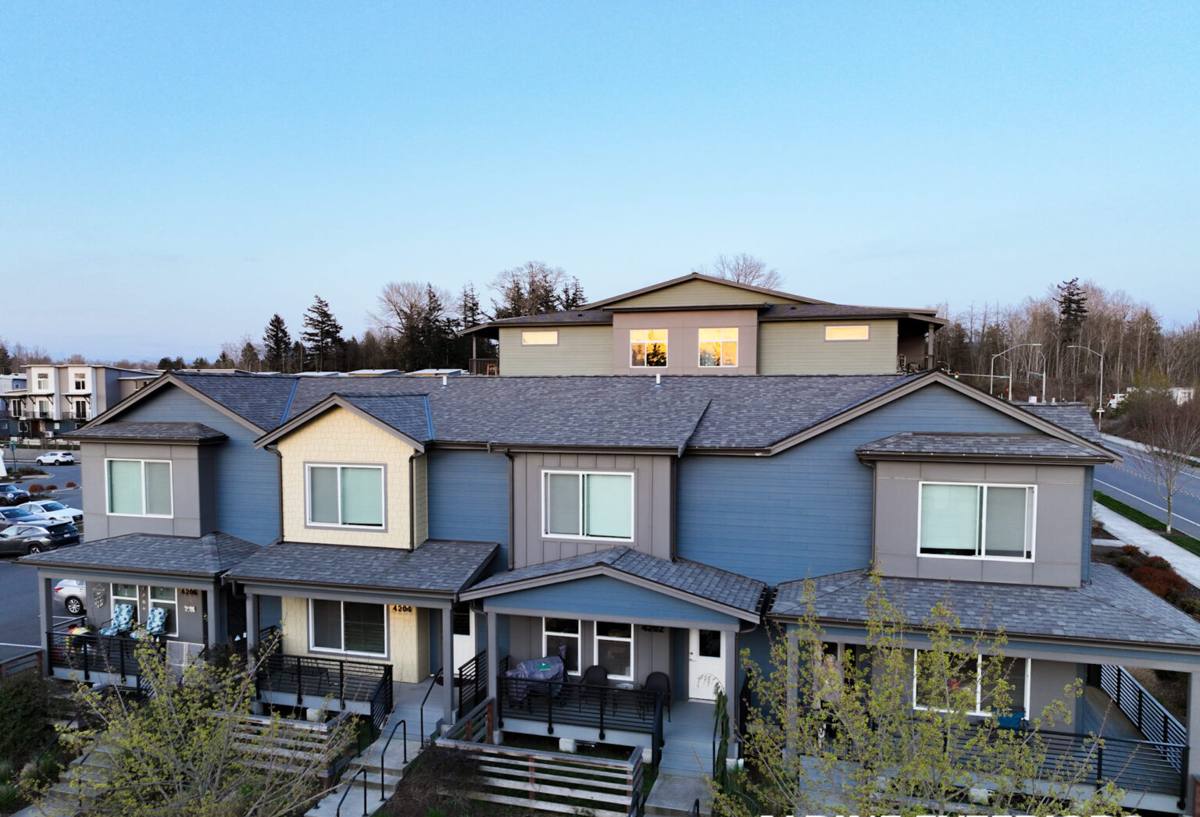
What Salt Air, Driving Rain, and Moss Season Actually Do to Windows
Salt Air
Airborne salt is corrosive to exposed metal hardware — hinges, locks, balance systems, and especially lower-grade aluminum components. Over time it can also dull and pit finishes on frames that aren't rated for coastal exposure. This is slow damage, which is exactly why it gets missed; a window can look fine for years while its hardware is quietly degrading underneath.
Driving Rain
Wind-driven rain doesn't just hit a window straight on — it gets pushed sideways and upward, finding any gap in the flashing, sealant, or trim detail. Most water intrusion problems we find in older Bellingham homes aren't failures of the window itself; they're failures of the flashing and sealing around it, which is an installation issue, not a product issue.
Moss Season
Shaded, north-facing, or heavily treed lots — common throughout this part of Whatcom County — stay damp longer between rain events. That extended moisture window lets moss, algae, and mildew take hold on sills, trim, and any wood surfaces nearby. Trapped moisture from moss and organic buildup is also what accelerates wood rot around window openings if the surrounding trim and sheathing aren't properly protected.
Signs a Bellingham Home Actually Needs Window Replacement
Not every window problem means full replacement — sometimes it's a resealing or hardware fix. Here's what we actually look for during an assessment:
- Soft, discolored, or spongy trim and sills around the window frame
- Fogging or a persistent haze between the panes of a double-pane window (a sign the seal has failed)
- Drafts or cold spots near the window even with it fully closed and locked
- Visible gaps, cracked caulk, or daylight showing around the frame
- Hardware that's stiff, corroded, or won't latch tightly anymore
- Moss, algae, or persistent black staining on the sill or lower trim that keeps coming back after cleaning
- Noticeably higher heating bills compared to similar-sized rooms elsewhere in the house
If you're seeing two or more of these on the same window, it's usually more cost-effective to replace than to keep patching.
What a Correct Window Replacement Job Actually Involves
The window unit itself is maybe half the job. The other half — the part that determines whether the installation holds up through Bellingham's rain seasons — is everything around it:
- Opening inspection. Before anything new goes in, we check the surrounding sheathing and framing for rot or moisture damage from the old window. This is the step that gets skipped by installers in a hurry, and it's the one that causes the most expensive problems down the road if it's missed.
- Proper flashing. Correct flashing sequence — sill pan, jamb flashing, head flashing, all lapped in the right order — is what actually keeps driving rain out. Sealant alone is not a substitute for correct flashing; sealant fails, flashing (installed right) doesn't rely on staying perfectly intact to work.
- Air and water sealing. A continuous seal between the window frame and the rough opening, using materials rated for exterior exposure, not just standard caulk.
- Level, plumb, square setting. A window that's slightly out of square will bind, won't seal evenly, and will wear unevenly at the hardware over time.
- Interior and exterior trim finish work. Finished to shed water away from the opening, not toward it.
Choosing Window Materials for This Climate
There's no single "best" window material — it depends on budget, maintenance appetite, and how exposed the specific opening is to salt air and rain. Here's how the common options actually compare for a Bellingham home:
| Frame Material | Salt Air Performance | Maintenance | Notes |
|---|---|---|---|
| Vinyl | Good — won't corrode | Low | Most cost-effective; quality varies a lot by manufacturer grade |
| Fiberglass | Excellent — very stable, corrosion-resistant | Low | Higher upfront cost, holds up well to temperature swings and moisture |
| Wood (unclad) | Poor without diligent upkeep | High | We're honest about this one — bare wood exposed to this climate needs regular repainting and sealing or it will rot; we don't recommend it for exposed elevations here |
| Wood-clad (vinyl or aluminum exterior) | Good on the exterior face | Moderate | Interior wood warmth with better weather protection outside; cladding quality matters |
| Aluminum | Fair — can pit or corrode in salt air over time unless marine-grade | Low | Better suited to inland installs than exposed coastal-facing walls |
For most Bellingham homes, we steer people toward vinyl or fiberglass for anything facing weather or salt exposure, and we'll say so plainly if a wood option isn't going to hold up on a particular elevation — that's a maintenance and moisture conversation, not a knock on wood windows in general.
Glass Package Matters Too
Double-pane with a low-E coating and argon fill is the practical standard for this region — it manages both our wet winters and the condensation that comes with big indoor-outdoor temperature swings. Triple-pane is available and does perform better thermally, but for most Bellingham homes the added cost doesn't pencil out unless you're dealing with a specific noise or exposure issue.
Our Window Replacement Process
- On-site assessment. We look at each window individually — condition, exposure, sun and wind direction — rather than quoting a flat per-window price sight unseen.
- Honest recommendation. We'll tell you which windows genuinely need replacement now, which can wait, and which just need resealing or hardware service.
- Written estimate. Clear line items for materials, labor, and any trim or sheathing repair we expect to encounter.
- Removal and opening repair. Old units come out, and any rot or moisture damage found underneath gets addressed before the new window goes in — not covered up.
- Installation with proper flashing and sealing. Done to hold up specifically against wind-driven rain, not just to pass a quick visual check.
- Final walkthrough. We check operation, seal, and finish work with you before we call it done.
What Window Replacement Costs — and What Drives the Price
Costs vary a lot based on window count, size, material, and how much (if any) rot repair is needed once we open things up. In general terms, expect a range from a few hundred dollars per window for a straightforward vinyl replacement in good openings, up toward the higher end for larger units, premium materials, or openings that need structural repair.
| Cost Factor | Why It Matters |
|---|---|
| Window size and type (fixed vs. operable, standard vs. specialty shape) | Larger and custom-shaped units cost more in both material and labor |
| Frame material | Vinyl is typically the most affordable; fiberglass and clad-wood cost more upfront |
| Condition of the existing opening | Hidden rot or moisture damage found during removal adds repair cost, but skipping this repair is how future leaks happen |
| Number of windows done at once | Bundling multiple windows in one project usually reduces per-window labor cost |
| Trim and interior finish work | Matching existing interior trim or doing full replacement trim adds time |
We'd rather walk you through real numbers for your specific windows than throw out a generic estimate that doesn't hold up once we're on-site.
Why Hire a Crew That Already Works Bellingham
Window replacement done wrong doesn't usually fail on day one — it fails two or three winters later, when driving rain finds the gap a rushed installer left behind, or when hardware that wasn't rated for salt exposure starts seizing up. A crew that works this specific stretch of Whatcom County regularly has already seen how these failures show up locally, and builds the installation around avoiding them from the start rather than learning on your house.
We're based in Lynden and work Bellingham as a regular part of our service area, so we're not guessing at what this climate does to a window installation over time — we're accounting for it up front, in the flashing detail, the material recommendation, and the honest conversation about what your specific openings actually need.
If your windows are showing wear, drafts, or moisture issues — or you're just planning ahead — we're glad to come take a look. The estimate is free, there's no pressure, and you'll get a straight answer about what your home actually needs. Use the form below to get started.