 Lynden Siding
 Window Installation for Acme Homes Near Lynden
Acme sits in the foothill country east of Lynden, where Whatcom County's weather runs a little wetter and a little wilder than the flatter valley floor. Homes out here take on more direct wind-driven rain off the higher terrain, more standing shade from tree cover, and a longer moss and mildew season than homes closer to town. Windows are one of the first places that shows up. A window that was installed with shortcuts, or one that's simply reached the end of its service life, will tell you about it through fogged glass, drafts, soft trim, or a sash that won't seat right anymore.
We install windows for homeowners in and around Acme as part of our regular Lynden-area service area, not as a special trip. That matters more than it sounds like it should — a crew that already knows how water behaves on this terrain, how deep the flashing needs to lap, and which details actually matter in this climate is going to make fewer assumptions and fewer mistakes.
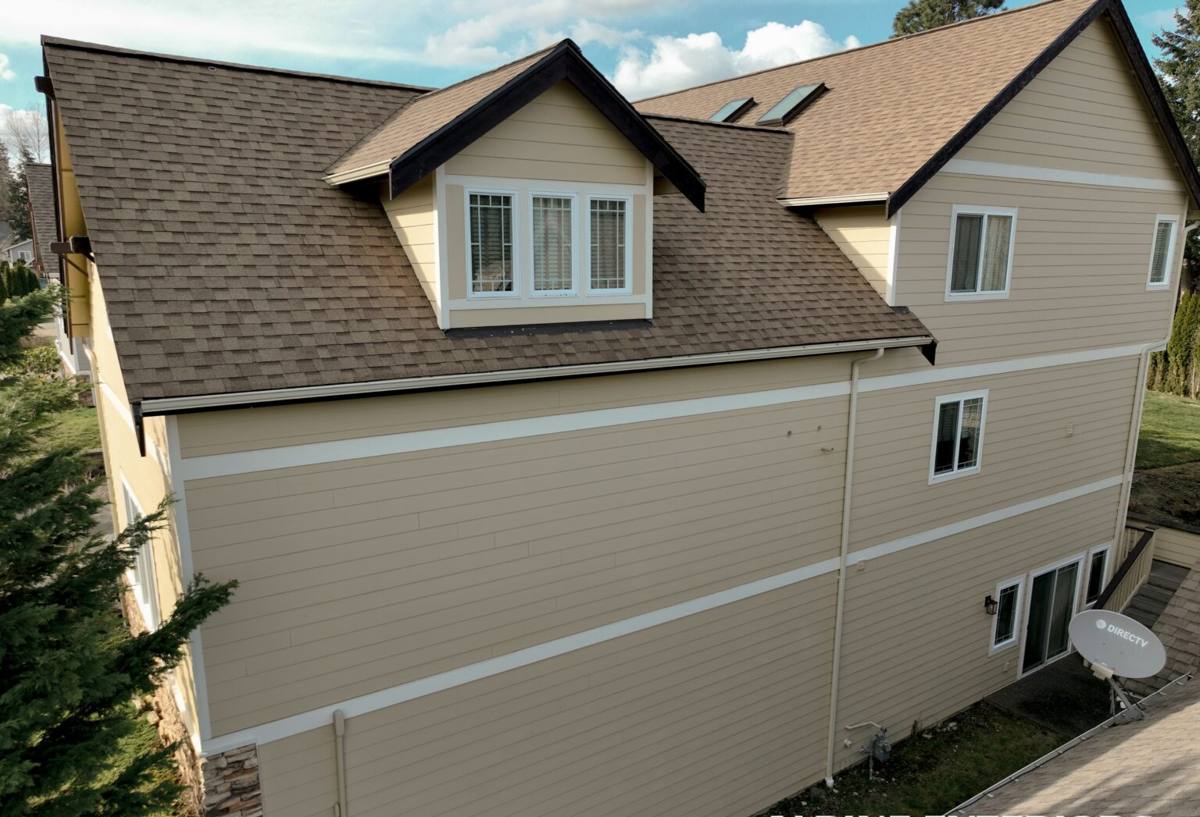
What This Climate Actually Does to Windows
Three things drive window wear in this part of Whatcom County, and they don't act alone — they compound.
Driving rain and wind exposure
Rain that falls straight down is easy to manage. Rain that's pushed sideways by wind — which is common on the exposed and elevated lots around Acme — gets forced against and under window trim, sills, and flashing in ways a lot of older installations were never detailed to handle. Over years, that pressure finds any gap in the flashing sequence.
Salt-influenced air
Whatcom County sits close enough to the Salish Sea that salt-laden air reaches inland on prevailing winds, even at Acme's distance from the water. Salt exposure accelerates corrosion on window hardware — hinges, cranks, locks, and especially unprotected fasteners — and it degrades some sealants faster than inland-only climates would.
Long moss and mildew season
Shaded, damp conditions for much of the year mean moss and mildew get a real foothold on horizontal surfaces — window sills, trim ledges, and anywhere water is allowed to sit instead of shed. Moss holds moisture against wood and paint far longer than open air would, which is exactly the condition that rots sills and swells sashes.
None of this means windows here fail faster by nature. It means the installation details that don't matter much in a mild, dry climate matter a great deal here.
Signs an Acme-Area Home Needs New Windows
- Fogging or a visible haze between the panes of a double- or triple-glazed window — the seal has failed and the insulating gas is gone
- Windows that feel drafty even when fully latched, especially noticeable during wind events
- Wood sills or trim that are soft, spongy, or visibly rotting at the corners
- Sashes that stick, won't stay up on their own, or are difficult to lock
- Visible moss, black staining, or persistent mildew on the sill or lower trim
- Paint that's peeling or bubbling specifically around the window frame, which often points to trapped moisture rather than just old paint
- A noticeable jump in heating costs with no other explanation
- Condensation forming on the inside of the glass regularly through the wet months
What a Correct Window Installation Involves
Replacing a window is not just pulling the old sash and dropping in a new unit. In a climate like this, the flashing and water management around the window is at least as important as the window product itself. Here's the sequence we follow and why each step is there.
1. Remove and inspect
Once the old window is out, we check the rough opening — the sheathing, the framing, and any existing flashing or building wrap — for hidden water damage. This is often the first real look anyone's had at that opening in decades, and it's the point where problems get caught before they're covered back up.
2. Repair before you install
If there's rot in the sill plate or framing, or the building wrap is torn or improperly lapped, that gets addressed before a new window ever goes in. Installing a good window into a bad opening just delays the same failure.
3. Flash for wind-driven rain, not just gravity
Sill pan flashing, properly lapped building wrap, and head flashing that sheds water outward — in that order, shingle-style, so every layer directs water down and out rather than trapping it. Given the wind exposure common around Acme, we don't treat this as optional trim work; it's the difference between a window that stays dry for decades and one that leaks in five years.
4. Set the window level, plumb, and square
A window that's out of square stresses the frame, binds the hardware, and can compromise the seal around the glass over time. This step is unglamorous but it's where a lot of the long-term performance is decided.
5. Insulate the gap correctly
The gap between the window frame and the rough opening gets filled with a proper low-expansion foam or backer rod and sealant — not stuffed with fiberglass, which does little for air sealing and nothing for water.
6. Finish and seal the exterior
Exterior trim, caulking, and any siding tie-in get finished so water sheds away from every seam. Corners and joints get particular attention, since that's where moss and mildew tend to establish first.
Choosing the Right Window for This Climate
Not every window product performs the same way once it's actually exposed to years of coastal-influenced Whatcom County weather. We steer homeowners toward materials and features that hold up rather than ones that just look good on day one.
| Factor | Why it matters here |
|---|---|
| Frame material corrosion resistance | Salt-influenced air accelerates corrosion on unprotected metal hardware and fasteners over time |
| Sill design | A sill that sheds water cleanly resists the moss and standing-moisture problems common under tree cover |
| Glazing (double vs. triple pane) | Better insulating glass reduces interior condensation, which is a common complaint through the wet season |
| Weatherstripping quality | Determines how well the window resists wind-driven rain intrusion at the sash |
| Warranty structure | Look for coverage that includes seal failure, not just glass breakage — seal failure is the more common issue in this climate |
We're happy to walk through specific product lines and their trade-offs during an estimate — the honest answer depends on your home's exposure, budget, and how long you plan to stay in it.
A note on low-maintenance vinyl and fiber-composite options
A lot of Acme-area homeowners ask about lower-maintenance frame materials, and it's a fair question given how much upkeep painted wood trim needs in a climate this wet. Vinyl and fiber-composite frames hold up well against moisture and don't need repainting, which is worth factoring in if you're tired of the maintenance cycle. Wood-frame windows can still be the right call for certain homes, particularly where matching existing trim details matters, but they do require a real maintenance commitment — regular repainting and caulk inspection — to perform well long-term out here.
Why Local Experience Matters for This Job
Window installation looks similar everywhere on the surface, but the details that actually keep water out are climate-specific. A crew that mostly works drier inland regions may not default to sill pan flashing or may underestimate how far wind-driven rain travels under a poorly lapped wrap. A crew that works Acme and the surrounding Lynden area regularly has already made those judgment calls on other homes with similar exposure, similar tree cover, and the same moss season every year.
That local pattern-matching shows up in small decisions — how deep to set the sill pan, how many courses of building wrap to lap over the new flashing, whether a given opening needs extra attention because of its orientation to prevailing wind. None of it is complicated, but it's easy to skip if you don't already expect to need it.
Our Process for Acme Homeowners
- Free on-site estimate — we look at your existing windows, the rough openings where visible, and talk through what's actually going on before recommending anything
- Honest product recommendation — based on your home's exposure and budget, not a one-size-fits-all pitch
- Written scope and timeline — so you know what's being done and roughly how long it'll take before work starts
- Careful removal and opening inspection — catching hidden rot or flashing problems before they get covered again
- Proper flashing and installation — following the sequence above, not a shortcut version of it
- Walkthrough at completion — so you can see the finished work and ask questions before we consider the job done
Practical Checklist Before You Call a Contractor
- Note which windows are worst — draftiest, foggiest, hardest to operate — so you can point them out during the estimate
- Check for soft or discolored trim around each window from the outside, if it's safe to do so
- Ask any contractor you're considering how they handle sill pan flashing specifically — it's a good gauge of whether they're doing climate-appropriate work
- Get the warranty terms in writing, including what's covered for seal failure versus just glass
- Ask whether the crew doing the physical installation is the contractor's own employees or subcontracted out
- Confirm what happens with old window disposal and whether it's included in the quote
Cost Factors to Expect
Every home is different, but the estimate you get should reflect a few real variables rather than a flat per-window number pulled out of thin air.
| Factor | Effect on cost |
|---|---|
| Number of windows and sizes | Larger and non-standard sizes cost more than standard replacement sizes |
| Condition of the rough opening | Hidden rot or framing repair adds cost but should never be skipped to hit a lower number |
| Frame material chosen | Vinyl, fiber-composite, and wood carry different price points and maintenance profiles |
| Glazing package | Triple-pane and upgraded low-E coatings cost more upfront, less to heat and cool over time |
| Access and site conditions | Upper-story or hard-to-access windows can add labor time |
We'd rather give you a real number based on your actual home than a vague range that doesn't hold up once we're on site.
If your windows around Acme are drafty, fogged, or just past their working life, we're glad to take a look. The estimate is free, there's no pressure to commit, and you'll get a straight answer about what your home actually needs — use the form below to get started.