 Lynden Siding
 Asphalt Shingle Roofing Built for Sumas's Border-Valley Climate
Sumas sits out at the far eastern edge of Whatcom County, pressed right up against the Canadian border in the flat farmland of the Sumas Prairie. It's a different setting than the in-town lots and coastal neighborhoods closer to Bellingham Bay, but a Sumas roof still sits inside the same regional weather system that shapes exterior work across this part of the Pacific Northwest. Salt-tinged marine air still reaches this far inland and works quietly on exposed fasteners and flashing metal over the years. Rain rarely just falls here — it gets pushed sideways and forced up under shingle tabs during the wetter stretches of the year. And on shaded, north-facing roof planes, a long moss season settles in and holds on for months at a stretch. None of that rules out asphalt shingle roofing as the right choice for a Sumas home. It just means the roof has to be built for those specific stresses instead of installed like it's going on a sheltered lot somewhere drier.
This page covers what a correct asphalt shingle roof install or replacement looks like for a home in Sumas specifically — what the valley-and-border setting adds on top of the usual Whatcom County weather, what a properly built roof needs to hold up to it, and how our process works when we come out from Lynden to take care of it.
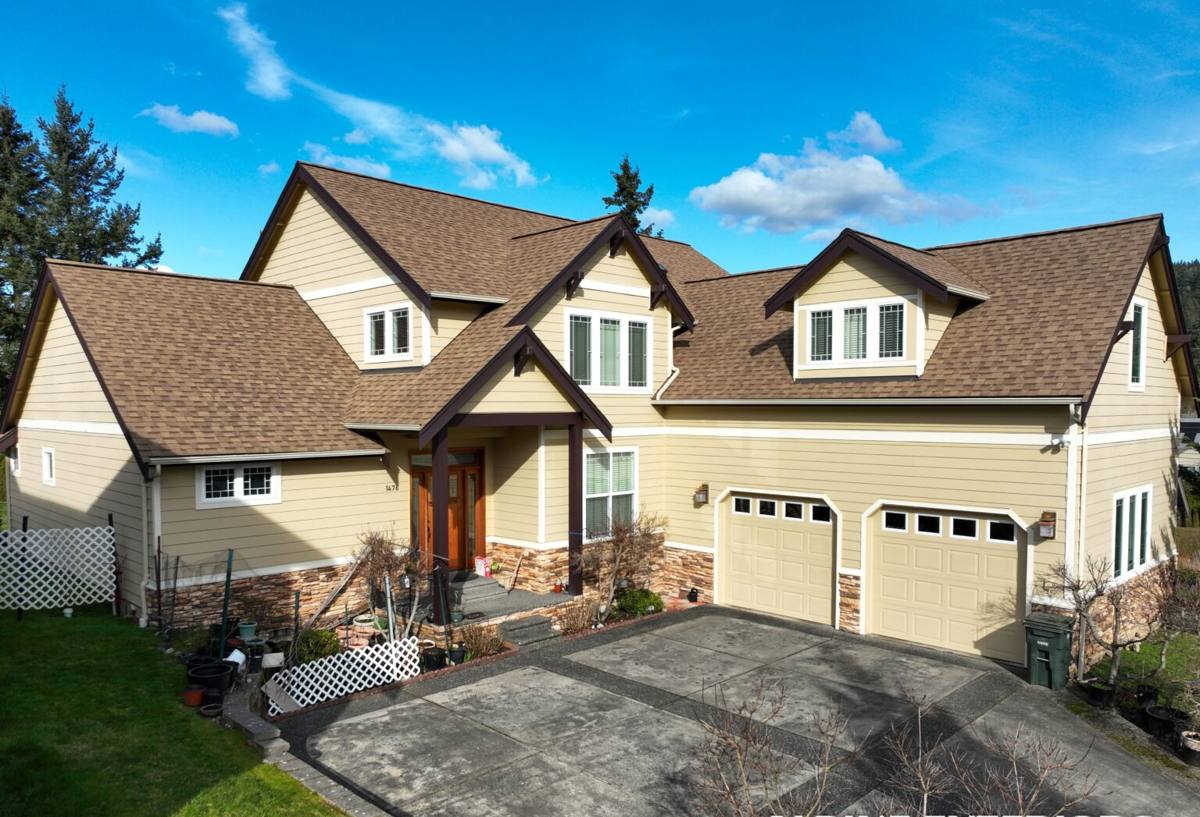
What Sumas's Climate Actually Demands From a Roof
Cold Outflow Wind Near the Border
Because of where it sits, at the head of the valley near the Canadian border, Sumas catches cold outflow wind events more directly than towns further west toward the water. These events push cold, dense air down out of the north with real force behind it, often arriving alongside sharp winter temperature drops. A roof fastened to a bare-minimum wind spec can get tested harder here, in a single outflow event, than a sheltered in-town roof sees in years of ordinary weather.
Wind-Driven Rain Over Flat, Low-Lying Ground
The Sumas Prairie is flat, low-lying agricultural land near the Nooksack River system, and that terrain holds and moves moisture differently than a well-drained hillside lot. When wind pushes rain sideways, it gets driven up under shingle edges and around flashing details rather than running cleanly off a slope. On a flat property, a roof that isn't detailed to handle wind-driven rain — rather than rain that simply falls straight down — tends to show water intrusion first at valleys, penetrations, and low-slope transitions.
A Long Moss and Algae Season
Persistent regional dampness, mild valley temperatures for much of the year, and plenty of shaded or north-facing roof area on most homes add up to a moss and algae season that runs long in this part of the county. It shows up first as dark streaking or green growth on the shadier slopes, and it's not just a cosmetic problem — sustained moss growth holds moisture directly against the shingle surface and decking underneath, which is exactly the condition that shortens a roof's real service life.
Freeze-Thaw Cycling
Sitting further inland and away from the moderating effect of open water, Sumas sees more frequent hard frosts than the coastal parts of Whatcom County. That matters for a roof because moisture that's worked its way into a shingle seam, a nail hole, or a section of aging underlayment expands when it freezes, which accelerates cracking and material failure in a way a purely wet-but-mild coastal climate wouldn't test nearly as hard.
What a Correct Asphalt Shingle Install Involves
A roof replacement isn't just laying new shingles over what's already there. Done correctly, it addresses the roof as a full system, from the decking up.
Tear-Off and Deck Inspection
A full tear-off to the decking is the only reliable way to find hidden moisture damage, soft spots, or rot that's developed under old shingles — often invisible from inside the attic until it's well advanced. A layover install skips this step entirely and simply buries whatever problems already exist under a fresh layer of shingles.
Underlayment and Ice-and-Water Shield
Synthetic or self-adhered underlayment gives the shingle field a real water barrier, which matters directly in a climate where wind-driven rain gets forced under shingle tabs instead of running straight off. Ice-and-water shield at eaves, valleys, and other vulnerable transitions adds a second layer of protection at the spots where water is most likely to find its way in, and it's worth doing thoroughly given how much more freeze-thaw cycling Sumas sees than coastal Whatcom County.
Flashing at Valleys, Chimneys, and Walls
Most roof leaks in this region start at flashing details, not out in the open field of the roof. Valleys where two planes meet, chimney and skylight penetrations, and wall-to-roof intersections all need flashing that's properly lapped, sealed, and tied into the underlayment — not caulked over as an afterthought once the shingles are down.
Fastening Pattern and Wind Rating
Correct nail placement and count, following manufacturer specification rather than a shortcut pattern, is what keeps shingles from lifting when an outflow wind event comes through. This matters more for exposed or elevated Sumas properties out on open farmland than it would for a sheltered lot tucked between other buildings in town.
Ventilation
Balanced intake and exhaust ventilation keeps the underside of the roof deck dry, which extends shingle life and reduces the moisture that feeds moss growth from below as well as from above. A roof that looks fine from the ground can still be shortening its own lifespan through poor attic airflow that nobody's checked in years.
Comparing Shingle Options for a Sumas Roof
| Shingle Type | Typical Lifespan | Fit for Sumas Conditions |
|---|---|---|
| 3-Tab Shingles | 15-20 years | Lower upfront cost, but a thinner profile and lower wind rating make it a harder match for open, wind-exposed farmland lots |
| Architectural (Laminated) Shingles | 25-30 years | Heavier and better wind-rated, the practical default for most Sumas homes given outflow wind exposure |
| Premium/Impact-Resistant Shingles | 30+ years | Added algae resistance and impact durability worth considering on shaded roof planes or fully exposed properties |
For most homes in this area, architectural shingles with algae-resistant granules strike the right balance between upfront cost and long-term performance given the wind and moss factors specific to Sumas. Whether a premium tier is worth the added cost usually comes down to how exposed the lot is and how long the roof stays shaded through the year.
Cost Factors Worth Understanding
Bids for what looks like the same roof can vary by thousands of dollars, and the gap usually comes down to real differences in scope rather than one contractor simply charging more for identical work.
| Factor | What It Affects |
|---|---|
| Tear-off vs. layover | Whether hidden deck damage gets found and fixed before new shingles go on |
| Underlayment and ice-and-water shield grade | How well the roof resists wind-driven rain and freeze-thaw damage |
| Shingle grade and wind rating | Expected lifespan and resistance to lifting during outflow wind events |
| Flashing scope | How thoroughly valleys, chimneys, and wall intersections are addressed |
| Ventilation work | Long-term moisture control and shingle longevity |
| Site access | Rural and agricultural Sumas properties can have longer driveways or wider staging needs than an in-town lot |
A detailed written estimate that itemizes each of these is worth far more than a single lump-sum number, and any contractor should be willing to walk through exactly what's included before you compare it against another bid.
How Our Process Works
We keep the process straightforward, because a job this size deserves a homeowner who knows what's happening at every stage.
- In-person inspection: We walk the roof and attic in person, not from a photo or a drive-by estimate, and document what we actually find.
- Written estimate: You get a clear, itemized bid covering tear-off, underlayment, flashing, ventilation, material selection, and cleanup — no vague single-line pricing.
- Scheduling around weather and access: We build reasonable flexibility into the timeline, since wet-season delays and rural site access are both a normal part of working a property out in Sumas.
- Tear-off and deck repair: Old roofing comes off completely, and any deck damage found underneath is addressed before anything new goes down.
- Underlayment, flashing, and shingle installation: Each layer goes on to manufacturer specification, with extra attention at valleys, penetrations, and wall transitions.
- Final walkthrough and cleanup: We review the finished roof with you and do a full site and magnetic nail sweep before calling the job done.
Why Hiring a Crew That Already Works in Sumas Matters
A crew that regularly works roofs out toward Sumas has already seen how border-area outflow wind tests a fastening pattern, how flat farmland holds moisture longer than a well-drained in-town lot, and which roof orientations hold moss through the longest stretch of the year. That's practical knowledge that shows up in small decisions throughout a job — decisions a crew unfamiliar with this specific stretch of Whatcom County might not think to make at all.
It also matters for accountability once the job is finished. A workmanship warranty is only as good as the company standing behind it, and a contractor with an established, ongoing presence in the Lynden and Sumas area is one you can actually reach two or three years down the road if a question comes up.
A Practical Checklist Before You Choose a Roofer
- Do they perform a full tear-off with deck inspection, not just a layover?
- Does the estimate specify underlayment type, ice-and-water shield placement, and shingle product — not just "new shingles"?
- Is flashing work at valleys, chimneys, and walls explicitly called out in the bid?
- Do they carry current WA contractor licensing, liability insurance, and workers' compensation?
- Can they point to recent, real work completed in or near Sumas, not just closer to town?
- Does the bid separate manufacturer material warranty from their own workmanship warranty?
Signs Your Sumas Roof May Need Attention
Asphalt shingle roofs don't usually fail all at once. They give warning signs first, and catching them early is often the difference between a repair and a full replacement.
- Granules collecting in gutters, which signals shingles wearing thinner than they should
- Curling, cracking, or lifted shingle edges, especially on wind-exposed slopes facing open farmland
- Dark streaking or moss buildup on shaded or north-facing roof planes
- Water staining on interior ceilings or in the attic near valleys or penetrations
- Visible sagging along the roofline, which can point to deck-level moisture damage
If you're seeing any of these, it's worth having the roof looked at before the next outflow wind event or heavy rain rather than waiting for a leak to force the decision.
If you'd like an honest, no-pressure look at your Sumas home's roof and a written estimate to compare against anything else you've received, we're glad to make the drive out. Use the form below to request a free estimate.