 Lynden Siding
 Blaine's Coastal Climate Asks More of a Roof
Blaine sits right where Whatcom County meets the water, and that location comes with a roofing problem most inland homes never deal with: salt-laden air moving off the water almost year-round. Combine that with the Pacific Northwest's long wet season and the deep shade many Blaine lots get from mature evergreens, and you have the three things that age a roof faster than anything else — salt, standing moisture, and moss. None of these show up as a dramatic failure overnight. They work slowly, underneath the surface, which is exactly why so many roof problems in this area get discovered later than they should.
A roof repair in Blaine isn't the same job as a roof repair in a dry inland climate. The materials, the fasteners, and the sequence of work all need to account for near-constant moisture exposure and airborne salt. Get that wrong and a "repair" turns into a callback within a year or two.
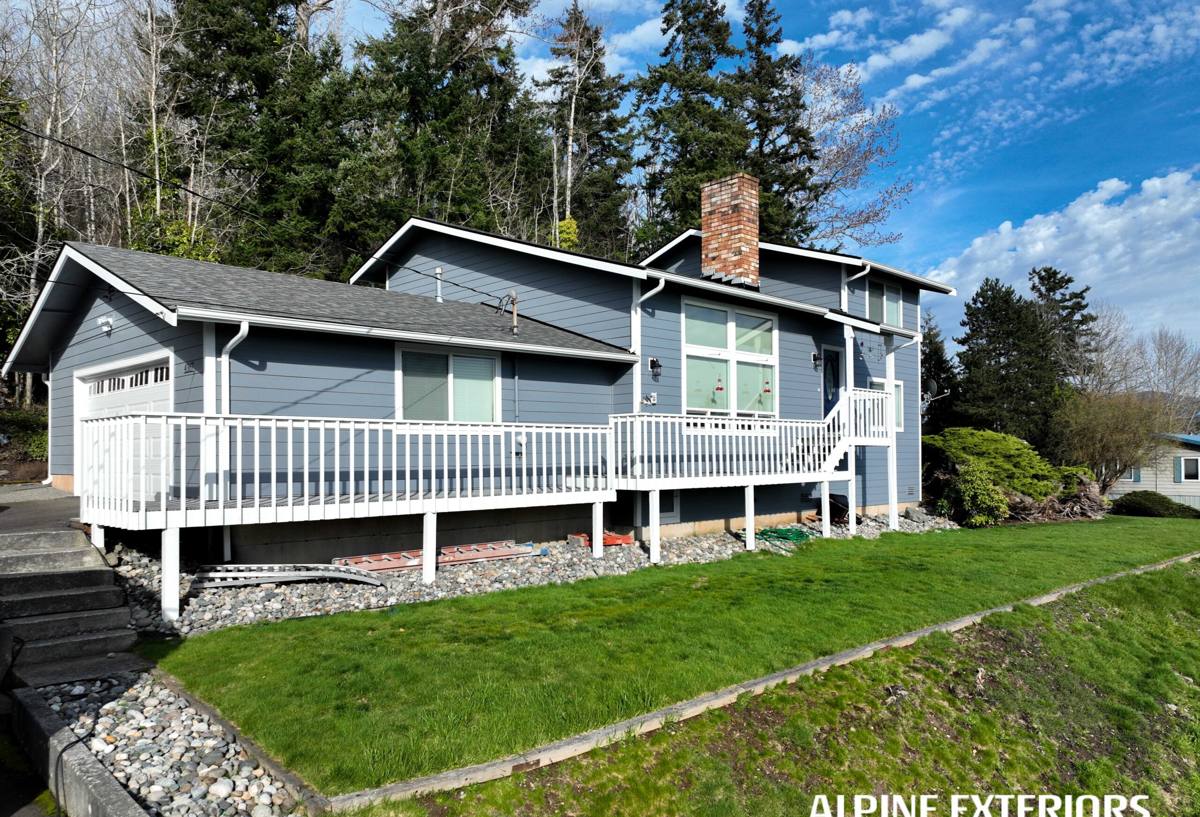
Signs a Blaine Roof Needs Attention Now
Most roofs give warning signs well before there's an active leak inside the house. In this climate, the signs tend to be quieter and easier to miss from the ground:
- Dark streaking or thick moss growth concentrated on the north-facing or shaded slopes
- Granules collecting in gutters or at downspout outlets
- Shingles that look cupped, curled at the edges, or lifted along a seam
- Rust staining below metal flashing, vent boots, or exposed fasteners
- Soft or spongy decking felt underfoot near valleys or chimneys
- Daylight visible through the attic at roof penetrations or ridge lines
- Water stains on interior ceilings that appear only during heavy, wind-driven rain
Any one of these on its own might be minor. Two or three together, especially near a valley, chimney, or where two roof planes meet, usually means water has already found a path and the repair needs to address the cause, not just the symptom.
What Salt Air and Moss Actually Do to a Roof
Salt Air and Metal Components
Every roof depends on small metal parts working correctly — flashing, drip edge, valley metal, vent boots, and the fasteners holding everything down. Standard galvanized coatings hold up fine in a lot of the country, but in a location with regular salt-air exposure, that coating breaks down faster, and once it does, rust takes over. Rusted flashing doesn't fail all at once; it thins out at the edges and around fastener holes until water starts working past it during hard, wind-driven rain. This is why the metal and fastener choice matters more here than it would fifteen miles inland.
Moss, Moisture, and Roof Rot
Moss isn't just a cosmetic issue. It holds moisture directly against the roofing surface long after the rain has stopped, which keeps shingles wet far longer than they were designed for and accelerates granule loss underneath the moss mat. On older roofs, moss rhizoids can work into shingle seams and lift tabs slightly, giving wind-driven rain a place to get underneath. Left long enough, the plywood decking beneath a heavy moss mat can start to soften from constant moisture, which turns a shingle repair into a decking repair.
What a Correct Repair Actually Involves
A proper roof repair in this environment is more than swapping out a few damaged shingles. Done right, it includes:
- A full inspection of the surrounding roof area, not just the spot with visible damage
- Checking the decking underneath for soft spots or rot before new material goes down
- Matching shingle type, weight, and where possible color, so the repair doesn't stand out
- Replacing compromised flashing or fasteners with materials suited to salt-air exposure
- Clearing and treating moss rather than just repairing over it
- Confirming attic ventilation isn't contributing to trapped moisture at the repair site
Skipping any of these steps is how a patch job turns into a repeat visit. A shingle swap over rotted decking, or new flashing installed with the same fasteners that just failed, doesn't actually solve the problem — it just delays the next repair.
Our Repair Process
- On-site inspection. We get on the roof (or use a camera where access is limited) and look at the full slope, not just the reported problem area.
- Honest diagnosis. We tell you what's actually going on — including if the underlying issue is bigger than a repair can reasonably fix.
- Written scope and estimate. You get a clear explanation of what needs to happen and why, before any work starts.
- The repair itself. Matched materials, corrosion-resistant flashing and fasteners where exposure calls for it, and decking replaced if it's compromised.
- Cleanup and moss treatment. Debris removed, gutters cleared if they're part of the problem, and moss addressed at the source.
- Follow-up. We stand behind the work and want to know if anything doesn't hold up as expected.
Repair or Replace? A Straight Comparison
Not every roof problem calls for a full replacement, and not every roof problem is fixable with a patch. Here's how we generally think about it:
| Situation | Repair usually makes sense | Replacement usually makes sense |
|---|---|---|
| Age of roofing material | Roof is under 15-20 years old with isolated damage | Roof is near or past its expected lifespan roof-wide |
| Extent of damage | Damage limited to one slope, valley, or penetration | Granule loss, curling, or moss cover across most slopes |
| Decking condition | Decking is solid where damage occurred | Widespread soft decking found in multiple areas |
| Leak history | First or isolated leak with a clear, single cause | Repeated leaks in different spots over time |
| Moss/algae staining | Localized to shaded areas, roof otherwise sound | Heavy, roof-wide moss with granule loss underneath |
What Affects the Cost of a Roof Repair
Repair costs vary based on a handful of practical factors. There's no honest way to give a firm number without seeing the roof, but here's what drives the price up or down:
| Factor | Why it matters |
|---|---|
| Size and location of damage | A small isolated repair costs far less than damage spread across a slope or near a valley |
| Decking condition | Rotted plywood found under the damaged shingles adds material and labor to replace it |
| Roof pitch and access | Steeper roofs and limited access (tight lot lines, tall trees) take more time and safety setup |
| Material match | Older or discontinued shingle lines can be harder to match, sometimes requiring a larger repair area for a clean blend |
| Flashing and fastener grade | Corrosion-resistant flashing and fasteners cost more upfront but hold up far longer in salt air |
| Moss removal scope | Light moss is a quick treatment; heavy, established moss takes more time to clear safely without damaging shingles |
Why a Crew That Already Works in Blaine Matters
Roofing crews that only pass through occasionally tend to treat every roof the same, using whatever materials and methods work fine in a drier, inland climate. A crew that regularly works Blaine and the surrounding Whatcom County coastline already knows which flashing grades hold up to the salt air, which slopes on a typical local roof collect moss fastest, and how quickly a small leak can turn into decking damage in a climate that rarely gives a roof a chance to fully dry out. That knowledge shows up in the details — the fastener choice, the flashing overlap, where ventilation gets checked — not in anything a homeowner would notice until years later when the repair is still holding up.
There's also a practical side to it: a local crew can usually get to a roof faster when weather has caused sudden damage, and stands behind the work because they're not disappearing after one job in the area.
Homeowner Maintenance Checklist
Between professional inspections, a few simple habits go a long way toward catching problems early in this climate:
- Clear gutters and downspouts at least twice a year, more often under overhanging trees
- Look for moss buildup on shaded slopes each spring and fall
- Check the attic after a heavy storm for any daylight, staining, or damp insulation
- Trim back branches that keep a roof section shaded and damp longer than the rest
- Have the roof looked at after any major windstorm, even if nothing looks obviously wrong from the ground
- Don't pressure-wash a roof to remove moss — it can force water under shingles and strip granules
If you're seeing moss buildup, rust staining, or a leak that only shows up during hard rain, it's worth getting a second pair of eyes on it before it becomes a bigger job. We're happy to take a look and give you a straight, no-pressure estimate — use the form below to get started.