 Lynden Siding
 Why Sumas Roofs Take More Punishment Than Most
Sumas sits close to the Nooksack River lowlands in Whatcom County, right up against the kind of weather pattern that doesn't do a roof any favors. Winters bring long stretches of driving rain that comes in sideways more often than straight down, spring and fall carry heavy dew and fog that never quite burns off some days, and the moss season here isn't a few weeks — it's most of the year. Add in the salt-laden air that pushes inland from the Puget Sound and Strait of Georgia, and you've got a combination that ages roofing material faster than it would in a drier climate. A roof that might last twenty-five years in eastern Washington can start showing real wear well before that out here if it wasn't installed with this specific climate in mind.
This isn't a scare tactic — it's just what the material has to deal with. Constant moisture cycling, wind-driven rain that tests every seam and flashing point, and organic growth that holds water against the surface. A new roof installation in this area needs to be built for that reality from the decking up, not just dropped in the same way it would be anywhere else in the state.
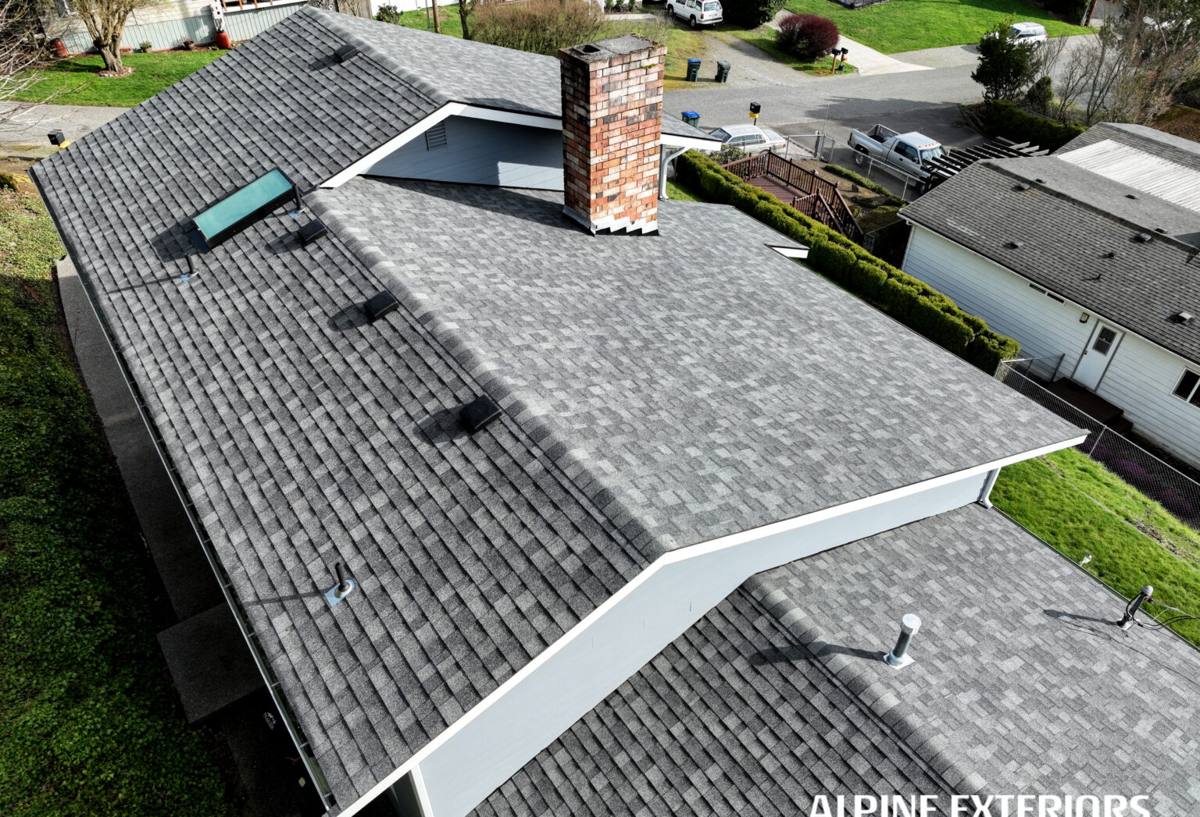
What a Correct New Roof Installation Actually Involves
A lot of roofing problems homeowners deal with a few years down the road trace back to shortcuts taken during the original install — not the shingle brand, but the layers underneath that nobody sees once the job is done. Here's what should happen on every full tear-off and replacement.
Full Tear-Off and Deck Inspection
We don't install new roofing over old material. A full tear-off lets us see the actual roof deck — the plywood or OSB sheathing underneath — and check it for soft spots, delamination, or rot, which is common on older homes in this area where a roof has been holding moisture longer than it should have. Any damaged decking gets replaced before anything else goes down. Skipping this step is one of the most common ways a new roof fails early.
Ice and Water Shield Where It Matters
Along eaves, valleys, and around any roof penetration — chimneys, vents, skylights — we install a self-adhering ice and water barrier. In a climate with as much sustained rainfall as Whatcom County gets, these are the spots most likely to see water back up under the shingles during a heavy storm or a period of freeze-thaw. This layer is cheap insurance against the kind of leak that shows up as a stain on a ceiling months later.
Underlayment Across the Whole Roof
A synthetic underlayment goes down over the rest of the deck as a second line of defense. It's not optional in this region — it's the layer that protects the structure if wind ever lifts a shingle edge or drives rain up under a course during a storm.
Flashing Done Right
Flashing around chimneys, walls, skylights, and roof-to-wall transitions is where the majority of roof leaks actually start, not out in the open field of shingles. We replace flashing rather than reuse old pieces, and we make sure step flashing and counter-flashing are layered correctly so water sheds outward instead of finding a gap to sit in.
Ventilation Built Into the System
A roof needs to breathe. Balanced intake and exhaust ventilation keeps the attic space at a reasonable temperature and moisture level, which matters as much in our damp winters as it does in summer heat.
Choosing a Roofing Material for Sumas Weather
There isn't one "best" roofing material for every home — it depends on budget, the home's structure, and how much long-term maintenance a homeowner wants to take on. Here's an honest comparison of the main options we install, with this climate specifically in mind.
| Material | Typical Lifespan Here | Moisture & Moss Behavior | Relative Cost |
|---|---|---|---|
| Architectural asphalt shingle | 20–30 years | Good when properly ventilated; benefits from periodic moss treatment | $$ |
| 3-tab asphalt shingle | 15–20 years | More prone to curling and moss buildup over time | $ |
| Standing seam metal | 40–50+ years | Sheds water and moss growth very well; smooth surface resists organic buildup | $$$ |
| Composite/synthetic shingle | 30–50 years | Strong moisture resistance, holds up well to freeze-thaw cycling | $$$ |
Asphalt shingles remain the most common choice because they balance upfront cost with solid performance when the installation underneath is done correctly. Metal roofing costs more initially but sheds this region's near-constant moisture better than almost anything else, and it doesn't give moss the rough texture it needs to take hold. We'll walk through the real trade-offs for your specific roof rather than pushing whatever has the highest margin.
Ventilation and Moisture Control: The Part Nobody Sees
Homeowners tend to focus on the shingle color and warranty length, but the attic ventilation system underneath does more to determine how long a roof lasts here than the shingle brand does. Trapped moist air condenses on the underside of the deck, and over a few seasons that can rot sheathing from the inside out — a problem that has nothing to do with the roof surface looking fine from the ground. Proper intake at the eaves paired with exhaust at the ridge keeps air moving continuously, which matters more in a climate where the outside air itself is often carrying moisture.
Moss and Algae: Managing the Long Season
Whatcom County's moss season isn't really a season — shaded, north-facing slopes can stay damp enough to support growth nearly year-round. Moss holds water against the roofing material, and over time that moisture retention breaks down shingles faster than sun and rain exposure alone would. A correct installation reduces how aggressively moss can take hold: proper flashing and drainage keep water moving off the roof instead of pooling, and in some cases zinc or copper strips near the ridge can help suppress growth over the life of the roof. No roofing material is moss-proof, but the right install and a bit of routine upkeep go a long way.
Our Installation Process
- On-site assessment — we inspect the existing roof, attic ventilation, and any problem areas before quoting anything.
- Written estimate — a clear scope of work and material options, no vague line items.
- Tear-off and deck inspection — old material removed, deck checked and repaired as needed.
- Underlayment and flashing — ice and water shield, synthetic underlayment, and new flashing installed.
- Material installation — shingles, metal, or composite roofing installed to manufacturer spec.
- Ventilation check — intake and exhaust confirmed balanced for the attic space.
- Final walkthrough and cleanup — job site cleared, nail sweep completed, and the finished roof reviewed with the homeowner.
Signs a Sumas Home Needs a New Roof, Not a Repair
Not every roofing issue calls for full replacement. But a few signs usually mean patching won't hold for long in this climate:
- Granule loss heavy enough that shingles look bare or patchy in spots
- Shingles that are curling, cupping, or cracking across multiple areas of the roof
- Daylight visible through the roof deck from inside the attic
- Soft or spongy spots when walking the roof, a sign of deck rot underneath
- Recurring leaks in the same area even after past repairs
- Heavy, persistent moss growth that's returned despite cleaning
- The roof is at or past the manufacturer's expected lifespan for its material
If a roof is showing just one or two of these, a repair might still make sense. Several at once usually means the roofing system as a whole has reached the end of its useful life.
Why Hire a Crew That Already Works in Sumas
Roofing crews who mostly work drier climates or different building codes don't always account for the moisture load this part of Whatcom County deals with. A crew that regularly installs roofs in and around Lynden and Sumas knows which details actually matter here — where ice and water shield needs to extend further, how much ventilation an attic in this climate really needs, and which flashing details tend to fail first under sustained wind-driven rain. That local familiarity shows up in fewer callbacks and a roof that performs the way it's supposed to for its full expected lifespan.
Let's Talk About Your Roof
If your Sumas-area home needs a new roof or you're not sure whether it's time yet, we're happy to take a look and give you a straightforward assessment. Fill out the form below for a free, no-pressure estimate — no obligation, just an honest read on where your roof stands.