 Lynden Siding
 Roofing Built for Abbotsford's Coastal Climate
Abbotsford sits close enough to the Salish Sea and the Fraser Valley lowlands that its roofs deal with a different combination of stresses than homes further inland. Salt-laden air moving up the valley slowly attacks exposed metal fasteners, flashing, and vents. Driving rain off the coast pushes water sideways under poorly lapped shingles and around chimneys. And the region's long, damp shoulder seasons give moss and algae months at a time to take hold on north-facing slopes that never fully dry out. None of this is exotic — it's just steady, cumulative wear that shortens the life of a roof that wasn't installed with these conditions in mind.
A roof that looks fine from the ground can already be failing underneath if the underlayment, flashing details, and ventilation weren't matched to this climate. Our approach to new roof installation in Abbotsford starts with treating moss, salt exposure, and wind-driven rain as design constraints, not afterthoughts.
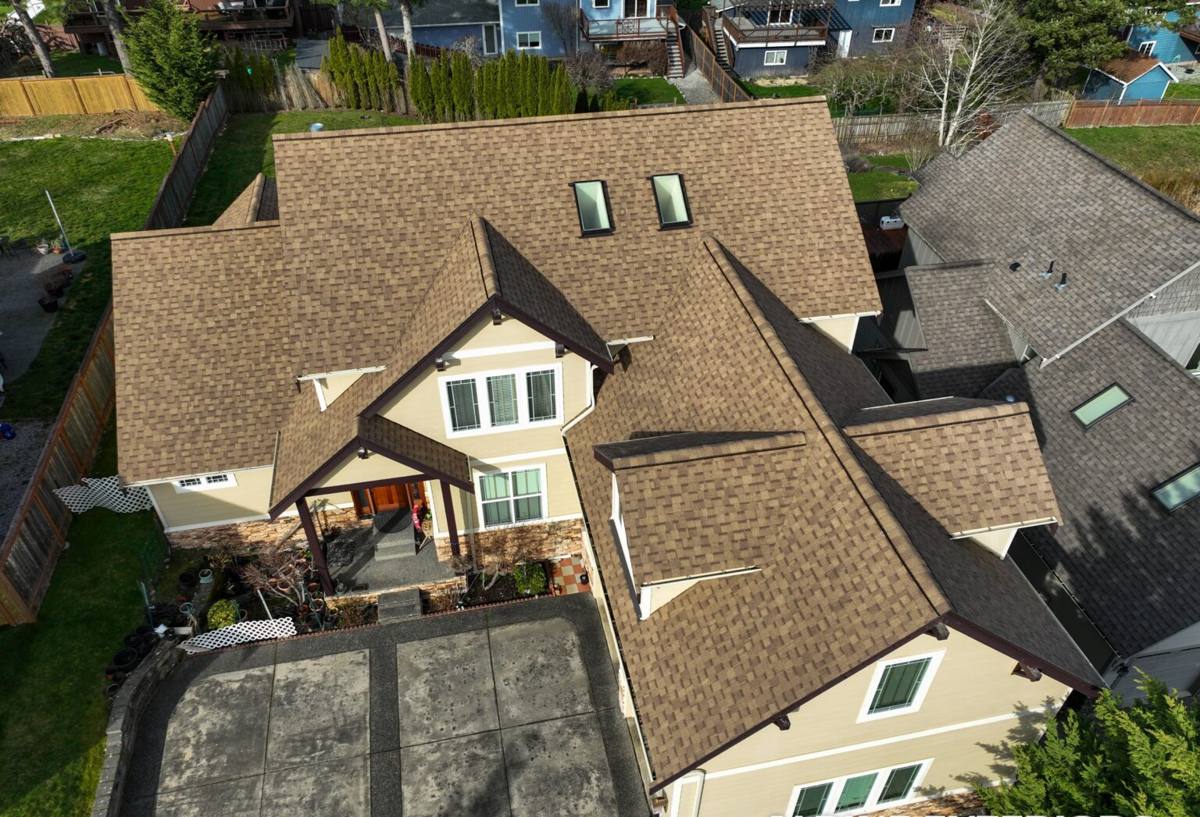
What Abbotsford Homes Actually Need From a New Roof
Moss and Algae Resistance
Shaded, north- and east-facing roof planes in this area rarely get enough direct sun to dry out between rain events. That moisture retention is exactly what moss and algae need to establish. A new roof system here should include algae-resistant shingles where budget allows, along with roofing details — proper overhangs, clean valleys, unobstructed drainage — that don't give moss extra places to collect and hold water against the deck.
Salt Air and Metal Components
Fasteners, flashing, drip edge, and vent housings are the first things salt air degrades. Cheap or mismatched metal on a roof near the coast can start showing corrosion within a few years, well before the shingles themselves are due for replacement. We spec corrosion-resistant flashing and fasteners as standard, not an upgrade, on jobs in this area.
Wind-Driven Rain Protection
Ordinary rain falls straight down and sheds off a roof easily. Driving rain — pushed sideways by wind off open water or valley funneling — gets forced up under shingle tabs, around vent boots, and into any gap in a valley or chimney flashing that a fair-weather installation might get away with. This is where underlayment quality and flashing technique matter more than shingle brand.
Ventilation That Keeps Up With Humidity
Whatcom County and the border stretch into the Fraser Valley share a humid, marine-influenced climate. A roof deck that can't breathe traps moisture from both the outside (rain, condensation) and the inside (household humidity venting upward). Balanced intake and exhaust ventilation isn't optional here — it's what keeps a new roof from developing hidden rot and mold from the underside, where you won't see it until it's expensive.
What a Correct Installation Involves
A new roof is only as good as the parts nobody sees once it's finished. Here's what we treat as non-negotiable on every installation, in this area or anywhere else:
- Full tear-off to the deck — never a layover — so we can inspect and repair the sheathing underneath
- Ice-and-water shield or high-performance synthetic underlayment at eaves, valleys, and around every penetration
- Corrosion-resistant metal flashing at all valleys, walls, chimneys, and skylights
- New pipe boots and vent flashing — reused boots are a common source of early leaks
- Balanced ridge and soffit ventilation sized to the attic, not just "what was there before"
- Proper nailing pattern and placement per manufacturer specification, not just per crew habit
- A final walk-through inspection before we consider the job done
Skipping any one of these doesn't usually cause an immediate problem — it causes a problem in year four or five, after the workmanship warranty window most homeowners assume they still have has already closed.
Our Process, Start to Finish
1. On-Site Assessment
We inspect the existing roof, deck condition, ventilation setup, and any trouble spots — valleys, chimney flashing, moss buildup — before quoting anything. This is also when we talk through material options that fit the home and the budget.
2. Clear, Written Estimate
You get a written scope and price before any work starts — what's included, what materials, and what happens if we find deck damage once tear-off begins. No surprise change orders for things we could have flagged up front.
3. Tear-Off and Deck Inspection
We strip the old roof down to the deck and inspect every sheet of sheathing. Soft or water-damaged sections get replaced before anything new goes down — installing new roofing over a compromised deck just hides the problem.
4. Underlayment, Flashing, and Ventilation Installed to Spec
This is where climate-appropriate details actually get built in — proper underlayment coverage, new flashing at every transition, and ventilation sized correctly for the attic.
5. Roofing Material Installation
Shingles, metal, or other chosen material go down following manufacturer specifications for nailing pattern, exposure, and fastening — the details that determine whether a wind or wind-driven-rain warranty actually applies later.
6. Cleanup and Final Walk-Through
We magnet-sweep the yard for stray nails, clean up debris, and walk the finished roof with you so you know what was done and what to watch for going forward.
Comparing Common Roofing Material Choices for This Area
| Material | How It Handles Moss/Moisture | Salt Air Durability | Typical Lifespan |
|---|---|---|---|
| Asphalt architectural shingles | Good with algae-resistant granules; needs clean ventilation and drainage | Good, if metal components are corrosion-resistant | 25-30 years |
| Standing seam metal | Excellent — sheds moisture fast, little surface for moss to grip | Very good with coated/finished panels; fasteners still need attention | 40-60 years |
| Cedar shake | Higher maintenance — needs regular treatment to resist moss in shaded areas | Fair; more upkeep near salt air | 20-30 years with upkeep |
| Synthetic/composite shingles | Good moisture resistance, often algae-resistant by design | Good | 30-50 years |
There's no single "right" answer here — it depends on the home's roof pitch, how much shade it gets, and what the homeowner wants to maintain over time. Part of our job during the assessment is being honest about the upkeep each option actually requires in this climate, not just what looks good on a spec sheet.
Signs an Abbotsford Roof May Need Replacing, Not Repairing
- Granule loss heavy enough that shingles look patchy or bald in sun-exposed areas
- Persistent moss growth that returns within a season or two of cleaning
- Soft spots or sagging when walked on, suggesting deck damage underneath
- Rusted or lifting flashing around chimneys, valleys, or vents
- Staining or moisture marks on interior ceilings, especially after wind-driven rain
- Shingles curling, cracking, or missing tabs in multiple areas rather than just one spot
A repair can extend a roof's life when the damage is isolated. But once several of these show up together, patching individual spots usually costs more over a few years than one properly done replacement — and it doesn't fix the underlying ventilation or flashing issues driving the wear.
What Roof Replacement Typically Costs — And What Moves the Number
Roofing costs vary a lot based on roof size, pitch, material, and how much deck repair is needed once tear-off starts, so we won't quote a number here that wouldn't hold up for your specific home. What we can tell you is what actually drives the price:
- Total roof area and number of stories (steep or multi-story roofs cost more to work safely)
- Material choice — asphalt, metal, and composite each carry different material and labor costs
- Number and complexity of valleys, dormers, chimneys, and skylights
- Condition of the existing deck (found only after tear-off begins)
- Ventilation upgrades needed to bring an older attic up to a workable standard
We'd rather walk your roof and give you a real number than guess at one online.
Why It Matters That We Already Work Near the Border
Abbotsford sits just across the line from Whatcom County, and the climate doesn't stop at the border — the same salt air, valley wind, and moss pressure that affect Lynden roofs affect roofs a few miles north. A crew that's used to working this specific stretch of coastal Pacific Northwest climate isn't guessing at underlayment coverage or flashing details based on a manual written for a drier region. We've built our process around what actually holds up here, and we bring that same standard across the border rather than adjusting it down.
Working in both Whatcom County and the Fraser Valley border area also means we're familiar with the permitting and inspection expectations on both sides, and we can schedule crews efficiently without treating an Abbotsford job as an out-of-territory exception.
Get a Straightforward Estimate
If your roof is showing moss, aging flashing, or interior signs of water intrusion, it's worth having someone look at it before those issues get more expensive to fix. We offer free, no-pressure estimates for new roof installation in Abbotsford — use the form below to get a straight answer on condition, options, and cost.