 Lynden Siding
 Siding Built for Maple Falls, Not Just Sold Here
Maple Falls sits in the rural, tree-covered stretch of Whatcom County along the route toward Mount Baker, and homes out here take a different kind of weather beating than a house closer to downtown Lynden. The tree cover holds moisture against exterior walls longer after a storm passes, driving rain that rolls in off the Sound still arrives with real force this far inland, and the salt-tinged marine air common to Whatcom County doesn't stop at the city limits. Add a moss season that runs a good half of the year in shaded, damp spots, and you get a climate that is genuinely hard on exterior cladding, especially anything that depends on paint film or caulk to keep water out.
We install siding across Whatcom County, and Maple Falls comes with its own set of considerations: more shade, more standing moisture on north-facing walls, and often a longer drive for a warranty callback if you hire a contractor who only works close to town. This page covers what a correct siding installation looks like for a Maple Falls home, how our process works, and why we install exclusively James Hardie fiber cement siding rather than the vinyl, engineered wood, or cedar products still common on older homes in the area.
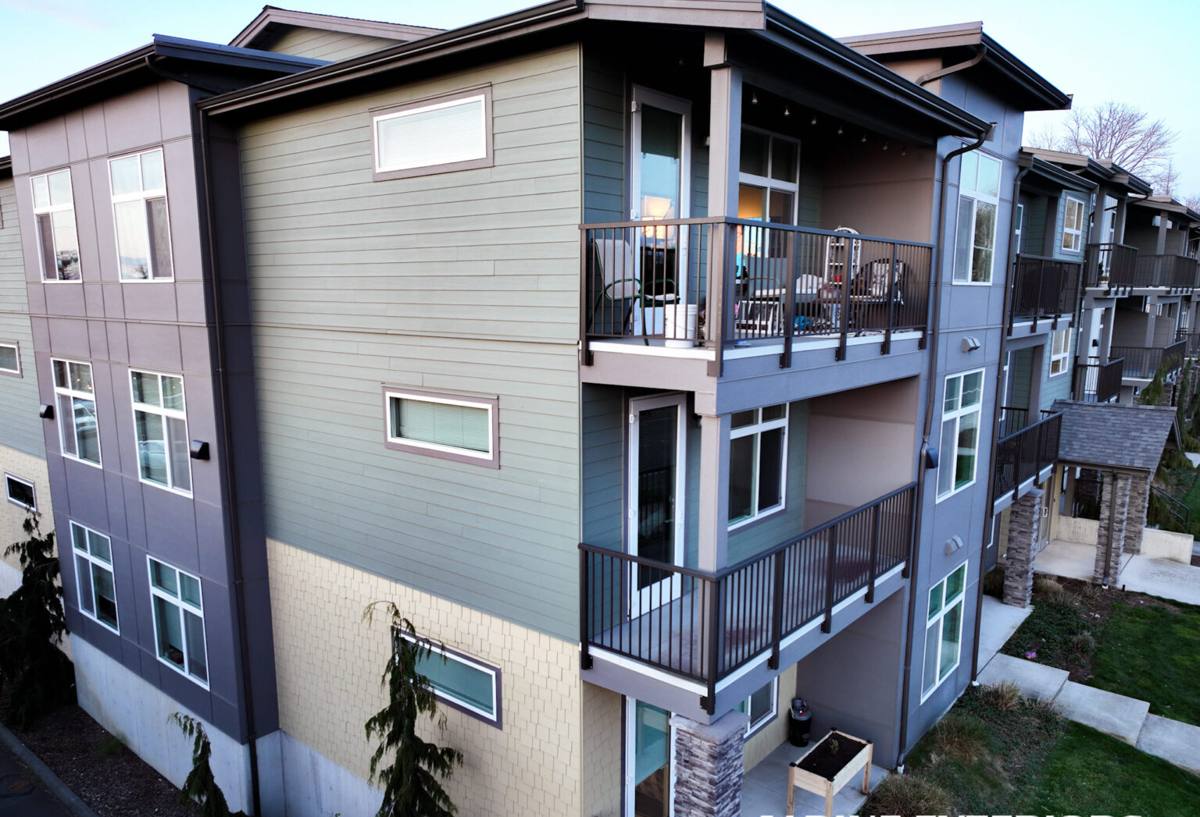
What This Climate Does to Siding Over Time
Shade, Moisture, and Slow Drying
Homes tucked under fir and cedar cover dry out slower after every rain than a house sitting in open sun. Siding that stays damp longer is siding where paint fails sooner, where seams and butt joints have more time to wick water, and where any hidden gap in the water-resistive barrier gets tested over and over. This isn't unique to Maple Falls, but the tree cover and terrain out this way make it more common than in more open parts of Lynden.
Wind-Driven Rain and Exposed Walls
Whatcom County gets its share of wind-driven rain, and on exposed gable ends and upper stories, that rain doesn't just fall straight down — it gets pushed sideways and up under laps, trim, and butt joints that weren't detailed correctly the first time. A siding system that isn't installed with the right overlaps, clearances, and flashing will eventually let that water in, no matter how good the material looks on day one.
Moss and Organic Growth
A long moss season means organic growth on roofs, gutters, and siding that gets more time each year to hold moisture against a wall. Moss and algae staining on siding is mostly cosmetic on a material that handles moisture well, but on products that swell, delaminate, or lose their finish when they stay wet, that same moss season accelerates real damage, not just discoloration.
What a Correct Siding Installation Actually Involves
The siding itself is only part of the system. Most siding failures we get called out to inspect trace back to installation details, not the material choice — and that holds true whether the old siding was vinyl, hardboard, or cedar.
Water-Resistive Barrier and Flashing
Every wall gets a continuous water-resistive barrier behind the siding, lapped correctly from the bottom up so any water that does get past the cladding drains back out instead of soaking into the sheathing. Flashing at windows, doors, and roof-to-wall transitions has to be integrated with that barrier in the right order — flashing installed on top of house wrap instead of underneath it is a common shortcut that causes leaks years later.
Fastening and Clearances
Fiber cement has specific fastening requirements — nail type, spacing, and depth all affect how the siding performs and whether the manufacturer's warranty stays valid. Clearances matter just as much: siding installed too close to grade, a roofline, or a deck surface holds moisture against the bottom edge and invites the kind of rot and staining that shows up first in exactly those low, shaded spots common on Maple Falls lots.
Joints, Caulking, and Factory Finish
Butt joints, corners, and trim transitions are where most siding problems start. We detail joints to shed water rather than rely on caulk as the only line of defense, because caulk is a maintenance item, not a permanent seal. This is also where a factory-applied finish has a real advantage over field-applied paint, which we'll get to next.
Why We Install Only James Hardie Fiber Cement
We made a decision as a company to install James Hardie fiber cement siding exclusively, and not vinyl, LP SmartSide, Cemplank, Allura, primed spruce, or cedar. It's a non-combustible material, it holds its shape and finish in wet, shaded conditions far better than wood-based siding, and its ColorPlus factory finish is baked on under controlled conditions rather than brushed on outdoors — which matters a lot in a climate where field-applied paint has a short window to cure before the next rain. Hardie's HZ product lines are engineered for specific climate zones, including the wetter Pacific Northwest, and the product carries a strong transferable warranty when installed to Hardie's specifications. None of that is a knock on every other product on the market; it's simply the standard we decided to hold every home we side to, and it's what lets us stand behind the work in a climate that doesn't forgive shortcuts.
Our Installation Process
- On-site assessment: we look at the existing siding, sheathing condition, and any problem areas — shaded walls, low clearances, past water damage — specific to your home.
- Written estimate: a clear scope covering siding line, trim, color, and any sheathing or flashing repair the assessment turned up, so there are no surprises once removal starts.
- Removal and inspection: old siding comes off in sections so we can check the sheathing and framing underneath before anything new goes up, not after.
- Water-resistive barrier and flashing: installed and integrated at every penetration, corner, and transition before a single piece of siding is hung.
- Hardie siding installation: fastened, spaced, and clearanced to manufacturer specification for the product line chosen.
- Trim, caulk, and touch-up: finish details completed and inspected against the original scope.
- Final walkthrough: we go over the finished work with you before calling the job complete.
Comparing Siding Options for a Maple Falls Home
| Material | Moisture Behavior in Shade/Rain | Finish | Combustibility |
|---|---|---|---|
| James Hardie fiber cement | Dimensionally stable when wet; resists swelling and rot | Factory-applied ColorPlus finish | Non-combustible |
| Vinyl | Doesn't rot, but can warp or gap, letting moisture behind panels | Color molded through, fades over time | Combustible |
| Engineered wood (e.g. LP SmartSide) | Wood-based; sensitive to sustained moisture at edges and joints | Factory or field-applied, varies | Combustible |
| Cedar | Natural material; absorbs moisture, needs regular maintenance | Field-applied stain/paint, recoat required | Combustible |
This table describes general material characteristics, not performance guarantees — installation quality affects every product on this list. We include it because the choice of material is the first decision, and it's one worth making with the local climate in mind rather than on price alone.
Cost Factors for Siding Installation in Maple Falls
Every home is different, so we don't quote a number until we've walked the property, but the main variables that move a siding estimate are consistent:
- Total square footage of wall area and the complexity of the roofline and trim
- Whether sheathing repair is needed once old siding comes off
- Siding profile and Hardie product line selected
- Number of stories, wall height, and site access
- Amount of trim, corner, and window/door detail work involved
We'd rather give you an honest, itemized estimate after seeing the actual condition of your walls than a ballpark figure that doesn't hold up once removal starts.
Signs Your Siding Needs Attention
- Soft or spongy spots when you press on the siding, especially near the bottom edge or trim
- Persistent moss, algae, or staining that comes back soon after cleaning
- Visible warping, buckling, or gaps between panels
- Paint that's peeling, chalking, or has stopped holding a fresh coat
- Rising energy bills that point to a failing weather barrier behind the siding
- Visible daylight or drafts at corners, seams, or penetrations
Why Local Experience in Maple Falls Matters
A siding job is only as good as the crew standing behind it years later. We work throughout Whatcom County, including Maple Falls, so a warranty callback isn't a special trip — it's a normal part of how we operate here. We've seen how this specific climate treats different products and installation shortcuts over time, and that experience shapes every detail on the list above, from flashing sequence to fastener spacing. Hiring a crew that already understands the moisture, shade, and moss conditions specific to this part of the county is worth more than a slightly lower bid from a contractor who mostly works somewhere drier.
If you're weighing your options for a Maple Falls home, we're happy to take a look and give you a straight answer about what your siding needs. Request a free, no-pressure estimate using the form below, and we'll walk the property with you before recommending anything.