 Lynden Siding
 Decks Built for the Way Maple Falls Actually Weathers
Maple Falls sits up against the foothills of the North Cascades, in the shadow of Mount Baker, and that setting shapes what a deck has to survive out here. The marine weather systems that move in off the Salish Sea dump a lot of rain on this part of Whatcom County, and once that moisture reaches the tree-covered lots and shaded yards common in Maple Falls, it doesn't leave in a hurry. Add long stretches of overcast, low-sun months and you get the conditions that grow moss on anything horizontal — deck boards included.
A deck built with generic, one-size-fits-all specs might look fine the first summer. The problems show up in year two or three: soft spots where water sits, moss creeping across boards that never fully dry, fasteners bleeding rust, and a substructure that's staying wet far longer than the manufacturer ever accounted for. Building correctly for Maple Falls means designing for drainage and airflow first, and picking finish materials second.
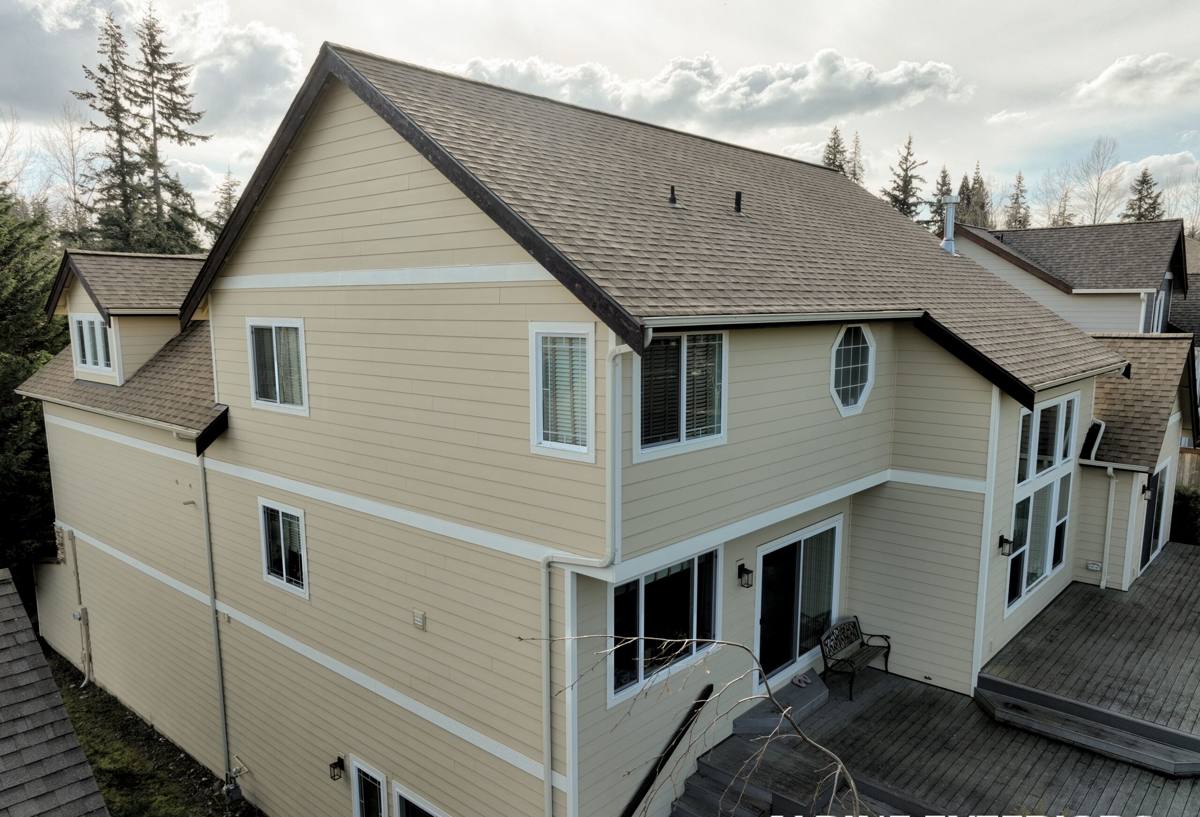
What Local Conditions Demand From a Deck
Every deck we build in this area has to answer to the same set of local pressures:
- Sustained rainfall: Whatcom County gets a lot of slow, soaking rain rather than short downpours — decking and framing need real drying time built into the design, not just the material spec sheet.
- Heavy shade and tree cover: Many Maple Falls lots back up to forest or have mature trees close to the house, which keeps decks damp longer and feeds moss and algae growth.
- Elevation and cooler temperatures: Being closer to the mountains means cooler, damper air for more of the year than you'll find down in Lynden or Bellingham, which slows evaporation even further.
- Debris load: Fir and cedar needles, leaves, and cones collect in board gaps and joist bays faster here than in more open, in-town lots.
None of this means a deck can't hold up — it means the build has to account for water and shade from the framing up, not treat them as afterthoughts.
Getting the Framing and Drainage Right
Ledger and Footing Details
The ledger board connection and footings are where a deck's long-term structural health is decided, and they're also where shortcuts do the most damage. Proper flashing behind the ledger, correctly sized and set footings below frost depth, and joist hangers rated for exterior exposure all matter more in a wet, shaded climate than in a dry one — there's simply less margin for error before trapped moisture becomes rot.
Airflow Under the Deck
A deck built low to the ground, or boxed in without any ventilation, will hold moisture underneath it almost year-round in a shaded Maple Falls yard. We plan clearance and skirting so air can actually move beneath the structure, which is one of the simplest and most effective ways to keep a substructure dry.
Board Spacing and Water Path
Gapping between deck boards has to be wide enough to let water and debris pass through rather than pool on the surface. On composite and PVC decking especially, correct spacing (and following the manufacturer's expansion gap requirements) prevents the standing water that leads to premature staining, mold, and slick surfaces.
Choosing a Decking Material That Fits This Climate
There isn't one "best" decking material for every home — there's a best fit for your budget, your maintenance appetite, and how much shade and moisture your specific lot deals with. Here's how the common options stack up for a Maple Falls setting:
| Material | Moisture Performance | Maintenance | Typical Lifespan |
|---|---|---|---|
| Pressure-treated wood | Good if sealed and maintained; absorbs moisture without upkeep | Annual cleaning and re-sealing recommended | 10–15 years |
| Cedar | Naturally rot-resistant, but still needs finish upkeep in constant shade | Periodic staining/sealing | 15–20 years with care |
| Composite decking | Very good; resists rot but can still grow surface moss/algae in deep shade | Low — occasional washing | 25–30 years |
| PVC/capped decking | Excellent; fully resists moisture absorption | Lowest — soap and water | 25–30+ years |
In heavily shaded, moss-prone yards, we lean homeowners toward composite or capped PVC boards precisely because they don't absorb water the way wood does — that single property removes most of the maintenance burden this climate creates. Wood and cedar are still good choices for owners who want a natural look and are willing to keep up a sealing schedule; we just make sure they understand that trade-off up front rather than after the first mossy season.
How We Approach a Maple Falls Deck Project
- On-site assessment: We walk the lot, check sun exposure and drainage patterns, and look at how water actually moves across the yard — not just what the property looks like on paper.
- Design and material selection: We talk through decking material, framing layout, and any structural needs (stairs, railings, multi-level design) based on how the space will be used and how much upkeep you want to take on.
- Permitting: Deck projects above certain heights or attached to the home typically require a permit through Whatcom County; we handle that process as part of the job.
- Framing and structural work: Footings, ledger flashing, joists, and hardware are installed to hold up under sustained moisture, not just pass a one-time inspection.
- Decking, railing, and finish work: Boards are spaced and fastened correctly for drainage, and railing and trim are finished to match the home.
- Final walkthrough: We go over basic care — what to expect the first wet season, and what maintenance (if any) the material you chose requires.
Moss and Mold: Prevention Beats Removal
Once moss and algae establish themselves on a deck surface, they're a recurring nuisance to remove and can make boards dangerously slick underfoot. The better approach is designing the deck so moss has a harder time getting a foothold in the first place:
- Correct board spacing so water drains through instead of sitting on the surface
- Clearance underneath the deck for airflow, rather than skirting sealed tight to grade
- Material choice that doesn't hold surface moisture (composite/PVC vs. untreated wood)
- Positioning stairs and rail sections so nearby foliage isn't shading the same boards all day, where practical
- Keeping gutters and nearby roof drainage from dumping directly onto the deck surface
Even with all of this done right, some seasonal cleaning is part of owning a deck in a shaded, wet corner of Whatcom County — a periodic wash keeps whatever growth does appear from ever becoming a real problem.
What Drives the Cost of a Custom Deck
Every deck is priced around the specifics of the property, but the same handful of factors move the number up or down on most Maple Falls projects:
| Cost Factor | Why It Matters |
|---|---|
| Decking material | Pressure-treated wood is the lowest upfront cost; composite and PVC cost more per square foot but need far less upkeep over time |
| Deck size and shape | Multi-level decks, angled layouts, and built-in features add labor beyond a simple rectangular footprint |
| Height and stairs | Elevated decks need more substantial framing, railing, and stair structures than ground-level builds |
| Site access and grading | Sloped or tree-crowded lots, common around Maple Falls, can add site prep and equipment access time |
| Railing style | Cable, glass, and custom wood railings cost more than standard baluster railing |
We provide a straightforward, itemized estimate before any work starts, so you know exactly what you're paying for and why.
Why Local Experience Matters for This Job
A deck contractor who mostly works dry, open-lot suburbs somewhere else can still build a structurally sound deck — but they may not think twice about board spacing for a shaded, moss-prone yard, or about how much airflow a low-clearance deck needs under near-constant cloud cover. Crews who already work in and around Lynden and the Whatcom County foothills have seen what actually goes wrong on decks out here over a few wet seasons, not just what a spec sheet says should happen.
That local pattern recognition is worth something: it's the difference between a deck that needs real attention in year three and one that's still tight, dry, and moss-free a decade in.
Ready to Talk Through Your Project?
If you're planning a new deck or replacing one that's struggled with moisture or moss, we're happy to come take a look and walk you through honest options for your specific lot. There's no pressure and no obligation — just a straightforward conversation about what will actually hold up on your property. Use the form below to request a free estimate.