 Lynden Siding
 Roofing for a Wetter, Shadier Corner of Whatcom County
Maple Falls sits up in the foothills east of Lynden, closer to the mountains than to open water, but that doesn't mean the roof over your head gets an easy ride. Homes here deal with a combination most roofers in flatter, more open parts of the county rarely see all at once: heavy tree canopy that keeps shingles shaded and damp, driving rain that comes sideways off the Cascades, and the same moisture-laden marine air that moves through the rest of Whatcom County during our long fall-through-spring wet season. Add in salt-tinged air pushed inland on stronger weather systems and you've got a roofing environment that punishes shortcuts.
An asphalt shingle roof is still the right call for most Maple Falls homes — it's durable, cost-effective, and easy to repair or partially replace when needed. But "the right product" and "the right installation" are two different things. A roof installed the same way you'd install one in a dry, open subdivision will underperform up here. This page covers what actually matters for asphalt shingle roofing on a Maple Falls home, and how we approach it differently because of where you live.
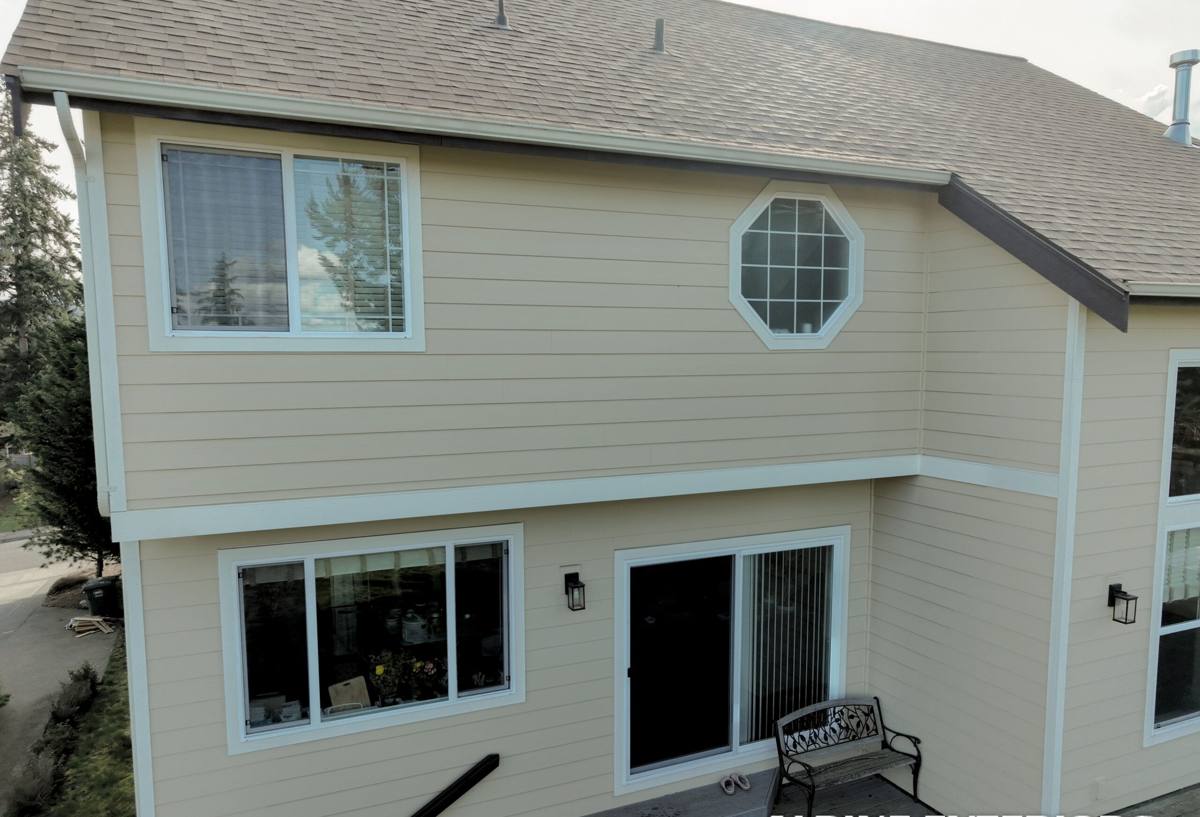
What Shade and a Long Moss Season Do to a Shingle Roof
The biggest difference between a Maple Falls roof and one out on open ground isn't the rain totals — it's how long the roof stays wet after the rain stops. Under heavy fir and cedar cover, a roof plane can stay damp for days after a storm while a nearby open roof dries out in hours. That extended dampness is exactly what moss, algae, and lichen need to get established.
Once moss takes hold, it does more than look bad. Moss mats hold water directly against the shingle surface, work their root structures under shingle tabs and granules, and can lift edges enough for wind-driven rain to get underneath. Left unchecked over a few seasons, moss growth shortens the effective life of an otherwise sound shingle roof and can void certain manufacturer warranties that require reasonable maintenance.
Where Moss Shows Up First
- North-facing slopes and any plane shaded by mature trees for most of the day
- Valleys where two roof planes meet and debris collects
- Around chimneys, skylights, and anything that interrupts water flow
- Along eaves where granule wash and slower drying combine
None of this means Maple Falls homeowners are stuck fighting moss forever. It means the roofing system, the layout, and the maintenance plan all need to account for shade and slow drying from the start — not get bolted on after the fact.
Choosing an Asphalt Shingle System Built for This Climate
Not every asphalt shingle product handles a shaded, damp environment equally well. For Maple Falls installations, we favor architectural (dimensional) shingles with algae-resistant (AR) granules as our standard rather than an exception. It's a matter of professional judgment, not brand-bashing — every asphalt shingle product has trade-offs, and in a high-moisture, tree-covered setting the heavier mat weight and copper- or zinc-infused AR granules genuinely earn their keep by slowing the biological growth that plain granules don't resist.
Why We Lean Toward Heavier, AR-Rated Products Here
- Thicker laminate construction resists the freeze-thaw and constant damp cycling better than lightweight 3-tab shingles
- Algae-resistant granules release trace metals over time that slow moss and algae regrowth on shaded planes
- Better wind uplift ratings matter on exposed ridgelines and clearings where storm gusts funnel through gaps in the tree line
- Deeper, more textured profiles shed water faster off low-slope sections, reducing standing moisture time
Standard 3-tab shingles are still a legitimate, budget-conscious product, and we'll install them if that's what a homeowner wants for an outbuilding or a lower-priority structure. For a primary residence surrounded by trees in this part of Whatcom County, we tell customers honestly that the upgrade to an AR-rated architectural shingle usually pays for itself in reduced moss treatment, fewer granule-loss issues, and a longer service life before the next full replacement.
What a Correct Installation Actually Involves
The shingle brand gets most of the attention, but the layers underneath it are what actually keep a Maple Falls roof dry through a long wet season. A correct installation is a system, and every layer has a job.
The Layers That Do the Real Work
- Ice and water shield at eaves, valleys, and around every penetration — the first line of defense where driving rain and slow-draining moisture concentrate
- Synthetic underlayment across the full deck, sized and lapped correctly for our rain patterns, not just the manufacturer's minimum
- Balanced attic ventilation — intake at the eaves, exhaust at the ridge — so the underside of the deck can actually dry out between storms instead of trapping moisture
- Properly flashed valleys, chimneys, and skylights using new flashing, not reused metal from the old roof
- Correct nailing pattern and placement, matched to the shingle manufacturer's high-wind specification rather than a generic pattern
- Drip edge at all eaves and rakes to keep water off the fascia and out of the deck edge
Skipping or shortcutting any one of these is usually invisible from the ground and invisible for the first year or two. It shows up later as a soft spot in the deck, a stained ceiling, or moss establishing faster than it should because the roof never gets a chance to fully dry.
Our Process, Start to Finish
We keep the process straightforward and communicate at each step, because the biggest source of roofing complaints isn't workmanship — it's homeowners left guessing what's happening and when.
1. On-Site Evaluation
We walk the roof (weather permitting) and inspect the attic from inside, checking deck condition, ventilation, existing moss or algae damage, and flashing points. Roofs under heavy tree cover get extra attention to valleys and north-facing planes.
2. Written Estimate
You get a clear, itemized proposal: shingle product and color options, underlayment and ice-and-water-shield scope, ventilation work if needed, flashing replacement, and a firm price — no vague allowances.
3. Scheduling Around Weather
We watch the forecast closely for tear-off days. An open deck in a Maple Falls downpour is a problem we simply don't allow to happen; we stage material and timing to keep exposure windows short.
4. Tear-Off and Deck Inspection
Old roofing comes off down to the deck. Any soft, rotted, or delaminated sheathing gets identified and replaced before anything new goes down — this is where shortcuts on other jobs usually start.
5. Installation
Underlayment, ice and water shield, flashing, ventilation, and shingles go in following manufacturer specification and our own standard for this climate, not the bare minimum.
6. Cleanup and Walkthrough
Magnetic sweep for nails, full debris haul-off, and a walkthrough so you know what was done and what to watch for going forward.
Cost Factors for a Maple Falls Roofing Project
Every roof is priced on its own specifics, but these are the factors that most commonly move the number up or down for homes in this area:
| Factor | Why It Matters Here |
|---|---|
| Roof pitch and access | Steeper pitches and limited driveway/staging access around trees add labor time |
| Tree cover and cleanup | Heavier canopy usually means more debris cleanup and careful material staging |
| Deck condition | Long-term moisture exposure under moss-covered sections sometimes means sheathing replacement |
| Shingle tier | Standard 3-tab vs. AR-rated architectural changes both material cost and long-term maintenance |
| Ventilation upgrades | Older homes often need added intake or exhaust venting to meet current best practice |
| Valleys, chimneys, skylights | Each penetration adds flashing labor and is a common source of past leaks to correct |
We walk through these line by line during the estimate so you understand exactly what's driving the price — not just a single lump-sum number.
Keeping a Maple Falls Roof Healthy Between Installations
A good installation buys you years of low-maintenance performance, but a shaded, moss-prone roof still benefits from periodic attention. A simple maintenance checklist we recommend to homeowners in this area:
- Have moss and debris cleared from valleys and shaded planes at least once a year, more often under dense tree cover
- Keep overhanging branches trimmed back to reduce shade and let planes dry faster
- Check and clear gutters each fall so water isn't backing up under the eave line
- Look for granule buildup in gutters and downspouts, an early sign of shingle wear
- Have flashing around chimneys and skylights inspected every few years, since these are the most common leak points
- Address small issues — a lifted shingle tab, a cracked pipe boot — right away rather than waiting for a leak to show up inside
Why a Crew That Already Works Maple Falls Matters
Roofing crews that mostly work open, sunny subdivisions don't always think about shade patterns, moss cycles, or how long a north slope stays wet after a storm rolls through. Working regularly in Maple Falls and the surrounding Lynden and Whatcom County area means we're used to sizing ventilation and underlayment for tree-covered lots, not just following a generic spec sheet. It also means we understand local permitting expectations and are already familiar with the driving conditions and access challenges that come with foothill properties — so scheduling and logistics don't turn into surprises mid-project.
A roof is one of the few home systems where the installation quality matters more than the brand printed on the shingle wrapper. We'd rather walk you through the honest trade-offs of each option — including where a lower-cost product is genuinely fine — than upsell you on something your home doesn't need.
If your Maple Falls home is due for a new roof, showing early moss growth, or you just want an honest opinion on what shape your current shingles are in, we're happy to take a look. Request a free, no-pressure estimate using the form below and we'll walk the roof, answer your questions, and give you a straight assessment.