 Lynden Siding
 Siding Repair Built for Laurel's Climate
Laurel sits close enough to the water and the foothills that its homes take a specific kind of weather beating year after year. Salt-laden air drifts in off the bay, driving rain comes sideways during winter storms, and the moss season stretches longer here than it does further inland. None of that is unusual for Whatcom County, but it means siding repair in this neighborhood isn't a one-size-fits-all job. A repair that works fine in a drier part of the state can fail here within a couple of seasons if it doesn't account for how much moisture this area actually sees.
We've been doing repair and replacement work on homes in and around Lynden long enough to know which failure patterns show up in Laurel specifically, and which shortcuts don't hold up. This page walks through what we look for, how we fix it, and why the crew you hire for this job matters as much as the materials.
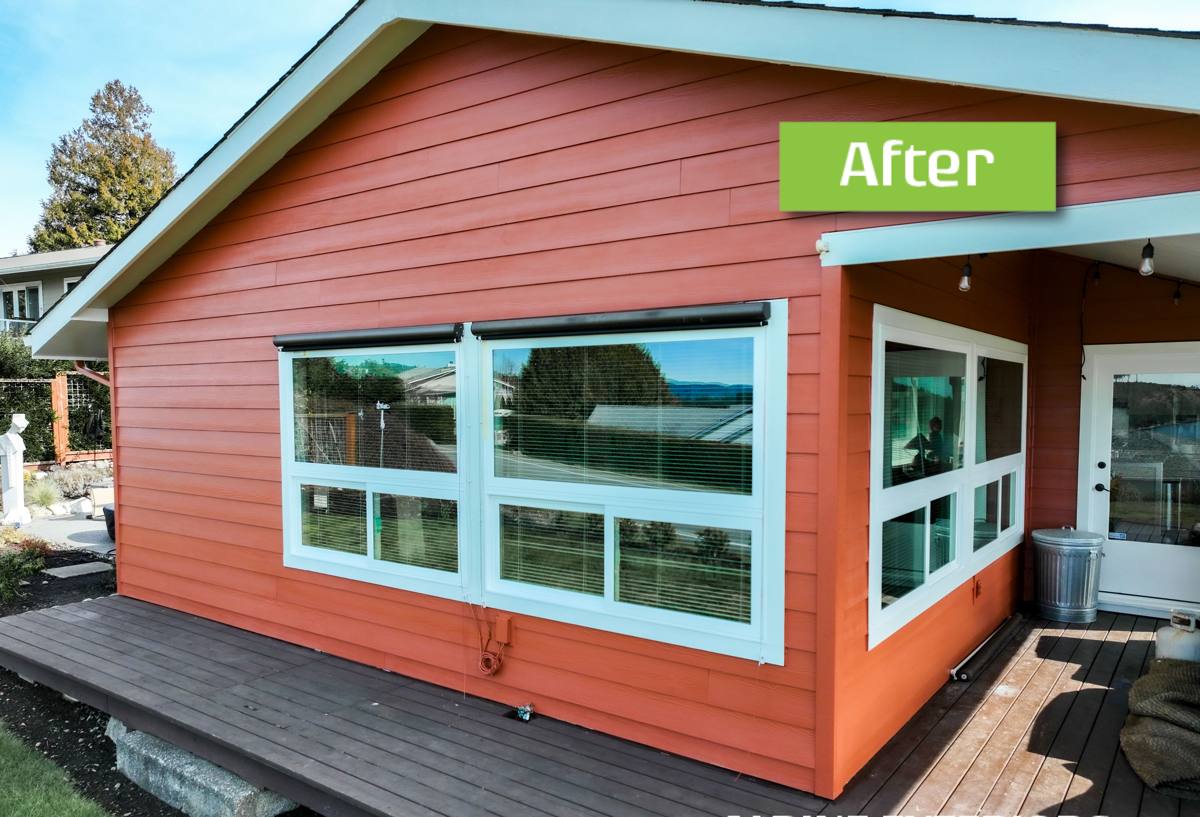
Why Laurel Homes See Siding Problems Sooner
Three environmental factors compound on each other here:
- Salt air corrosion: Even at a modest distance from open water, airborne salt accelerates the breakdown of fasteners, flashing, and any exposed metal trim. Once a fastener starts to corrode, it loses its grip on the substrate and the siding panel it's holding starts to work loose.
- Driving rain intrusion: Whatcom County storms often come with real horizontal force behind the rain. Water gets pushed into laps, seams, and butt joints that would stay dry in a gentler climate. Over time this finds any gap in caulking, flashing, or panel overlap.
- Extended moss season: Shaded north- and west-facing walls, especially under overhangs or near mature trees, stay damp long enough for moss and algae to take hold. Moss holds moisture against the siding surface far longer than open air would, which is exactly the condition that rots wood-based products and stains even durable ones.
Individually, each of these is manageable. Together, they shorten the useful life of siding that isn't installed or maintained with this specific climate in mind — and they're the reason we see the same handful of failure points on repair calls across this neighborhood.
What This Looks Like on a Real Wall
On a typical Laurel repair visit, the damage usually falls into one of a few categories: soft or delaminating panels near ground level where splashback keeps the bottom courses wet, dark streaking and moss buildup on shaded elevations, corroded or backed-out fasteners on walls that catch the most weather, and gaps at trim and window flashing where caulking has failed and let water behind the cladding. Rarely is it just one of these — usually two or three are happening at once, which is why a proper repair starts with a full assessment, not a patch job on the one spot the homeowner noticed.
What a Correct Siding Repair Actually Involves
A lot of "siding repair" in this trade is really just cosmetic patching — caulk over a crack, a dab of paint over a stain, a new piece nailed over the old one. That kind of work looks fine for a season and then fails again, often worse, because it never addressed what let moisture in to begin with. A correct repair follows a different sequence:
- Diagnose the moisture path. Before touching the siding itself, we figure out how water is getting in — a failed seam, missing flashing, a gap at a penetration, or a substrate that's already saturated.
- Open it up and check what's underneath. Damaged siding often means damaged sheathing or house wrap behind it. Covering that up without inspecting it just traps a bigger problem under a fresh face.
- Replace, don't just patch, compromised material. Soft, delaminated, or rotted sections get cut out and replaced with matching material, not skimmed over.
- Correct the water management detailing. Flashing, kick-out diverters, and proper laps get fixed or added where they were missing in the original installation — this is often the actual root cause.
- Match the finish. Color and texture matching matters more on a repair than most homeowners expect; a mismatched patch is the first thing anyone notices.
Skipping any of these steps is how a $400 patch turns into a $4,000 wall replacement two years later.
Why We Only Repair and Install James Hardie Fiber Cement
We stopped installing vinyl, LP SmartSide, primed spruce, and cedar siding as standard offerings, and we don't install Cemplank or Allura either. That's not a knock on every homeowner who has one of those products on their house today — plenty of it is still serviceable, and we repair what's there when that's the right call. But when it comes to what we put back on a wall or recommend for a full replacement, James Hardie fiber cement is what we stand behind, for reasons that matter specifically in this climate:
- Non-combustible core. Fiber cement doesn't feed a fire the way wood-based products can, which matters more every year as wildfire smoke and ember exposure become a regional concern.
- Engineered for wet-cold climates. Hardie's HZ10 product line is specifically formulated for the Pacific Northwest's freeze-thaw and moisture cycle, which is exactly the cycle Laurel sits inside.
- ColorPlus factory finish. A baked-on finish resists the fading and moisture absorption that repainted or field-finished products struggle with, and it holds up better against salt air exposure than a site-applied coat.
- Moss and mildew resistance. Fiber cement doesn't provide the organic material that moss and algae feed on the way wood-based sidings can, which directly addresses the extended moss season this area deals with.
- Real transferable warranty. When a repair or replacement is done to spec, the warranty coverage carries meaningful weight — and it can transfer to a new owner if the home sells.
When we're repairing a section of existing non-Hardie siding, we'll always be straight with you about whether a patch makes sense or whether that section (or the whole elevation) is a better candidate for replacement with Hardie instead. We'd rather tell you the honest answer than sell you a repair that won't hold.
Repair vs. Replacement: How We Help You Decide
| Factor | Repair Usually Makes Sense | Replacement Usually Makes Sense |
|---|---|---|
| Extent of damage | Isolated to one or two sections | Spread across multiple elevations |
| Underlying substrate | Dry, sound sheathing found on inspection | Rot or moisture damage found behind panels |
| Age of existing siding | Under 10-15 years, otherwise sound | Original installation is decades old or failing broadly |
| Material type | Hardie or other durable material in good condition | Wood-based or vinyl showing systemic wear |
| Water management detailing | Flashing and laps generally correct | Original detailing was inadequate throughout |
We'll walk the exterior with you, point out exactly what we're seeing, and give you a straight recommendation — not the most expensive option by default.
Our Process for Laurel Repair Jobs
Every repair starts with an in-person walkaround, not a phone estimate. Siding damage in this climate is often more extensive than what's visible from the ground, so we get close to the wall, check the areas prone to moisture intrusion, and probe any soft-looking sections. From there:
- We explain what we found in plain terms, including what's likely happening behind the surface.
- We give you a written scope and estimate before any work starts — no surprise add-ons mid-job.
- We open up damaged areas, inspect the sheathing and weather barrier, and correct any flashing or lap issues we find.
- We replace damaged material with properly matched product and finish it to blend with the surrounding siding.
- We clean up thoroughly and walk the finished work with you before we consider the job done.
Why a Crew That Already Works in Laurel Matters
Siding repair isn't just a materials question — it's a familiarity question. A crew that regularly works this part of Whatcom County already knows which elevations tend to take the worst of the driving rain, where moss builds up fastest given the tree cover and shade patterns typical to the area, and what the salt air does to fasteners and flashing over time. That local pattern recognition shortens the diagnostic process and helps us catch secondary damage before it becomes a bigger, more expensive problem. It also means we're not guessing at how a repair will hold up in this specific climate — we've already seen how it performs on homes nearby.
A Quick Homeowner Checklist
If you're trying to decide whether it's time to call about a repair, walk your exterior and look for these signs:
- Soft or spongy spots when you press on the siding, especially near the bottom of walls
- Dark streaking, green or black discoloration, or visible moss on shaded sides of the house
- Panels that look warped, bowed, or separated at the seams
- Rust stains or visibly corroded fasteners
- Peeling or bubbling paint/finish that keeps coming back in the same spot
- Gaps or cracked caulking around windows, doors, or trim
- Any musty smell or interior wall staining near an exterior wall, which can indicate moisture already got past the siding
Catching these early is almost always cheaper than waiting until the damage spreads to the sheathing or framing behind the siding.
Get a Straight Answer on Your Siding
If you're seeing any of the signs above on your Laurel home, or you just want an honest read on how your siding is holding up against this area's salt air, rain, and moss, we're glad to take a look. We'll give you a clear, no-pressure estimate and tell you plainly whether a repair, a partial replacement, or a full James Hardie install is the right call for your home. Fill out the form below to get started.