 Lynden Siding
 Kendall's Climate Is Tougher on Siding Than Most Homeowners Realize
Kendall sits in the rural, tree-covered stretch of Whatcom County north of Lynden, where weather moving in off the coast funnels into the valley and settles there for days at a time. That marine-influenced air brings driving rain that doesn't just fall straight down — wind-driven storms push moisture sideways into wall assemblies, working into seams, laps, and fastener points that a calmer climate would never test. Add the salt-tinged air that reaches this far into Whatcom County during winter storm systems, and you get a slow, steady corrosion pressure on fasteners, trim, and any siding material that isn't built to shrug it off.
Then there's shade. Many Kendall properties sit on larger, wooded lots with mature fir and cedar cover, which is part of the area's appeal — but tree cover also means siding stays damp longer after every rain. Where the land opens into farmland at the edges of the community, the opposite problem shows up: wind-driven rain gets a clear, unbroken run at exposed walls. Either way, Whatcom County's long, gray stretch from October through May gives moss, algae, and mildew months at a time to establish themselves, especially on north-facing walls and anywhere airflow is blocked by landscaping or fencing. Siding that can't handle sustained moisture exposure — swelling, delaminating, or feeding the organic growth it's covered in — shows it here faster than in most other parts of the state.
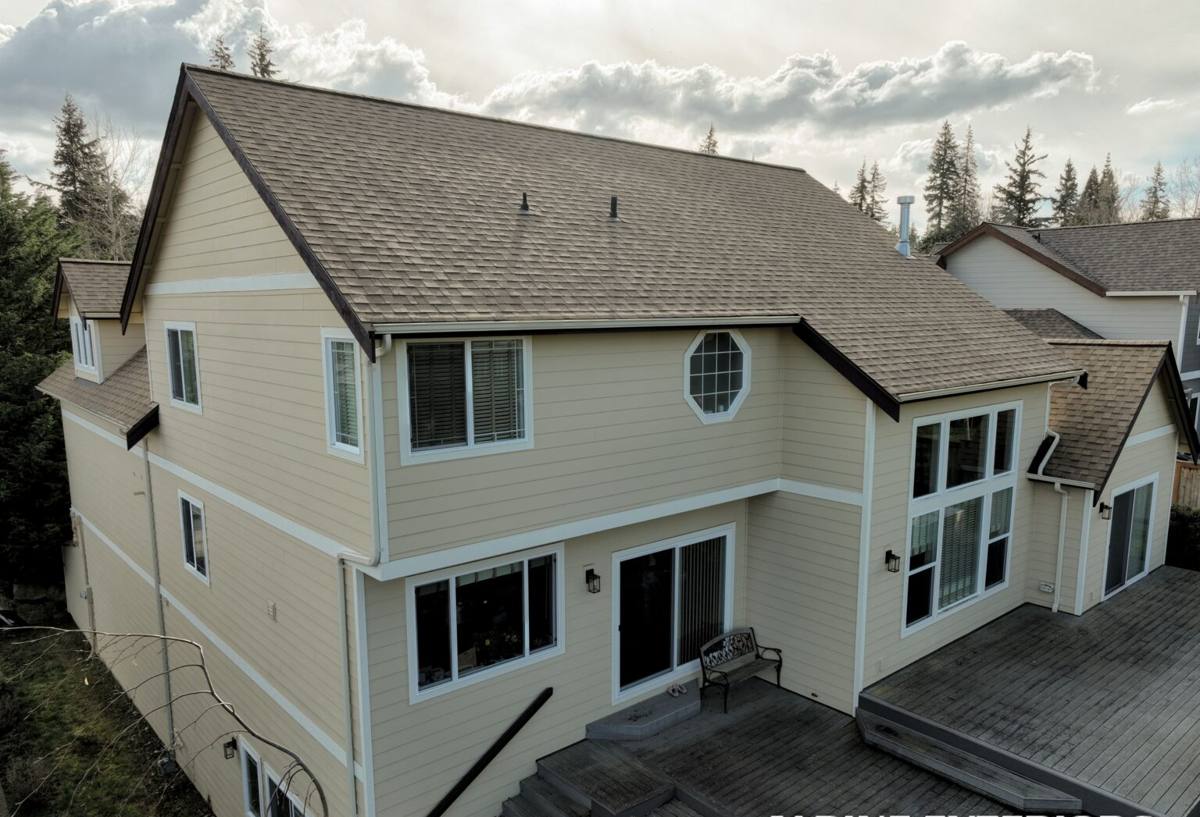
Warning Signs Kendall Homeowners Should Not Ignore
Because moisture damage in a wall assembly usually starts behind the siding, by the time it's visible on the surface it has often been developing for a while. Homeowners on larger, shaded Kendall lots should walk their home's exterior at least once a year, paying particular attention to north- and west-facing walls, areas under roof valleys, and anywhere siding sits close to grade or landscaping.
- Soft, spongy, or crumbling spots when you press on the siding, especially near the bottom courses
- Persistent green or black staining that returns within weeks of cleaning
- Paint that's peeling, bubbling, or needing a fresh coat far sooner than it used to
- Visible gaps, warping, or boards pulling away from the wall at seams and corners
- Swelling or a "fuzzy," delaminating texture on engineered wood or hardboard siding
- Musty smells or unexplained humidity inside rooms along an exterior wall
Any one of these on its own might be minor. Several together, especially on a home with original siding that's fifteen years or older, usually means it's time for a real inspection rather than another round of caulk and paint.
What a Correct Siding Replacement Actually Involves
Siding replacement is not a cosmetic swap — it's a rebuild of the wall's water management system, and that's where most of the long-term performance is won or lost. A tear-off should include a full inspection of the sheathing underneath. In a wet, shaded climate like Kendall's, it's common to find soft or water-stained OSB or plywood behind failed siding, and that damage has to be cut out and replaced before anything new goes back on — covering it up only hides the problem.
Water Management Comes First
A correct installation starts with a continuous weather-resistive barrier, properly lapped so every course sheds water downward and outward, never trapping it against the sheathing. Flashing at windows, doors, and rooflines needs to integrate with that barrier, not just sit on top of it. Kick-out flashing where a roofline meets a wall is a small detail that's easy to skip and is one of the most common sources of hidden rot we find on older homes in this area.
Details at Every Penetration
Hose bibs, exterior vents, light fixtures, and meter boxes are all places where the wall gets cut into, and each one needs to be flashed and sealed correctly or it becomes a point of entry for the same driving rain we started with. On tear-off jobs we treat every one of these the same way we treat window and door openings, because water doesn't care how small the opening is.
Fastening and Spacing Matter as Much as the Product
Fiber cement siding has specific fastening patterns, gap and clearance requirements, and joint treatment that vary by manufacturer and product line. Nailing too tight, closing up expansion gaps, or leaving siding too close to grade, decks, or roof surfaces will cause problems no matter how good the material is. This is where installer experience shows: a product only performs to its rating when it's installed to spec, not just installed.
Why We Install Only James Hardie Fiber Cement
We standardized on James Hardie siding for every job we do, including here in Kendall, because it's engineered to handle exactly the conditions this area produces. It's non-combustible fiber cement, so it doesn't swell, rot, or feed mold and moss the way wood-based and some engineered products can when they stay damp for months at a stretch. The factory-applied ColorPlus finish is baked on rather than field-sprayed, which means better fade and moisture resistance at the surface, right where driving rain and UV do the most damage over time.
Climate-Engineered for This Region
Hardie's HZ product line is engineered by climate zone, and the Pacific Northwest's wet, moderate-temperature conditions fall under specifications built for high-moisture regions rather than hot, dry ones. That matters in a place like Kendall, where siding stays wet longer between dry-out stretches than it would in a sunnier, more exposed part of the state. Paired with a strong transferable warranty, it's a product we're comfortable standing behind for the long haul — which is why we don't install vinyl, LP SmartSide, primed wood, or other fiber cement brands instead.
What Affects the Cost of a Kendall Siding Replacement
Every home is different, and we won't quote a number without seeing the property, but the factors below are what actually move the price up or down on most projects in this area.
| Factor | Why It Matters |
|---|---|
| Home size and wall complexity | More square footage, corners, gables, and dormers mean more cutting, fitting, and labor time |
| Condition of the sheathing underneath | Rot or water damage found during tear-off has to be repaired before new siding goes on |
| Siding profile and trim selection | Lap width, shingle-style panels, and trim details affect material and install time |
| Color and finish | Factory ColorPlus finishes vs. field painting affect both upfront cost and long-term upkeep |
| Site access | Larger wooded lots, long driveways, and limited staging space common around Kendall can add setup time |
| Tear-off and disposal | Removing and hauling away old siding, especially multiple layers, adds to the scope |
Our Process, Start to Finish
- Free on-site estimate — we walk the exterior with you, check for soft spots and existing damage, and talk through what your home actually needs
- Written scope and product selection — you'll know the Hardie line, profile, and color before work starts, with no vague allowances
- Tear-off and sheathing inspection — old siding comes off, and any damaged sheathing is identified and repaired before it's covered back up
- Water-resistive barrier and flashing — the wall's moisture management system goes in correctly, before a single piece of siding is hung
- Installation to manufacturer spec — proper fastening, clearances, and joint treatment per Hardie's requirements for this climate zone
- Final walkthrough — we go over the finished work with you before calling the job done
What Maintenance Looks Like After Replacement
One practical benefit of switching to fiber cement is how little ongoing work it asks for compared to what most Kendall homeowners are used to. A factory ColorPlus finish holds its color far longer than field-applied paint, and the material itself isn't feeding the moss and algae growth that shaded, damp lots in this area tend to produce. That doesn't mean zero maintenance — an annual rinse-down, keeping gutters clear so water isn't sheeting down the wall, and trimming back vegetation that's crowding the siding will keep it looking and performing its best through Whatcom County's long wet season.
Compare that to what wood-based sidings typically require in this climate: repainting or restaining on a recurring cycle, more frequent caulk maintenance at joints, and closer monitoring for soft spots after every winter. Fiber cement shifts that balance substantially, which is part of why we consider it the right long-term investment for a property that's going to spend a good chunk of every year wet.
Why Hiring a Crew That Already Works Kendall Makes a Difference
Kendall isn't downtown Lynden. Larger lots, longer driveways, septic and well setups instead of city utilities, and heavier tree cover all change how a siding job gets staged and scheduled compared to an in-town property. A crew that's worked rural Whatcom County properties before knows to plan for equipment access, protect landscaping and drainage fields, and work around the shorter dry-weather windows this area gets during the wetter months.
Permitting and inspection requirements also run through Whatcom County rather than a city building department, and a contractor who's already familiar with that process avoids delays that catch out-of-area crews off guard. Local experience isn't just a nice-to-have here — it directly affects how smoothly the job goes and how well the finished siding performs once it's facing its first full Whatcom County winter.
If your Kendall home's siding is showing its age — or you just want a straight answer about whether it's holding up the way it should — we're happy to take a look. Reach out for a free, no-pressure estimate, and we'll tell you honestly what we find.