 Lynden Siding
 Siding for a Lake Property Is a Different Job Than Siding in Town
Wiser Lake sits in a pocket of Whatcom County where the air stays wetter, longer, than it does a few miles away in downtown Lynden. Tree cover around the water holds humidity close to the house, morning fog burns off slower, and north-facing walls can stay damp well into the afternoon even on a day that looks sunny from the road. None of that is a problem you can see from the curb. It shows up two, five, ten years later as soft trim, streaked paint, or siding that's swelling from the bottom edge up.
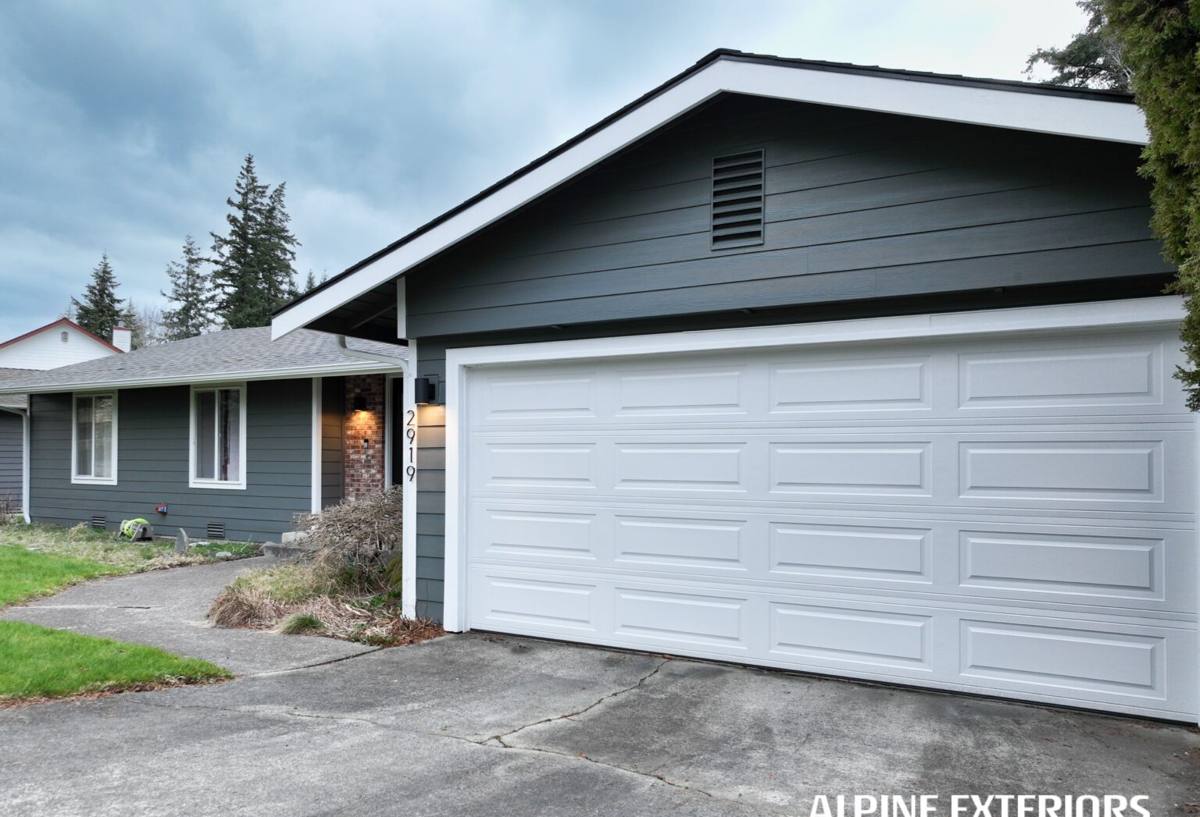
We install James Hardie fiber cement siding exclusively, and lake-adjacent homes are exactly the kind of property that shows the difference between a product built for this climate and one that just tolerates it. This page is about what a Wiser Lake home specifically needs from its siding, what a correct James Hardie install looks like here, and why the installer matters as much as the material.
What the Wiser Lake Microclimate Actually Does to a House
Whatcom County as a whole deals with salt-laden marine air, long stretches of driving rain, and a moss season that can run from October through May. Around Wiser Lake, those regional patterns get amplified by standing water and tree canopy right next to the structure.
Moisture that doesn't leave
A lake adds humidity to the air immediately around it, and mature trees slow the wind that would otherwise dry a wall face. Siding on the lake side or the shaded side of a Wiser Lake home can stay damp for days after a storm passes. Any material that swells, delaminates, or wicks water at cut edges will show it here faster than it would on an open, sun-exposed lot in town.
Moss and organic growth
Where moisture sits, moss, algae, and mildew follow. On wood-based or wood-look siding, that growth isn't just cosmetic — it holds water against the surface and accelerates whatever decay process is already underway. Siding that can't be pressure-washed or scrubbed without damaging the finish becomes a maintenance trap.
Driving rain and wind-blown moisture
Storms coming off the water push rain sideways into wall assemblies, not just straight down. That means the details around seams, laps, and penetrations matter more here than on a sheltered lot — a small installation shortcut that would be a non-issue in a dry climate becomes a real leak path at Wiser Lake.
Why We Only Install James Hardie Here
We don't install LP SmartSide, vinyl, Cemplank, Allura, primed spruce, or cedar. That's not a marketing position — it's a standard we set because of jobs exactly like the ones around Wiser Lake, where the climate finds every weakness in a product over time.
- Non-combustible fiber cement — Hardie board is engineered cement, sand, and cellulose fiber. It doesn't rot, and it isn't a food source for the moss and mildew that thrive in a lake environment the way wood-based siding can be.
- ColorPlus factory finish — the color is baked on in a controlled facility, not brushed on outdoors. That finish holds up to UV, driving rain, and repeated wash-downs far better than field-applied paint, which matters on a property where you'll be cleaning moss and algae off the walls periodically.
- HZ5 product engineering — Hardie's HZ5 line is formulated for cold, wet, freeze-prone climates like ours, with moisture and impact performance matched to the Pacific Northwest rather than a generic national spec.
- A warranty that's actually transferable — Hardie backs the product with a long-term, transferable limited warranty, which matters if this is a lake property you may sell down the road.
The honest trade-off: fiber cement costs more up front than vinyl, and it has to be installed to spec — proper clearances, fastening, and joint treatment aren't optional. We think that trade-off is worth it on any home in this county, and it's especially worth it on a property that sits in a damper-than-average pocket like Wiser Lake.
What a Correct Installation Actually Involves
The material only performs as well as the install. On a lake property, a few details matter more than they would elsewhere.
Clearance and drainage
Hardie siding needs a minimum clearance from grade, decks, patios, and roof lines so water has somewhere to go instead of wicking up into the board. On lake lots with lower, flatter grading near the water, we pay close attention to this — it's the single most common thing we find done wrong on older siding jobs in this area.
Rain screen and drainage plane
A proper weather-resistive barrier and drainage gap behind the siding let any moisture that does get past the surface dry out instead of sitting against the sheathing. This matters everywhere, but it matters more on walls that face the lake or sit under tree canopy and stay damp longer after a storm.
Fastening and joint treatment
Hardie specifies fastener type, spacing, and placement for a reason — done wrong, boards can crack, cup, or work loose over time. Butt joints and seams need to be treated correctly, especially on elevations that take direct, wind-driven rain.
Trim, flashing, and penetrations
Windows, vents, and anywhere else the siding is interrupted are where water actually gets in. Flashing details around these penetrations are non-negotiable on a driving-rain climate like ours, and doubly so where wind comes off open water.
How Our Process Works on a Wiser Lake Job
- On-site assessment — we look at your specific exposure: which walls face the lake, where tree canopy keeps things shaded, and where existing moisture damage or moss growth is already showing.
- Tear-off and substrate check — old siding comes off and we inspect the sheathing underneath for rot or soft spots before anything new goes up. This is where lake-area damage often turns up that wasn't visible from outside.
- Weather barrier and drainage plane — installed to current best practice, not the minimum code requirement, particularly on your most exposed elevations.
- James Hardie installation to manufacturer spec — correct clearances, fastening, and joint treatment throughout, with extra attention to flashing at every penetration.
- Final walk-through — we go over the completed work with you and explain what basic upkeep (if any) the ColorPlus finish will need going forward.
Why Hiring a Crew That Already Works This Area Matters
A crew that mostly works dry, open lots in town can do a technically fine install and still miss the details that matter on a shaded, damp lake property — because they don't see those conditions often enough to build habits around them. A crew that regularly works Lynden and the surrounding lake and rural properties has already seen what happens when clearance is off, when a drainage plane is skipped, or when trim flashing is treated as an afterthought on a wall that takes rain sideways off the water. That familiarity shows up in fewer callbacks and a house that's still performing the way it should a decade in.
Cost Factors on a Lake Property
Every home is different, but a few things tend to move the price on Wiser Lake jobs specifically. We'll give you real numbers after a site visit — broad ranges only, no invented figures.
| Factor | Why It Matters Here |
|---|---|
| Substrate condition | Lake-adjacent homes more often have hidden moisture damage under old siding, which affects how much sheathing repair is needed before new siding goes on. |
| Access and tree cover | Mature trees and lakefront lot layouts can affect staging, scaffolding, and how crews reach certain elevations. |
| Number of exposed elevations | Walls facing the lake or open water may warrant extra flashing and drainage attention, which affects labor time. |
| Existing trim and window condition | Damp climates are hard on trim; some homes need trim repair or replacement alongside the siding work. |
| Siding profile and color | Hardie offers multiple profiles (lap, shingle-style, panel) and ColorPlus color options, which affect material cost. |
Signs Your Wiser Lake Home May Need Attention Now
- Moss or dark streaking that returns quickly after cleaning
- Soft or spongy spots when you press on siding or trim, especially near the bottom courses
- Paint that's peeling, bubbling, or chalking faster than the rest of the house
- Visible gaps, warping, or cupping in existing siding boards
- Musty smell or staining on interior walls that back up to exterior siding
- Siding installed with little to no clearance from grade, decking, or roof lines
If you're seeing any of these, it's worth having a look before it turns into a bigger repair. A free, no-pressure estimate gets you a straight answer on what your home actually needs — fill out the form below and we'll take it from there.