 Lynden Siding
 Fiber Cement Siding for Laurel Homes
Laurel sits in the rural stretch of Whatcom County between Bellingham and Lynden, and homes out here take weather from a few different directions at once — marine air pushing in off the Salish Sea, open farmland with little windbreak in places, and enough tree cover in others to keep north walls damp for weeks at a time. It's a mix that's hard on siding, and it's part of why we get more calls from this area about moss-stained walls, soft trim, and paint that won't hold than from tighter, more sheltered neighborhoods closer to town. Fiber cement siding, installed correctly, handles this combination better than any other material we've worked with. Installed poorly, it can fail in some of the same ways as anything else.
We install James Hardie fiber cement exclusively — nothing else — and everything below is specific to what that means for a Laurel property, not a generic rundown of siding options.
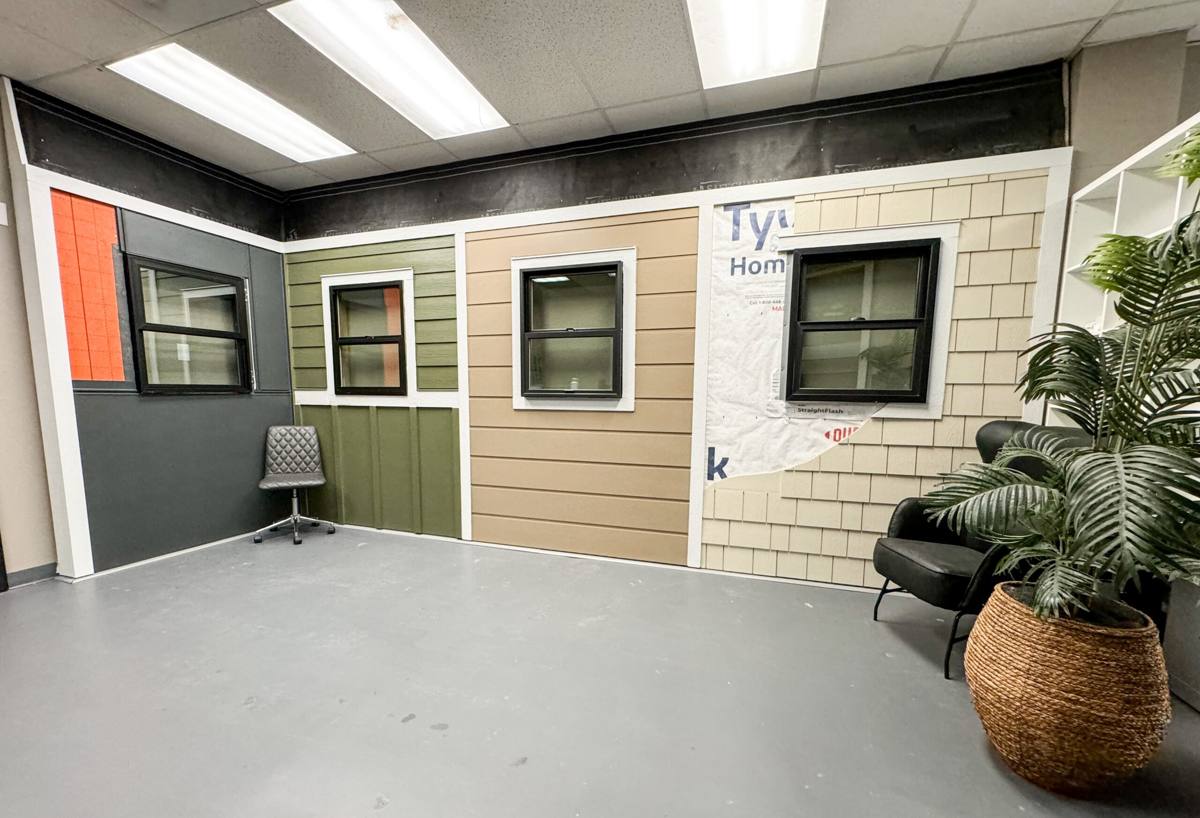
What Laurel's Climate Asks of Your Siding
Salt Air and Slow Corrosion
Whatcom County's proximity to the Salish Sea means salt-tinged air reaches well inland, and Laurel isn't far enough from the water to be exempt. Salt exposure doesn't damage fiber cement itself, but it works steadily on anything metal — fasteners, flashing, trim screws — that isn't rated for it. A siding job that looks fine on day one can start showing rust streaks at the fastener heads within a few years if the wrong hardware went into the wall.
Driving Rain on Exposed Walls
A lot of Laurel properties sit on open lots with fewer trees and structures breaking up the wind than you'd find in a denser neighborhood, which means rain doesn't just fall on these homes — it gets driven into them sideways during a storm. Wind-driven rain finds every gap in flashing, every underlapped seam, and every spot where house wrap wasn't lapped correctly. On an exposed wall, those small gaps get tested a lot harder and a lot more often than they would somewhere more sheltered.
A Moss Season That Runs Most of the Year
Between the marine humidity and the shaded, tree-lined stretches common around Laurel, moss and mildew have a long growing season here — realistically most of the year on north-facing or shaded walls. Moss itself doesn't eat through siding, but it holds moisture against the surface, and sustained dampness is exactly what breaks down primed wood products and stresses paint film on any material that isn't dimensionally stable.
Why We Only Install James Hardie
We made a decision a while back to standardize on one fiber cement system rather than offering a menu of siding materials at different price points. LP SmartSide, vinyl, Cemplank, Allura, primed spruce, and cedar are all products other contractors install competently — we simply chose not to carry them, because in a climate that stays wet and shaded as much as Whatcom County's does, we wanted to stand behind one system we trust completely rather than let a lower upfront price shift moisture risk onto the homeowner years down the line.
| Material | Moisture Behavior | Maintenance in This Climate | Finish |
|---|---|---|---|
| James Hardie fiber cement | Dimensionally stable; won't swell, cup, or rot from moss and damp exposure | Low; occasional wash, no repainting cycle | Factory-baked ColorPlus finish |
| Primed wood / spruce | Absorbs moisture readily; prone to rot in shaded, damp spots | High; repainting and caulk maintenance every few years | Field-applied primer and paint |
| Vinyl | Doesn't rot, but can warp or crack; seams trap moisture behind panels | Low, but hidden issues behind panels are hard to catch | Molded-in color, fades over time |
| Cedar | Natural material that needs consistent sealing to resist moisture | High; regular resealing or restaining required | Stained or sealed, reapplied on a cycle |
The property that matters most for a Laurel home is dimensional stability. Fiber cement doesn't swell when it's damp for weeks and shrink back when it dries, which is exactly the cycle that stresses wood-based products and eventually opens gaps at seams and fastener holes. James Hardie's ColorPlus finish is baked on at the factory rather than applied on site, so the color holds against sustained damp and shade far longer than a field-painted surface, and the only priming our crews do in the field is on cut edges — not the whole wall.
What a Correct Fiber Cement Install Actually Involves
Fiber cement is only as good as the installation behind it. A wall can look identical from the curb whether it was installed to spec or not — the difference shows up in year five or year ten, not on install day. A correct job includes:
- Weather-resistive barrier installed and properly lapped, shingle-style, before any siding goes up
- A drainage gap so moisture that gets past the surface has a way to dry out instead of sitting against the wall
- Corrosion-resistant fasteners, sized and spaced to Hardie's published specification — not just "enough to hold the board up"
- Proper clearance between siding and the ground, roofline, and any hard surfaces, so water can't wick up into the bottom course
- Correctly flashed and lapped transitions at every window, door, and corner, where most real-world leaks actually start
- Field-cut edges primed before installation to protect the one part of the board that doesn't have the factory finish
Skip any one of these on an exposed, wind-driven-rain lot like a lot of the ones around Laurel, and the wall may hold up fine through a dry summer and start showing problems the first real wet season it goes through.
Our Process for a Laurel Project
Walkthrough and Assessment
We start by looking at your specific walls — which ones catch wind-driven rain directly, which are shaded enough to stay damp longer, and whether there's already hidden moisture damage behind the existing siding that needs to be addressed before new material goes up. New siding over an unresolved moisture problem just buries it.
Planning the Details
Fastening pattern, flashing details, and how the siding will meet trim, windows, and rooflines get worked out before crews start cutting board. Deciding these details on paper avoids the kind of field improvisation that's where corners tend to get cut on a rushed job.
Installation to Manufacturer Spec
Every fastener, gap, and flashing lap follows James Hardie's published installation requirements for this climate zone. That's what keeps the manufacturer's warranty intact, and it's also simply what makes the wall perform the way it's supposed to for decades rather than years.
Final Walkthrough
We walk the finished job with you, cover what little maintenance fiber cement actually needs, and make sure you know what a healthy wall looks like if you ever want to check it yourself down the road.
Why Hire a Crew That Already Works Laurel
Laurel doesn't get the same attention from siding crews that denser parts of Lynden or Bellingham do, and that shows up in how some jobs out here get handled — more assumptions, less familiarity with how exposed a given lot actually is to wind-driven rain or how long a shaded wall really stays damp. A crew that's worked this specific area through multiple wet seasons already knows which orientations need extra flashing attention, where a drainage gap earns its keep versus where it's marginal, and what this county's combination of salt air and shade actually does to a wall over time. That judgment doesn't show up on a spec sheet or a bid sheet — it shows up in whether the siding still looks and performs the same way in fifteen years.
Cost Factors for Fiber Cement Siding in This Area
Every Laurel property is different, but a few factors consistently move the price on a fiber cement job in this part of Whatcom County:
| Factor | Why It Matters |
|---|---|
| Existing wall condition | Rot or moisture damage found during tear-off needs repair before new siding goes up |
| Wall exposure and orientation | Walls that take direct wind-driven rain need more careful flashing and detailing |
| Lot access and site layout | Open rural lots and long driveways can affect staging and labor time |
| Trim, window, and corner detail | More openings mean more flashing and finish work around each one |
| Siding profile chosen | Lap, shingle, and board-and-batten profiles differ in material and labor cost |
We'll walk your specific property and give you real numbers based on what your walls actually need, rather than a rough per-square-foot estimate that doesn't account for exposure or existing condition.
Living With Fiber Cement Siding After Installation
One of the practical advantages of a correctly installed James Hardie system in a climate like this is how little upkeep it asks for afterward. There's no repainting cycle, no resealing schedule, and the factory finish resists the kind of moss staining that keeps showing up on wood and some engineered products in shaded spots. An occasional rinse to knock off surface dirt or moss spores is usually all a Laurel home needs — a meaningful difference from the recurring maintenance that comes with wood siding in a county this consistently damp.
If you're weighing a siding project for a home in the Laurel area, we're happy to come take a look, walk your specific walls, and talk through what they actually need given their exposure and condition. There's a form below — reach out and we'll set up a time to give you a straightforward, no-pressure estimate.