 Lynden Siding
 Window Replacement Built for Ferndale's Coastal-Influenced Climate
Ferndale sits close enough to Bellingham Bay and the Strait of Georgia that homes here deal with a different mix of weather stress than houses further inland in Whatcom County. You get salt-tinged air rolling in off the water, long stretches of driving rain that comes in sideways more often than straight down, and a moss season that seems to stretch a little longer every year. None of that is dramatic on its own, but it adds up on windows faster than most homeowners expect. A window that would last two more years in a drier climate can fail early here if it wasn't installed with this specific combination of conditions in mind.
This page is about window replacement specifically for Ferndale properties — what the local climate actually does to windows over time, what a correct replacement job looks like, and why hiring a crew that already works in this area matters more than it might seem.
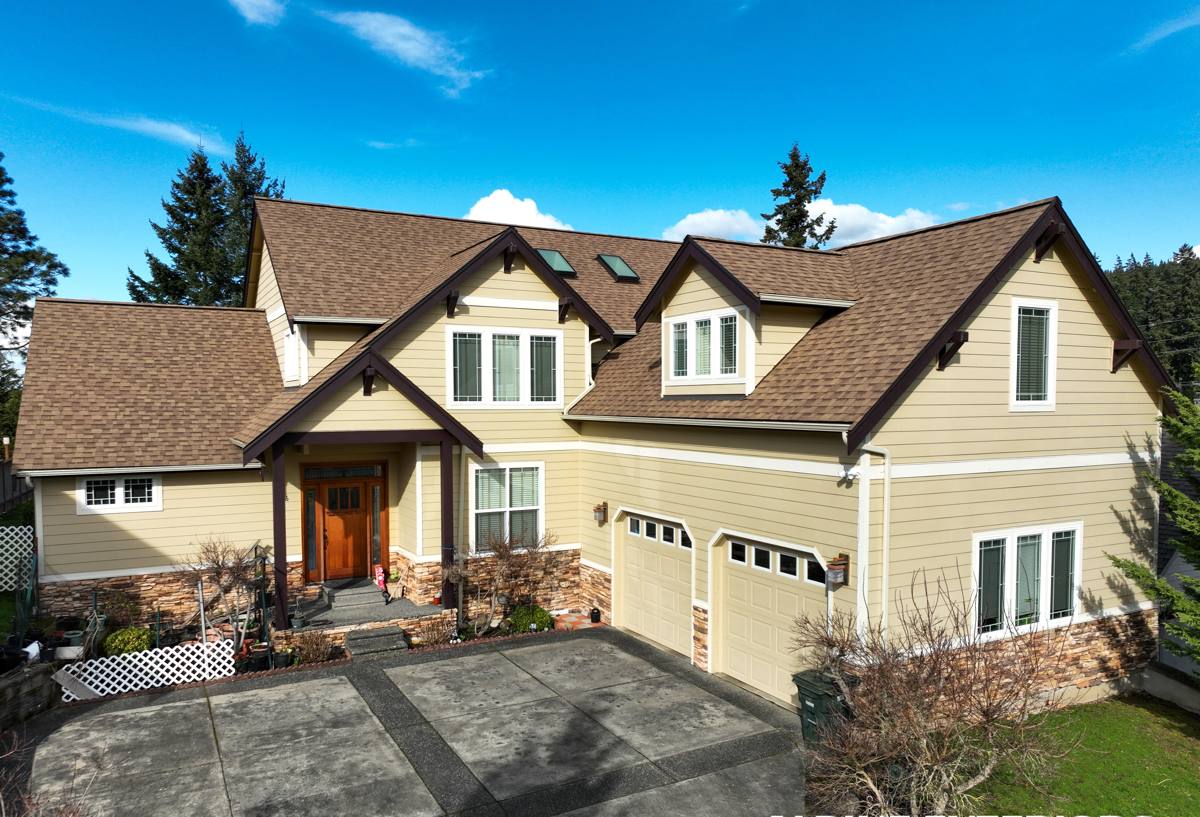
What Salt Air, Rain, and Moss Actually Do to Your Windows
Salt Air and Metal Components
Salt-laden air accelerates corrosion on window hardware — hinges, locks, balance mechanisms, and aluminum cladding or trim. It's a slow process, so most homeowners don't notice until a window starts sticking, a lock won't seat properly, or a crank mechanism on a casement window feels gritty. By the time that's happening, the corrosion is usually further along than the surface suggests.
Driving Rain and Seal Failure
Wind-driven rain doesn't just fall on a window, it pushes against it, testing every seal and flashing detail around the frame. Older windows and poorly installed newer ones handle vertical rain fine but fail under sideways pressure. That's when you start seeing water intrusion at the sill, staining below the window on the interior, or soft trim outside — even though the glass and sash look perfectly fine.
Moss and Trapped Moisture
Moss doesn't grow on window glass, but it thrives in the damp, shaded conditions around window trim, especially on north-facing walls and under eaves. Where moss holds moisture against wood trim or sill flashing for extended periods, it keeps that area wet far longer than open air would, which speeds up rot in wood components and encourages mildew on and around the frame.
Signs a Ferndale Home Needs Window Replacement
Some of these show up gradually, others appear suddenly after a hard rain event. Worth checking for on a walk around the exterior:
- Soft or spongy wood trim or sill when pressed with a finger
- Fogging or a permanent haze between double-pane glass (a sign the seal has failed)
- Windows that are difficult to open, close, or lock — especially casement or awning styles
- Visible gaps between the frame and siding, or cracked/missing caulk lines
- Interior condensation on the glass or sill during cold, wet stretches
- A noticeable draft near the frame on windy days
- Peeling paint or discoloration on interior trim below or beside the window
- Moss or dark staining building up on exterior trim around the frame
One or two of these on a single window might just mean that window needs attention. Several of these showing up across multiple windows usually points to a broader issue — either the original installation or the age of the units — and is worth addressing as a group rather than one at a time.
What a Correct Window Replacement Job Actually Involves
Removal and Inspection
Pulling the old window is also the best chance to see what's actually happening behind it. We check the framing, sill, and sheathing for rot or moisture damage before anything new goes in. Installing a new window over a damaged opening just hides the problem — it doesn't fix it.
Flashing and Water Management
This is the detail that matters most in a climate with regular driving rain. Proper flashing directs water that gets past the exterior cladding back out and away from the wall assembly, rather than letting it collect at the sill or track down into the framing. Flashing tape, sill pans, and correct shingling of building paper or house wrap around the opening all factor in here — it's not visible once the job is done, but it's the part that determines whether the window stays dry for the next twenty years.
Insulation and Air Sealing
The gap between the new window frame and the rough opening needs to be insulated correctly — not overpacked with spray foam, which can bow the frame and affect operation, and not left with gaps that let air and moisture through. Getting this right affects both comfort and long-term seal performance.
Sealing and Finish Work
Exterior caulking, trim work, and paint or finish matching are what make the replacement look intentional rather than patched in. We use exterior-rated sealants suited to the coastal-influenced moisture exposure this area sees, not a generic caulk that will crack and need redoing within a couple of seasons.
Choosing the Right Window Material for Ferndale Conditions
There isn't one universally "best" window material — the right choice depends on the home, the budget, and how much maintenance the homeowner wants to take on. Here's how the common options generally compare for a climate with salt air and heavy seasonal rain:
| Material | Moisture & Salt Air Resistance | Maintenance | Typical Lifespan |
|---|---|---|---|
| Vinyl | Good — won't corrode or rot, handles moisture well | Low — no painting needed | 20-30 years |
| Fiberglass | Very good — dimensionally stable, resists warping | Low to moderate | 30+ years |
| Wood-clad (exterior clad) | Depends heavily on cladding quality and installation | Higher — cladding and seals need periodic checks | 20-30 years if maintained |
| Aluminum-frame | Prone to corrosion in salt air over time unless well-coated | Moderate | 15-25 years in coastal-influenced air |
We're generally cautious about recommending bare aluminum-frame windows for properties this close to salt-influenced air, not because the product is bad, but because uncoated or lower-grade aluminum simply corrodes faster in this specific environment. That's a maintenance and longevity trade-off worth knowing about upfront, not a reason to rule it out entirely if it's paired with good coatings and upkeep.
Our Process for Ferndale Window Replacement Projects
- On-site assessment — we look at every window being considered, check framing and sill condition, and note any moisture or rot issues before quoting anything.
- Honest recommendation — we tell you which windows genuinely need replacement now, which can wait, and which just need resealing or minor repair.
- Material and style selection — matched to your home's exposure (how much direct wind-driven rain and salt air it actually gets) and your maintenance preference.
- Removal, inspection, and repair — any damaged framing or sheathing found during removal gets addressed before the new window goes in.
- Installation with proper flashing and sealing — following a sequence built for this area's rain exposure, not a generic installation shortcut.
- Final check and cleanup — operation, sealing, and trim are checked before we consider the job done.
Why Hiring a Crew That Already Works in Ferndale Matters
Window replacement done well is mostly about details that aren't visible once the job is finished — flashing sequence, sill pan setup, how the opening is prepped. A crew that regularly works in Ferndale and the surrounding Whatcom County area has already seen how the local combination of salt air, wind direction, and rain exposure plays out on real homes, not just in a manufacturer's spec sheet. That experience shows up in fewer callbacks for leaks and less premature hardware corrosion down the road.
It also matters for smaller, practical reasons — knowing which sides of a typical Ferndale home take the worst weather, understanding how local permitting works for exterior alterations, and being available if a seal needs a second look after the first hard rain of the season.
What Affects the Cost of Window Replacement
We don't publish flat pricing because window replacement costs vary a lot based on real project factors, but here's what typically drives the number up or down:
| Factor | Effect on Cost |
|---|---|
| Number of windows replaced at once | Per-window cost usually drops with larger batches |
| Material (vinyl vs. fiberglass vs. wood-clad) | Vinyl is typically the most budget-friendly; fiberglass and wood-clad run higher |
| Condition of the existing framing/sill | Rot or moisture damage found during removal adds repair cost |
| Window size and style (fixed vs. operable, casement vs. slider) | More complex operating hardware costs more than simple fixed units |
| Access and building height | Second-story or hard-to-access windows take more labor time |
The only way to get a real number is a look at the actual windows and openings — anything quoted without that is a guess.
If you're noticing drafts, sticking sashes, or trim that's starting to look rough around your windows, we're happy to take a look and give you a straightforward, no-pressure estimate. There's no obligation — just an honest read on what your windows actually need. Use the form below to get in touch.