 Lynden Siding
 Why Ferndale Homes Wear Out Siding Faster Than You'd Expect
Ferndale sits close enough to the water that salt-laden air is a constant, low-grade attack on anything mounted to the outside of a house. Add in Whatcom County's long stretch of driving rain each fall and winter, plus the shaded, damp conditions that let moss and algae take hold on north-facing walls, and you have a climate that is genuinely harder on siding than most of the country deals with. Homeowners who moved here from drier regions are often surprised by how much faster paint fails, caulk cracks, and wood-based products swell and delaminate compared to what they were used to.
None of this means Ferndale homes are doomed to constant repairs. It means the siding system and the installation details matter more here than in a mild, dry climate. A product and a crew that cut corners in Arizona might get away with it for a decade. In Ferndale, the same shortcuts show up in three or four years.
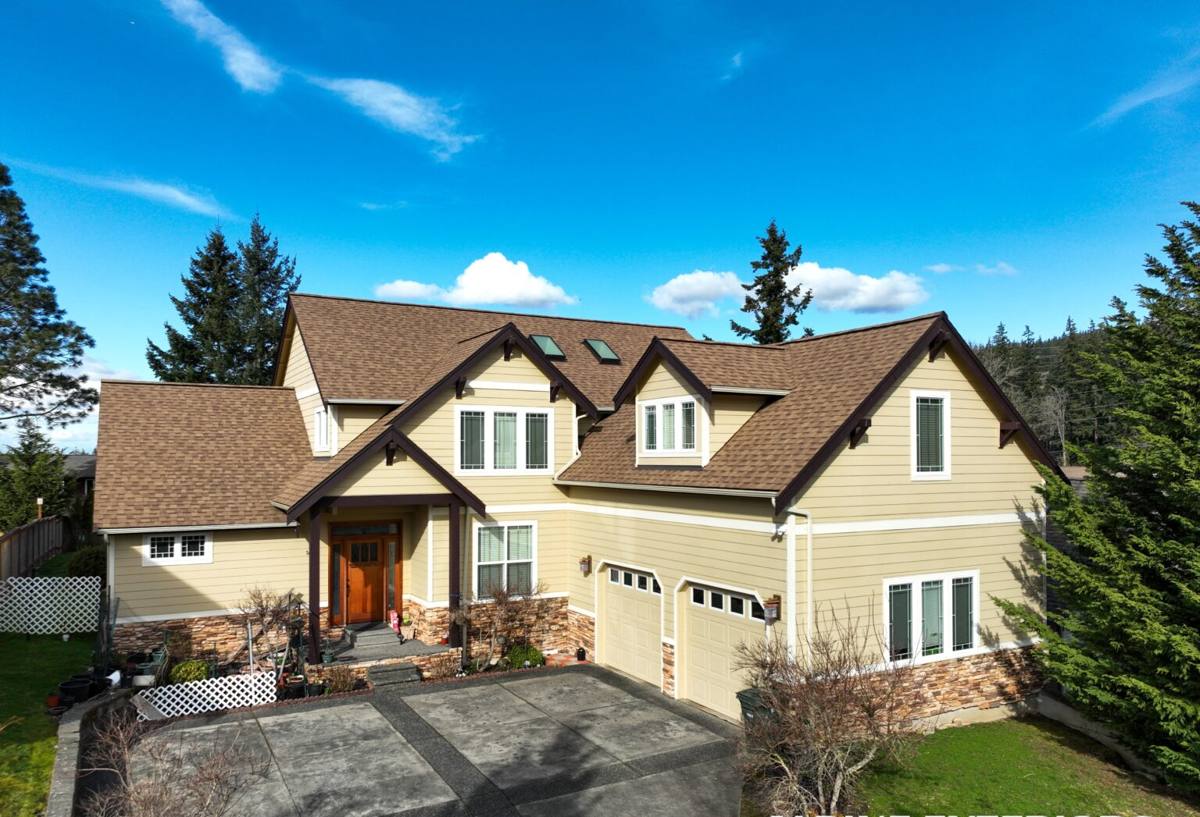
What Salt Air, Rain, and Moss Actually Do to a Wall
Salt Air
Airborne salt is corrosive to metal fasteners, flashing, and trim, and it accelerates the breakdown of lower-grade paint films. Over years, homes closer to the water tend to show chalking, fading, and fastener staining well before homes even a few miles inland.
Driving Rain
Wind-driven rain doesn't just fall on a wall — it gets pushed sideways and upward into seams, laps, and butt joints. A siding system that isn't detailed with proper overlaps, flashing, and a drainage plane behind it will eventually let water track behind the cladding, where it can sit against sheathing and framing.
Moss and Algae
Shaded elevations, gutters that overflow onto walls, and long stretches of damp weather all favor moss and algae growth. Beyond the cosmetic issue, moss holds moisture against the siding surface far longer than the wall would otherwise stay wet, which shortens the life of anything that isn't dimensionally stable and properly sealed at the edges.
Signs a Ferndale Home Needs Siding Replacement, Not Another Repair
- Soft, spongy, or crumbling spots when you press on the siding, especially near the bottom courses or under windows
- Paint that's failing every few years no matter how often it's redone
- Visible gaps, warping, or buckling boards, particularly on walls that face prevailing wind and rain
- Persistent moss or dark staining that comes back within a season of cleaning
- Rising energy bills alongside drafts or cold spots along exterior walls
- Siding that's original to a home built more than 20-25 years ago, especially if it's wood-based
One or two of these signs might mean a targeted repair is enough. Several at once, especially combined with soft sheathing underneath, usually means the water has been getting in longer than the siding has been showing it — and replacement is the more honest recommendation.
Why We Install Only James Hardie Fiber Cement
We standardized on James Hardie fiber cement siding for every job we do in Whatcom County, including Ferndale, and the climate here is a big part of why. Fiber cement is non-combustible, dimensionally stable, and doesn't absorb and swell with moisture the way wood-based or wood-composite products can. That matters directly in a place where walls stay damp for long stretches and moss holds water against the surface for weeks at a time.
James Hardie's HZ5 product line is engineered specifically for the wetter, harsher climate zones of the Pacific Northwest, with formulations aimed at better performance in high-moisture, freeze-thaw conditions. The factory-applied ColorPlus finish is baked on under controlled conditions rather than field-applied, which gives it more consistent coverage and better resistance to fading and chalking than a repainted surface — a real advantage against salt air's effect on lower-grade coatings. Hardie also backs the product with a strong, transferable limited warranty, which carries weight if you ever sell the home.
We don't install vinyl, LP SmartSide, Cemplank, Allura, or primed wood siding, and we're upfront about why: in a climate like this one, the long-term maintenance burden and moisture sensitivity of those products work against the homeowner. Fiber cement asks more of the installer up front — it's heavier, requires different fastening and cutting techniques, and doesn't forgive sloppy flashing detail — but it asks far less of the homeowner over the following 30 years.
What a Correct Siding Replacement Actually Involves
Replacing siding is not just pulling off old boards and nailing up new ones. On a Ferndale home, the water-management details underneath the siding matter as much as the siding itself.
Tear-Off and Inspection
Removing the old siding is also the only real chance to see what's happening underneath — soft sheathing, rot around window openings, or evidence of past leaks. A crew that's rushing to get new siding up without stopping to assess the sheathing is setting the new siding on top of an unresolved problem.
Water-Resistive Barrier and Flashing
A correctly lapped weather-resistive barrier, properly integrated window and door flashing, and correct flashing at roof-wall intersections and penetrations are what actually keep driving rain out of the wall assembly. The siding itself is the second line of defense, not the first.
Rainscreen and Drainage
In a climate this wet, a drainage gap behind the siding gives any water that does get past the outer layer a path to drain and dry out instead of sitting against the sheathing. This is one of the details that separates a durable installation from one that looks fine for a few years and then fails from behind.
Fastening and Clearances
Fiber cement has specific fastener spacing, penetration depth, and clearance requirements — including ground clearance and roof-line clearance — that are there to keep moisture from wicking into the bottom or top edge of the boards. Skipping these clearances is a common shortcut that shows up as damage years later.
Our Process for a Ferndale Siding Replacement
- On-site assessment — we look at existing siding condition, sheathing, trim, flashing, and the specific exposure of each elevation (which walls take the worst wind-driven rain, which stay shaded and moss-prone).
- Written scope and product selection — we walk through Hardie board profiles, textures, and ColorPlus color options suited to the home and the neighborhood.
- Tear-off and sheathing repair — old siding comes off, damaged sheathing or framing gets repaired before anything goes back up.
- Water-resistive barrier, flashing, and drainage plane installation — the part of the job that determines whether the siding lasts 10 years or 40.
- Hardie board installation — installed to manufacturer fastening and clearance specifications, not shortcuts.
- Trim, caulking, and final detailing — the seams and transitions that see the most water exposure get the most attention.
- Walkthrough — we go over the finished work with the homeowner before calling the job done.
What Drives the Cost of a Siding Replacement
| Factor | Why It Matters in Ferndale |
|---|---|
| Home size and wall complexity | More corners, gables, and dormers mean more cutting, flashing, and labor time |
| Sheathing condition | Rot or moisture damage found during tear-off adds repair scope before new siding goes up |
| Board profile and texture | Lap width, shingle-style, or panel systems vary in material and labor cost |
| Trim and detail work | Window and door surrounds, corner boards, and fascia detailing add time and material |
| Elevation exposure | Walls facing prevailing wind-driven rain often warrant extra flashing attention |
| Access and site conditions | Landscaping, slopes, and staging space affect labor efficiency |
We give homeowners a real, itemized number after seeing the home in person — not a rough guess over the phone. Broad regional ranges you'll see online rarely account for the sheathing repairs or detail work a specific house actually needs.
Why It Matters That We Already Work in Ferndale
A crew that regularly works Whatcom County homes already knows which elevations tend to take the worst wind-driven rain, how moss builds up differently on shaded lots near mature trees versus open lots closer to the water, and how the local building department expects flashing and drainage details to be handled. That local pattern recognition shows up in faster, more accurate assessments and fewer surprises mid-project. It also means a warranty call isn't a stranger showing up — it's a crew that's already familiar with the house and the neighborhood.
When you're vetting a siding contractor, ask directly how many fiber cement jobs they've done in this specific climate, whether they carry manufacturer certification for Hardie installation, and whether they'll show you the flashing and drainage plan before boards go up — not just the color chip.
Keeping New Siding Performing for the Long Run
- Rinse siding annually, especially shaded and north-facing walls prone to moss
- Keep gutters clear so overflow doesn't run down the wall face
- Trim back vegetation that keeps a wall section shaded and damp
- Recaulk trim joints and penetrations if you notice gaps opening up
- Have flashing and caulking spot-checked every few years, particularly after major storms
Fiber cement with a factory finish needs far less of this than repainted wood siding, but no siding is entirely maintenance-free in a climate like Ferndale's.
If your Ferndale home is showing signs of failing siding, or you're planning ahead before the next wet season, we're happy to take a look and give you a straightforward, no-pressure estimate — just fill out the form below.