 Lynden Siding
 Why Ferndale Roofs Take a Different Kind of Beating
A roof in Ferndale doesn't fail the same way a roof does further inland. Sitting close to Bellingham Bay and the open water of the Strait of Georgia, Ferndale homes deal with a steady dose of salt-laden air moving in off the water, mixed with driving rain that comes in sideways during winter storms rather than falling straight down. That combination corrodes exposed metal faster, works moisture into laps and seams that were never designed to take rain from an angle, and keeps roof surfaces damp for days at a stretch.
Add in Whatcom County's long, mild, wet stretch of fall through spring, plus the shade from mature evergreens common on Ferndale lots, and you get months of conditions that are ideal for moss and algae growth. Moss doesn't just look bad. It holds water against the roofing material, lifts shingle edges as it grows, and works its way under tabs and flashing over time. A roof installed without that reality in mind will show problems years before it should.
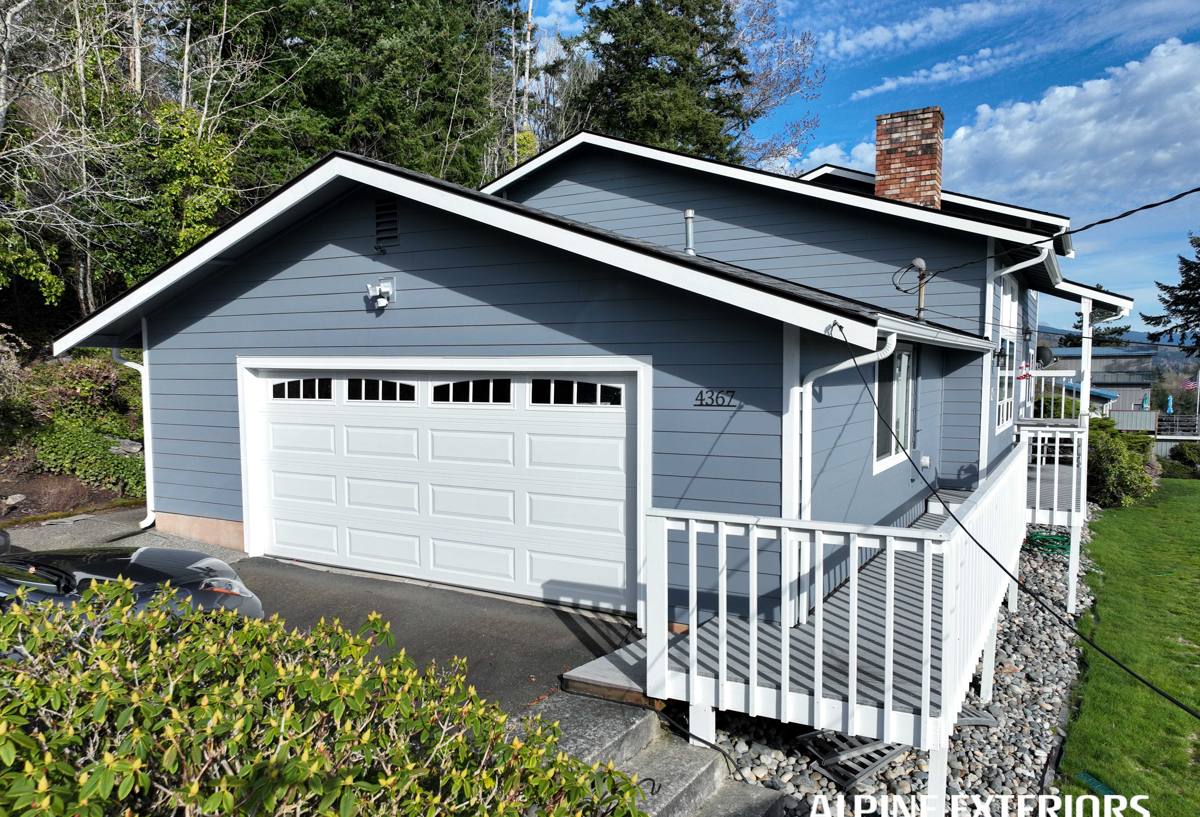
Signs a Ferndale Roof Needs Replacing, Not Another Patch
Every roof reaches a point where repair stops making sense and full replacement becomes the honest recommendation. In this climate, that point often shows up sooner than manufacturers' rated lifespans suggest, because moss, wind-driven rain, and salt air all accelerate wear in different ways.
- Granule loss heavy enough that you can see bare, shiny patches on shingles from the ground
- Moss growing in mats across north-facing slopes or shaded sections, especially where it's lifted shingle edges
- Soft or spongy spots when walking the roof, which usually mean the decking underneath has taken on moisture
- Daylight, water stains, or a musty smell in the attic
- Shingles that are curling, cracking, or missing tabs after wind events
- Repeated repairs to the same handful of spots over the last several years
- An asphalt shingle roof already past 20–25 years old, regardless of how it looks from the street
If a roof is showing two or three of these at once, patch repairs tend to become a cycle of spending money to buy a little more time rather than solving the underlying problem.
What a Correct New Roof Installation Involves
"New roof" covers a lot of ground, and the difference between a roof that lasts and one that leaks within a few winters usually comes down to details most homeowners never see once the shingles are down. A correct installation isn't just laying new material over what's there — it's a sequence of steps, each one protecting the next.
Tear-off and deck inspection
We remove the old roofing down to the deck rather than layering over it. That's the only way to actually see the plywood or board sheathing underneath, which is where moisture damage from a failing roof usually shows up first. Any soft, delaminated, or rotted decking gets replaced before anything new goes down — installing new roofing over compromised decking just hides a problem that will resurface.
Underlayment and water barriers
Given how much wind-driven rain this area sees, we pay close attention to self-adhered ice-and-water barrier membrane at eaves, valleys, and any low-slope transitions, backed by a synthetic underlayment across the rest of the roof. This is the roof's real waterproofing layer — the shingles or panels on top are the weather-facing surface, but the underlayment is what keeps water out if wind ever pushes it under a shingle edge.
Flashing details that decide whether a roof leaks
Most roof leaks don't happen in the open field of the roof — they happen at transitions: chimneys, skylights, sidewalls, and valleys. Proper step flashing at walls, counter-flashing at chimneys, and kick-out flashing where a roof edge meets a wall keep water moving off the roof instead of behind siding or trim. In a climate where rain regularly comes in at an angle, cutting corners here is where new roofs fail early.
Ventilation balance
A new roof needs balanced intake and exhaust ventilation — typically soffit vents pulling air in and a ridge vent letting it out. Without that balance, moisture from everyday household use gets trapped in the attic, condenses on the underside of the deck, and slowly rots it from the inside, regardless of how good the roofing material on top is.
Choosing a Roofing Material for This Climate
There's no single "best" roofing material — the right choice depends on the home, the budget, and how much long-term maintenance an owner wants to take on. In a coastal, moss-prone climate like Ferndale's, here's how the common options actually compare.
| Material | Moss & moisture resistance | Performance in wind-driven rain | Ongoing maintenance |
|---|---|---|---|
| Architectural asphalt shingle | Good with proper ventilation and periodic moss treatment | Strong when installed with correct underlayment and flashing | Occasional moss/algae cleaning; most common, most affordable to repair |
| Standing seam metal | Excellent — sheds moisture, little surface for moss to grip | Excellent; handles driving rain and wind uplift well | Low; mainly fastener and sealant checks over time |
| Cedar shake | Requires diligent upkeep — natural material holds moisture and is a moss magnet without regular treatment | Good when installed correctly, but detailing is less forgiving | Higher; periodic treatment and inspection expected |
| Synthetic/composite shingle | Good; engineered to resist moisture absorption better than wood | Strong; behaves similarly to quality asphalt in wind and rain | Low to moderate |
We're honest with homeowners about trade-offs rather than steering everyone toward one product. Metal roofing carries a higher upfront cost but shrugs off this climate with the least ongoing attention. Architectural asphalt shingle remains the most common choice because it balances price, appearance, and performance well, provided the installation details — underlayment, flashing, and ventilation — are done right. Cedar shake can look great but asks the most of an owner in terms of upkeep in a wet, shaded environment, which is worth knowing before committing to it.
What Drives the Cost of a New Roof Here
Every roof is priced individually, but the same handful of factors move the number up or down on almost every Ferndale project we look at.
| Factor | Why it matters |
|---|---|
| Roof size and pitch | More square footage and steeper slopes mean more material, more labor time, and more safety setup |
| Layers to remove | Tearing off one layer of old roofing costs less than removing two or three stacked layers |
| Decking condition | Sections of rotted or soft sheathing found during tear-off need replacing before new roofing goes down |
| Material choice | Standard architectural shingle, premium shingle, metal, and cedar all sit at different price points |
| Roof complexity | Valleys, dormers, chimneys, and multiple roof planes add flashing work and labor time |
| Access | Trees, tight lot lines, or difficult staging areas can affect setup and disposal logistics |
As a broad rule of thumb, a straightforward architectural asphalt shingle reroof on an average-size home tends to land in the mid-five-figure range, with larger roofs, extensive decking replacement, or a move to metal roofing pushing the number higher. We provide a specific, written number after seeing the roof in person — not a guess based on square footage alone.
Our Process, Start to Finish
- On-site inspection. We walk the roof and attic, measure, and check for decking issues, ventilation problems, and flashing condition before recommending anything.
- Material and scope review. We go over material options, ventilation needs, and any repair items we found, so the homeowner understands exactly what's being proposed and why.
- Written estimate and scheduling. A clear scope of work and price, along with a realistic timeline based on weather and crew availability.
- Tear-off and deck inspection. Old roofing comes off, the deck is checked, and any needed sheathing repairs happen before anything new is installed.
- Underlayment, ice-and-water barrier, and flashing. The waterproofing layers and all transition flashing go in before the finish material.
- Roofing material and ventilation installation. Shingles, metal panels, or other chosen material go on, with intake and exhaust ventilation balanced correctly.
- Cleanup and magnetic nail sweep. The property is cleared of debris and swept for stray fasteners before we consider the job done.
- Final walkthrough. We go over the finished roof with the homeowner and answer any questions before closing out the job.
Why a Crew That Already Works Ferndale Matters
Roofing crews who work across Whatcom County regularly, rather than dropping in on the occasional job, notice patterns that matter here: which flashing details tend to fail first in this area's wind-driven rain, how much ventilation a typical attic actually needs given the humidity, and which roof slopes hold moss the longest based on tree cover and sun exposure. That knowledge comes from repetition, not a general contracting background.
There's also a practical side to it. A local crew understands the permitting process for the area, shows up for warranty follow-up without a long drive being a disincentive, and is easy to reach if a question comes up two years after the job is finished. For a homeowner, that means fewer surprises during the project and more accountability after it.
Keeping a New Roof Performing Through Moss Season
A well-installed roof still benefits from basic upkeep, especially somewhere as prone to moss and moisture as this area. A little attention each year goes a long way toward getting full value out of a new roof.
- Keep gutters clear so water isn't backing up under the roof edge during heavy rain
- Trim back overhanging branches to reduce shade, debris buildup, and moss growth
- Have moss treated or gently removed before it establishes and lifts shingle edges — don't pressure-wash a roof, which can strip granules and force water under laps
- Check attic ventilation isn't blocked by insulation or stored items
- Schedule a quick visual inspection after any major windstorm
- Address small leaks or missing shingles right away rather than waiting for the next dry stretch
If you're weighing a repair against full replacement, or just want an honest read on where your roof actually stands, we're happy to take a look and put together a free, no-pressure estimate — the form below gets that started.