 Lynden Siding
 Deck Replacement Built for Everson's Climate
Everson sits close enough to the water and low enough in the Nooksack valley that decks here take a beating most homeowners underestimate. It isn't one dramatic storm that wrecks a deck — it's the slow, repeated cycle of damp air, standing moisture, and shade that never quite dries out between rains. Add in the salt-tinged air that drifts inland off the Sound on a west wind, and you've got conditions that work steadily against wood, fasteners, and finishes year-round.
A deck that was built to a minimum standard, or built for a drier climate's assumptions, tends to show its age fast in Whatcom County. Boards cup and split, joist hangers rust before their time, and moss finds every shaded corner and north-facing stair tread. Replacing a deck the right way here means building for this specific climate, not just swapping old boards for new ones on the same frame.
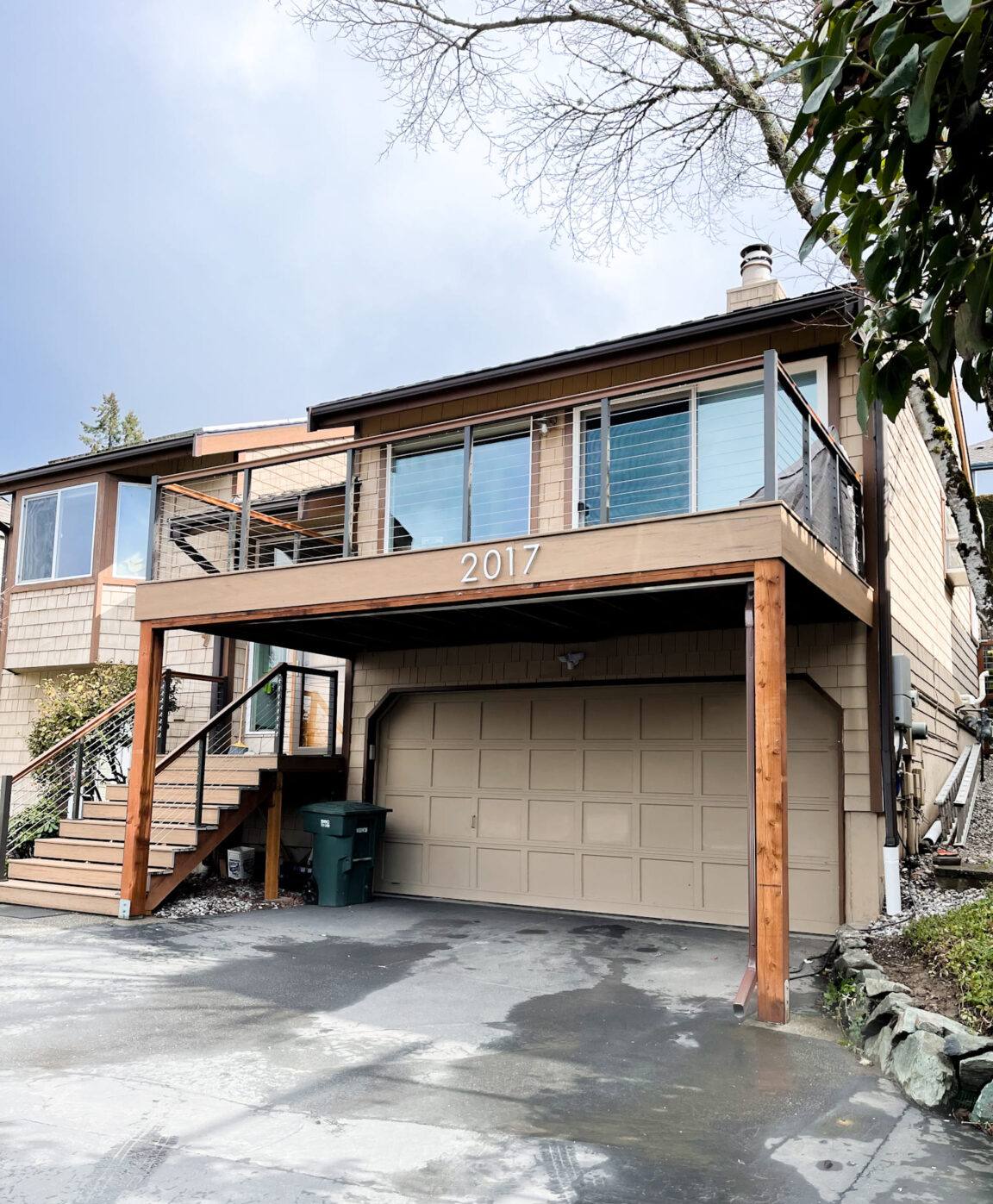
Signs an Everson Deck Needs Replacement, Not Just Repair
Not every tired-looking deck needs to come out. But there's a point where patching becomes false economy — you spend money and still have a deck with a compromised frame underneath. Here's how we tell the difference on a walkthrough.
Repair Is Usually Enough When:
- Individual boards are cupped, splintering, or gray, but the framing underneath probes solid
- Railings are loose at a few connection points but posts aren't rotted at the base
- Fasteners are surface-rusted but structurally intact
- The ledger board attachment to the house is sound and properly flashed
Replacement Is the Honest Call When:
- A screwdriver sinks into joists or beams with little resistance — a classic sign of moisture-driven rot
- The ledger board shows soft spots or gaps where it meets the house, which often means water has been getting behind the siding
- Support posts are rotted or crumbling at or below grade
- Multiple footings have shifted or settled, throwing the deck out of level
- The deck was built without proper flashing, joist hanger hardware, or adequate drainage — common in older Whatcom County decks — and moss and mildew keep returning no matter how often it's cleaned
We'll always tell you straight which category your deck falls into. If repair genuinely makes sense, we'll say so — a full tear-out isn't the right answer for every deck that just looks rough.
What a Correct Deck Replacement Involves
A deck replacement done properly for this region is really a structural project with a finished surface on top, not just a decking swap. The parts that matter most are the ones you won't see once it's finished.
Ledger Attachment and Flashing
Where the deck meets the house is the single most common failure point in this climate. Water that gets behind an improperly flashed ledger board doesn't just rot the deck — it can work its way into the wall assembly of the house itself. A correct replacement means proper ledger flashing, correct fastener spacing rated for the load, and a clean water path that directs moisture away from the structure rather than trapping it against the wall.
Framing and Fasteners
Given the amount of moisture Whatcom County decks sit through, we frame with pressure-treated lumber rated for ground contact where posts meet grade, and use corrosion-resistant, code-rated hardware throughout — joist hangers, structural screws, and post bases matched to the treated lumber's chemical makeup so they don't corrode prematurely against it. Mismatched hardware is a quiet, common cause of early structural failure that isn't visible until something gives way.
Footings and Drainage
Everson's soil holds water, especially through fall and winter. Footings need to be set below frost depth and sized for the deck's actual load, and the ground beneath the deck needs somewhere for water to go rather than pooling and staying damp against the framing all season.
Decking Surface
The visible boards get the attention, but they're the last decision, not the first. Board spacing, direction, and fastening method all affect how well a deck sheds water and resists moss buildup in shaded spots — details that matter more here than in drier climates.
Decking Material Options for Everson Homes
There's no single "best" decking material — the right choice depends on your budget, how much upkeep you're willing to do, and how much sun versus shade your deck actually gets. Here's an honest comparison based on how these materials perform in a wet, moss-prone climate like this one.
| Material | Moisture & Moss Resistance | Maintenance | Typical Lifespan |
|---|---|---|---|
| Pressure-treated wood | Good if sealed and cleaned regularly; shaded areas need extra attention | Annual cleaning and periodic re-sealing | 15-20 years with upkeep |
| Cedar | Naturally decay-resistant but still needs sealing in a wet climate | Regular cleaning, re-staining every 2-3 years | 15-25 years with upkeep |
| Composite decking | Very good — doesn't absorb moisture like wood, though moss can still grow on the surface film in shaded spots | Periodic washing, no staining or sealing | 25-30+ years |
| PVC/capped polymer | Excellent — fully moisture-resistant core | Occasional washing only | 25-30+ years |
We're straightforward about trade-offs: composite and PVC decking cost more upfront but remove most of the moisture-related upkeep that wood demands in this climate. Wood costs less initially but only holds up if it's cleaned and sealed on a real schedule — skip that and you'll be looking at repairs sooner than expected, especially on shaded sections of a deck that never fully dries between rains.
Our Deck Replacement Process
- On-site evaluation. We inspect the existing deck's framing, ledger connection, footings, and posts to confirm what actually needs replacing and identify any moisture damage to address before rebuilding.
- Straightforward proposal. You get a clear scope of work and material options, with the trade-offs explained in plain terms — no pressure toward the most expensive choice.
- Permitting. Deck replacements typically require a permit through Whatcom County; we handle that process so it's not on your plate.
- Careful tear-out. We remove the old structure and check the ledger connection and any framing behind it for hidden moisture damage before anything new goes up.
- Rebuild to code. Proper flashing, treated framing, corrosion-resistant hardware, and footings set for this soil and climate — then the decking surface and railings.
- Final walkthrough. We go over the finished deck with you, including what maintenance it needs and on what schedule, based on the material you chose.
Why Hiring a Crew That Already Works in Everson Matters
A deck built to a generic standard is a deck built for somewhere else's weather. Contractors who work Everson and the wider Lynden area regularly know which details actually matter here — flashing details at the ledger, hardware that won't corrode against treated lumber in constant damp, footing depth for local soil and frost conditions, and decking choices that hold up against a moss season that runs longer than it does in drier parts of the state.
There's also a practical side to hiring locally: familiarity with Whatcom County's permitting process, realistic scheduling around the region's wetter months, and being close enough to actually stand behind the work if something needs a look after the fact. A deck replacement is a structural investment attached to your home — it's worth having someone build it who understands exactly what this climate will do to it over the next twenty years.
What Affects the Cost of a Deck Replacement
Every deck is different, so we don't quote sight unseen — but these are the factors that most influence the final price on a replacement.
| Factor | Why It Matters |
|---|---|
| Deck size and shape | More square footage and complex angles mean more material and labor |
| Decking material chosen | Composite and PVC cost more upfront than wood, but reduce long-term maintenance costs |
| Height and structure | Taller decks or those requiring stairs and extra railing need more framing and hardware |
| Extent of hidden damage | Rot found at the ledger or framing during tear-out can add scope once it's exposed |
| Permit and code requirements | Guardrail height, footing depth, and attachment methods are set by current code, not the old deck's original build |
We'll always flag anything that changes the scope before we proceed — you won't be surprised by a number after the fact.
Keeping a New Deck in Good Shape
Whatever material you choose, a little regular upkeep goes a long way in this climate. A few habits that make a real difference:
- Sweep leaves and debris off the deck surface regularly, especially in fall — trapped organic matter holds moisture and feeds moss
- Clean shaded or north-facing sections more often than sunny ones, since they dry out slower
- Check that drainage paths under and around the deck stay clear so water doesn't pool against posts or framing
- For wood decking, re-seal on the schedule recommended for the product — skipping a cycle in this climate shows up fast
- Inspect railings and stair connections once a year for looseness before it becomes a safety issue
If you're weighing whether your current Everson deck needs a repair or a full replacement, or you're ready to plan a new one built for what this climate actually demands, we're happy to take a look and give you a straight answer. Reach out for a free, no-pressure estimate using the form below.