 Lynden Siding
 Deck Repair Built for Maple Falls Conditions
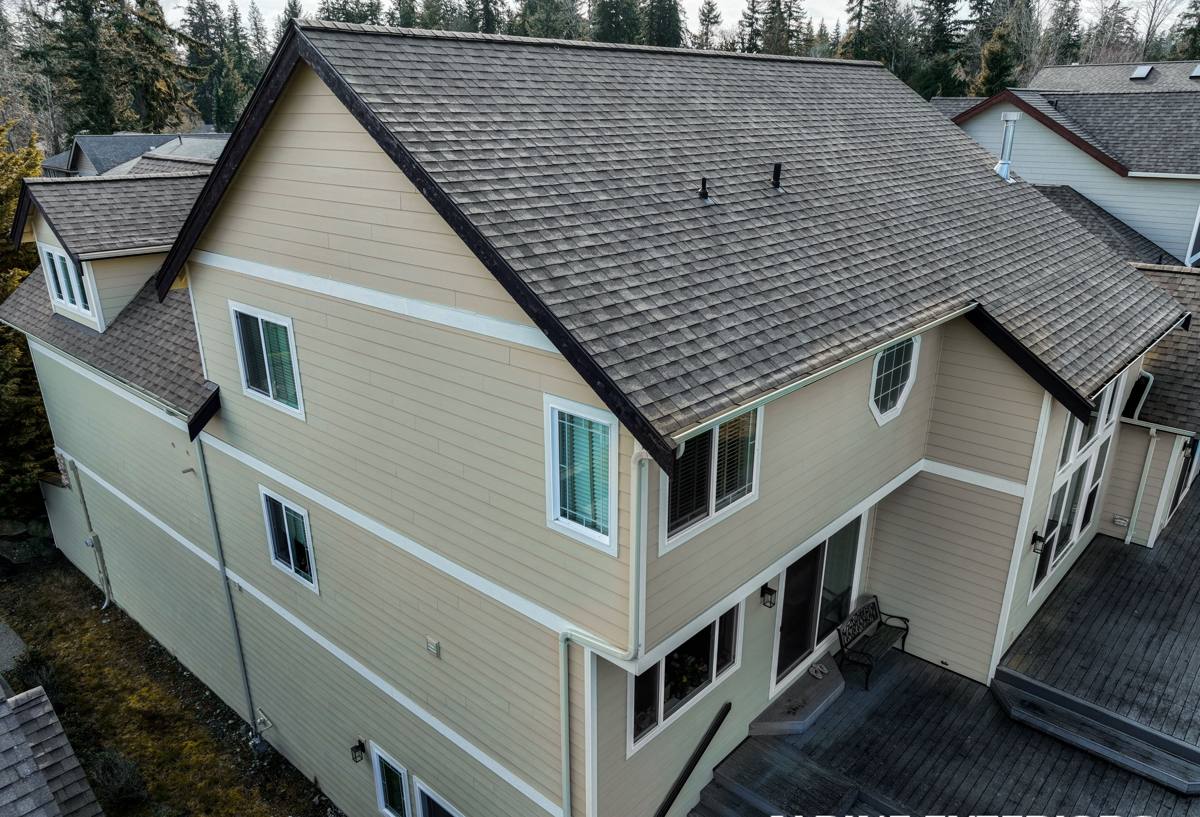
Maple Falls sits up against the foothills of the North Cascades, and that location shapes what happens to a deck here. Tree canopy holds shade and moisture on the boards long after a storm has passed. Winter systems moving in off the Sound still reach this far inland as driving rain, and the combination of shade, moisture, and cooler temperatures gives moss a long season to take hold — often eight or nine months out of the year. A deck built and finished the same way you'd see in a drier part of the state simply doesn't hold up as long out here. Repairing a deck correctly in Maple Falls means understanding those conditions, not just patching what's visibly broken.
This page covers deck repair specifically for Maple Falls homes: what typically fails, what a correct repair looks like, and how to tell whether repair is even the right call versus replacement.
Why Decks Fail Faster Here Than in Drier Parts of Whatcom County
Shade and Moss
Tree cover keeps large sections of a deck out of direct sun for most of the day. Without sun and airflow to dry the wood, moisture sits in the grain longer, and moss and algae get a foothold on boards, stair treads, and especially the north- or east-facing sides of a deck. Moss isn't just cosmetic — it holds water against the wood surface and makes footing slick and dangerous on stairs and ramps.
Driving Rain and Wind-Driven Moisture
Rain that comes in at an angle gets pushed under railings, behind ledger boards, and into any gap where flashing or caulking has failed. This is where most of the structural damage we find actually starts — not on the open deck surface, where problems are visible, but at the house connection and fastener points, where it's hidden.
Freeze-Thaw Cycling
Maple Falls sits at higher elevation than Lynden proper, and it sees more frequent freeze-thaw swings through the fall and winter. Water that's worked its way into a crack or a loose joint expands when it freezes, widening the damage a little more each cycle. A hairline split that would sit stable in a milder climate can open into a real structural crack after a few winters here.
Signs a Deck Needs Repair
Most decks give warning signs well before they become unsafe. Catching these early is what keeps a repair a repair, instead of turning it into a full rebuild.
- Soft or spongy spots underfoot, especially near the house or around post bases
- Visible gaps, rust streaks, or movement where the deck attaches to the house (the ledger board)
- Railings or posts that flex or wobble when pushed
- Persistent moss or black staining that comes back within weeks of cleaning
- Fasteners backing out, or dark halos around screw and nail heads
- Stair stringers that feel bouncy or uneven
- Gaps opening up between deck boards beyond normal seasonal movement
- Standing water that doesn't drain within an hour or two after rain stops
Any one of these on its own might be minor. Several showing up together, especially near the ledger or stair connections, usually means it's time for a proper inspection rather than a DIY patch.
What a Correct Deck Repair Actually Involves
A repair that only replaces the boards you can see is a repair that fails again in a year or two. In a climate like this one, the parts of the deck you can't see are usually where the real problem lives.
Structural Check First
Before any boards come off, we check the ledger board connection, the posts, the beams, and the footings. This is the load-bearing skeleton of the deck, and it's also the part most exposed to wind-driven rain and hidden moisture. If flashing behind the ledger has failed, that gets corrected as part of the repair — replacing boards over a rotting ledger just delays the real problem.
Fastener and Hardware Condition
Older decks around Maple Falls were often built with fasteners that aren't rated for today's pressure-treated lumber chemistry, which corrodes standard steel faster than people expect. Corroded fasteners get replaced with hardware rated for the wood species and treatment actually in use.
Board-by-Board Assessment
Not every board on a deck fails at the same rate — boards in full shade or near a downspout wear out well before boards in open sun. We replace what's actually damaged rather than defaulting to a full resurface, which keeps the cost honest.
Drainage and Airflow
Where moss and rot keep coming back in the same spots, the underlying cause is usually poor drainage or blocked airflow underneath the deck. Part of a correct repair is addressing that — trimming back vegetation, clearing debris from under low decks, and making sure water has somewhere to go instead of sitting under the structure.
Common Problems We Find on Maple Falls Decks
| Problem | Typical Cause | Repair Approach |
|---|---|---|
| Rot at ledger board | Failed or missing flashing, wind-driven rain | Remove affected material, install proper flashing, rebuild connection |
| Persistent moss/algae | Shade, poor drainage, low airflow | Clean, treat, improve drainage; replace boards that have soaked through |
| Loose or wobbly railings | Corroded fasteners, moisture-softened posts | Replace hardware with corrosion-rated fasteners, reinforce post connections |
| Soft/spongy decking | Standing water, trapped moisture under boards | Replace affected boards, correct board spacing for drainage |
| Cracked or splitting stair stringers | Freeze-thaw cycling on compromised wood | Sister or replace stringers, reassess load path |
| Bouncy or uneven decking | Weakened joists or undersized framing | Sister joists or replace, confirm spacing meets current load needs |
Repair or Replace? Honest Factors to Weigh
We don't push a full replacement when a repair will genuinely hold up, and we won't recommend patching a deck that's structurally compromised just to keep the job small. These are the factors that actually decide it:
| Factor | Favors Repair | Favors Replacement |
|---|---|---|
| Framing condition | Joists, beams, and posts are sound | Rot or damage found in multiple structural members |
| Extent of damage | Isolated to specific boards or one area | Widespread across the deck surface and substructure |
| Age of the deck | Under 15-20 years, decent original build | Original build quality was poor or well past typical lifespan |
| Code and permit status | Structure already meets current requirements | Undersized framing or missing proper footings for current code |
| Long-term plans | Homeowner plans to stay, wants to preserve current layout | Homeowner wants a different size, shape, or material anyway |
In most cases where we're called out to a Maple Falls property, a repair is the right call — the damage is concentrated at predictable points like the ledger, stairs, and shaded sections, while the core framing is still sound. Full replacement becomes the honest recommendation when rot has spread into the beams and posts, or when a deck was undersized to begin with.
Our Repair Process
- On-site inspection. We check the surface, the substructure, the ledger connection, and drainage — not just what's visible from the top.
- Written scope and estimate. You get a clear breakdown of what's failing, what we recommend fixing, and what it costs, before any work starts.
- Repair work. Structural corrections first, then decking, railings, and stairs, then hardware and fastener upgrades.
- Drainage and moss prevention. Addressing the conditions that caused the damage, not just the damage itself.
- Final walkthrough. We show you what was done and what to keep an eye on going forward.
Materials We Use for Repairs
For structural framing, we use pressure-treated lumber rated for ground contact where it's called for, matched with corrosion-resistant fasteners and connectors suited to that treatment. For decking and railings, the right choice depends on the deck's exposure and the homeowner's priorities — some homeowners prefer to match existing wood decking for a consistent look and lower upfront cost, while others move to composite boards in heavily shaded, moss-prone areas because composite doesn't absorb moisture the way wood does and needs less seasonal maintenance. We'll walk through the real trade-offs — upfront cost, maintenance, and appearance over time — rather than pushing one option across the board.
Why It Matters to Hire a Crew That Already Works in Maple Falls
A repair crew that mostly works in drier, more open parts of Whatcom County can miss what's specific to a shaded, higher-elevation property like the ones around Maple Falls. Knowing which areas of a deck take the worst of the moss and moisture, how freeze-thaw cycling behaves at this elevation, and which fastener and flashing choices actually hold up here isn't generic knowledge — it comes from working these conditions repeatedly. That local experience is what separates a repair that lasts from one you're calling someone back for in two years.
Simple Maintenance Between Repairs
A few habits go a long way toward stretching the life of a repaired deck in this climate:
- Sweep debris and needles off the deck regularly, especially in fall
- Clean moss and algae off boards and stairs before it builds up thick
- Keep gutters and downspouts clear so water isn't dumping onto or under the deck
- Trim back overhanging branches to let in more light and airflow
- Check railings and stair connections for movement once or twice a year
- Re-seal or re-stain wood decking on the manufacturer's recommended schedule, not just when it looks faded
If your deck in Maple Falls has soft spots, persistent moss, loose railings, or you're just not sure whether it needs a repair or something more, we're happy to take a look and give you a straight answer. Request a free, no-pressure estimate using the form below.