 Lynden Siding
 Building Decks for Kendall Homes in Whatcom County's Climate
Kendall sits in the rural, wooded stretch of Whatcom County north of Lynden, where lots tend to be larger, tree cover is heavier, and homes often sit back from the road with more shade and more exposure to weather moving in off the water and the foothills. A deck built out here has to earn its keep differently than one on a tight in-town lot. It's dealing with more standing moisture from tree canopy, more debris load in the gutters and deck boards, and a longer stretch of the year where surfaces just don't fully dry out between rain events.
We build custom decks for homeowners throughout the Kendall area and the rest of Lynden's outlying communities, and the approach we take here is shaped by what actually happens to wood, fasteners, and framing in this specific environment — not a generic deck spec pulled from a catalog. This page covers what a deck in Kendall needs to hold up, what a correct build looks like from the ground up, and how we run the job from first estimate to final walkthrough.
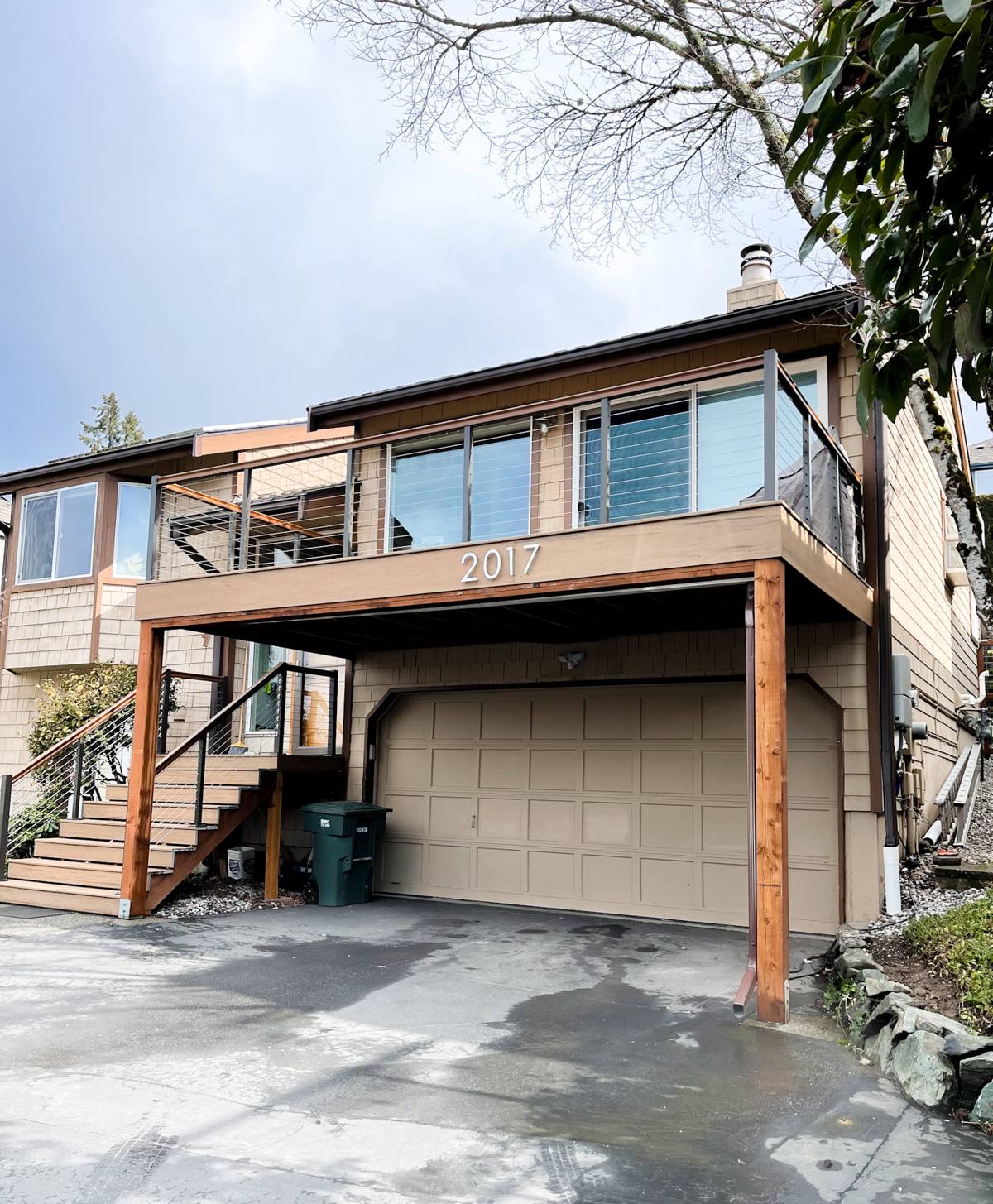
What Salt Air, Driving Rain, and Moss Season Do to a Deck
Whatcom County decks fight a combination of problems that drier inland climates never deal with. None of them are dramatic on their own, but stacked together over a Pacific Northwest winter, they're what separates a deck that lasts fifteen years from one that needs major repair in five.
Salt Air and Corrosion
Proximity to Puget Sound and the marine air that moves through the county means metal hardware is under constant low-grade attack from airborne salt. Fasteners, joist hangers, and railing brackets that aren't rated for coastal exposure will corrode from the inside out, often invisibly, until a board or a rail post fails without warning.
Driving Rain
Rain here doesn't just fall straight down — wind-driven rain gets pushed sideways and up under ledger boards, around post bases, and into any gap where flashing was skipped or done poorly. A deck that's watertight on a calm day can still be taking on water at every connection point during a storm.
The Long Moss Season
Shaded, wooded lots like the ones common around Kendall stay damp longer than open lots in town. Moss and algae get a foothold on decking, especially on the north side of a house or under tree cover, and once established they hold moisture against the wood surface year-round. That constant dampness is what accelerates rot, not the occasional heavy rain by itself.
Choosing the Right Decking Material for a Kendall Property
There's no single "best" decking material — the right call depends on how much shade the site gets, how much maintenance the homeowner wants to do, and budget. Here's how the common options actually perform in this climate.
| Material | Moisture & Moss Resistance | Maintenance | Typical Lifespan Here |
|---|---|---|---|
| Pressure-treated lumber | Good if sealed regularly; absorbs water at cut ends and fastener holes if not maintained | Annual cleaning and re-sealing recommended, especially on shaded lots | 10-15 years with upkeep |
| Cedar | Naturally rot-resistant, but still needs surface protection against algae in shade | Periodic cleaning and oil/stain to hold color and resist moss | 15-20 years with upkeep |
| Composite decking | Excellent — doesn't absorb water into the board itself | Occasional washing to keep pollen and algae film off the surface | 25-30 years, manufacturer-dependent |
| PVC/capped polymer | Best moisture resistance of the group; nothing to seal or absorb | Low — mostly rinsing surface debris | 25-30+ years |
On heavily shaded Kendall lots, we lean toward composite or capped polymer decking when budget allows, simply because they don't give moss and algae the porous surface they need to take hold. For homeowners who want the look and feel of real wood, cedar is the better call than standard pressure-treated lumber in shaded conditions — but it still needs a homeowner willing to keep up with cleaning and sealing.
Framing and Structure: The Part That Determines Whether the Deck Lasts
The decking surface is what you see and walk on, but the framing underneath is what determines whether the deck is still sound in fifteen years. This is where a lot of older or budget-built decks fail first, usually out of sight.
Ledger Attachment and Flashing
Where the deck ties into the house is the single most common failure point on any deck in this region. It needs proper flashing that directs water away from the house sheathing, not just a ledger board lag-bolted directly to the siding. Done wrong, this is how water gets behind siding and into wall framing — a problem that shows up as rot years after the deck was built.
Joist Hangers and Fasteners
Every joist hanger, screw, and bolt should be rated for exterior and, ideally, coastal exposure — stainless steel or heavy hot-dip galvanized, not the cheaper coated fasteners that start rusting within a couple of seasons in this air.
Post Bases and Footings
Posts should sit on bases that hold the wood off the concrete and off standing water, not buried in or resting directly on wet soil. Footings need to go below frost depth and be sized for the actual load of the deck, including snow load in a heavier winter.
Drainage Under the Deck
On sites with heavier tree cover and slower-draining soil, grading and drainage under and around the deck matter as much as the framing itself. A deck built over ground that holds water will stay damp longer after every rain, which shortens the life of everything above it.
Railings and Hardware Built for This Climate
Railings take a lot of abuse — they're handled constantly, they're the first thing to show rust streaks from corroding fasteners, and on a covered or partially shaded porch or deck they're often the last thing to dry out after a storm. We spec railing hardware and connectors the same way we spec framing hardware: rated for coastal, wet-climate exposure, not the minimum grade available at a box store. Cheaper hardware is where homeowners end up with rust stains bleeding down composite decking or cedar rails within a year or two — a cosmetic problem that's entirely avoidable with the right materials up front.
Our Process, From Estimate to Finished Deck
- On-site assessment. We walk the lot, look at sun and shade exposure, existing drainage, and how the deck will tie into the house before recommending materials.
- Honest material recommendation. We'll tell you straight whether your site's shade and moisture load make composite or capped polymer the smarter long-term call, or whether wood makes sense for your budget and maintenance preference.
- Written estimate. Clear scope, materials, and price before any work starts — no surprise change orders for things we should have caught during the walkthrough.
- Permitting. We handle the permit process where required so the structure is inspected and code-compliant, not just built to look right.
- Framing first, inspected before covering. Ledger flashing, footings, and structural framing are done and checked before decking goes down — this is the stage that matters most and the one that's easiest to rush.
- Decking, railing, and finish work. Surface material, railings, stairs, and any built-in features go in last, with attention to fastener placement and drainage gaps between boards.
- Final walkthrough. We go over the finished deck with you, including what maintenance it needs and on what schedule, before we consider the job done.
Maintenance Checklist for Kendall Deck Owners
A well-built deck still needs upkeep, especially on a shaded, wooded lot where moisture and moss have the advantage. This is what we recommend to homeowners after the job wraps up:
- Sweep debris and needles off the decking regularly — trapped organic matter holds moisture against the surface and feeds moss growth
- Wash the deck surface at least once a year, more often on heavily shaded areas, to keep algae film from establishing
- Check and re-seal or re-stain wood decking on the manufacturer's or a professional's recommended schedule, not just when it looks faded
- Inspect railing connections and hardware annually for rust bleed or looseness, especially after winter storms
- Keep gutters and downspouts near the deck clear so runoff isn't dumping extra water onto or under the structure
- Trim back overhanging branches where possible to reduce shade and debris load on the deck surface
- Watch for soft spots or discoloration around the ledger board — this is the first place hidden water damage shows up
Why Hire a Crew That Already Works in Kendall
A deck built to a generic spec sheet doesn't account for the fact that a shaded, wooded lot outside Lynden holds moisture differently than an open lot in town, or that hardware rated for a dry inland climate won't hold up to Whatcom County's marine air over the long run. Crews that already work this area know which details matter here — ledger flashing that actually sheds wind-driven rain, fasteners that won't rust out in five years, and material choices that account for how much shade and tree cover a given lot actually gets.
There's also a practical side to hiring locally for a Kendall property: being familiar with the outlying roads and the realities of scheduling a job further out from Lynden means fewer surprises on delivery timing and site access, and a crew that isn't learning the area's quirks on your project.
Getting Started
If you're planning a new deck or replacing one that's showing its age, we're glad to come out, take a look at your site, and give you a straightforward, no-pressure estimate — including an honest read on which materials make sense for your lot's sun, shade, and drainage. Use the form below to get in touch and we'll set up a time to come take a look.