 Lynden Siding
 Roof Repair in Custer: Fixing What This Climate Actually Breaks
Custer sits in the open agricultural flatland north of Ferndale, close enough to the Salish Sea that salt-laden air is a regular part of the exposure here even though it's not a true waterfront community. Combine that with flat, wind-exposed terrain and a moss season that runs most of the calendar year, and you get a specific pattern of roof damage that repeats across Custer properties: lifted or cracked flashing, moss-driven granule loss, and slow leaks that start small and get ignored until they show up as a stain on a ceiling. Roof repair here isn't a one-size-fits-all job, and it isn't just a matter of nailing down a loose shingle. It's about finding where water is actually getting in and fixing that point correctly, not just patching over the symptom.
We work on roofs, siding, windows, and decks throughout Whatcom County, and Custer is a regular part of our route. A roof repair call here almost always traces back to one of three things: flashing that's failed at a seam, moss that's held moisture against the roofing material long enough to cause damage underneath, or wind that's lifted or torn material during a storm. Knowing which one you're dealing with changes the whole approach.
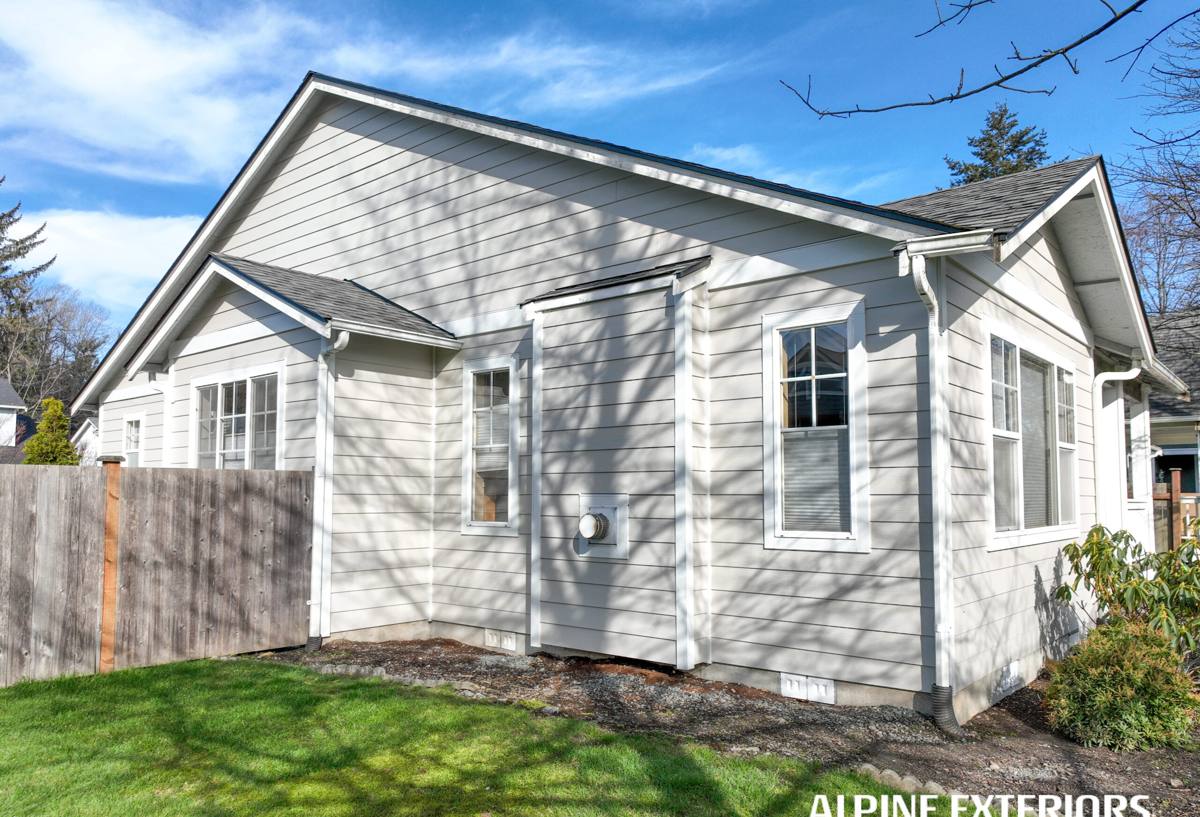
Why Custer Roofs Wear the Way They Do
Salt Air Carried Inland
Custer isn't on the water, but it's close enough that winter storms carry salt-laden air well inland across the flat farmland surrounding it. That air accelerates corrosion on exposed metal — flashing, fasteners, vent caps, and gutter hardware — faster than it would in a drier or more sheltered inland location. A flashing detail that would last decades somewhere else can start showing rust and failed seals years earlier out here.
Wind-Driven Rain Over Open Ground
There's not much to break the wind across the flatland around Custer, and storms coming off the Strait push rain sideways instead of straight down. Sideways rain finds its way under shingle edges, into roof valleys, and behind flashing that isn't lapped and sealed correctly. A roof that would stay dry under calm, straight-down rain can still leak in a Custer windstorm if the flashing details aren't right.
A Moss Season That Doesn't Really End
Mild temperatures and near-constant moisture mean moss and algae can grow on a Custer roof for most of the year, especially on shaded slopes, north-facing planes, and any roof under nearby trees. Moss doesn't just look bad — it holds water against the roofing surface, works under shingle tabs as it spreads, and can lift or loosen material over time if it isn't kept in check.
What a Correct Repair Actually Involves
A lot of roof repairs done poorly don't fail because the wrong material was used — they fail because the repair only addressed the visible symptom instead of the underlying cause. A shingle that blew off in a storm usually isn't the real problem; the real problem is why the wind got under it in the first place, which is often a nailing pattern or adhesive strip that never sealed correctly. On every repair, we look at:
- Where water is actually entering, which is often several feet from where the stain or damage shows up inside
- Whether flashing at valleys, chimneys, vent pipes, and roof-to-wall transitions is lapped and sealed correctly
- Whether the roof deck underneath the damaged area has soaked through and needs to be addressed, not just covered
- Whether moss or debris buildup contributed to the failure, and whether it needs to be cleared as part of the fix
- Whether the surrounding shingles or roofing material are still sound enough to tie a repair into cleanly
Fixing the visible spot without answering those questions usually means the same leak comes back, sometimes in a different spot, within a season or two.
Common Roof Repair Issues We See in Custer
Flashing Failures
Flashing around chimneys, skylights, vent pipes, and roof valleys is where most leaks in this climate actually start. Sealant dries out and cracks, metal corrodes from salt exposure, or the original lap wasn't done correctly to begin with. These repairs are usually straightforward once the failure point is found, but finding it can take more time than the fix itself.
Moss and Algae Damage
Heavy moss growth that's been left unaddressed for a few seasons can lift shingle edges and hold enough moisture against the roofing material to cause granule loss or deck damage underneath. Repair here often means clearing the growth, checking the condition of the material underneath, and replacing anything that's degraded before it becomes a bigger problem.
Wind and Storm Damage
Open, flat terrain around Custer means wind gusts hit roofs with less obstruction than in more sheltered areas. Storm damage repairs usually involve replacing lifted, cracked, or missing shingles and checking the surrounding area for damage that isn't obvious from the ground.
Slow Leaks From Aging Materials
Not every leak comes from a single storm. Roofing material that's simply aged out, especially in areas that stay damp longer than the rest of the roof, can develop small leaks that show up gradually as a soft stain rather than an obvious active drip.
Repair vs. Full Replacement: What We Actually Look At
Most roof problems in Custer are legitimate repairs, not an excuse to sell a full roof. We look at the age of the roof, how much of the total surface is affected, whether the deck underneath has moisture damage, and how many times the roof has already been patched. The table below is a general guide, not a diagnosis — every roof gets an actual inspection before we recommend either path.
| Situation | Usually a Repair | Usually Worth Discussing Replacement |
|---|---|---|
| Single leak location | Yes, if the deck underneath is still sound | Only if the deck has significant rot |
| Roof age | Under roughly two-thirds of its rated lifespan | Near or past its rated lifespan |
| Moss coverage | Isolated to one or two shaded slopes | Widespread across most of the roof |
| Prior repair history | First or second repair in this area | Repeated patching in the same spot over several years |
| Storm damage | A handful of shingles or one flashing point | Widespread material loss across multiple slopes |
When a repair is the honest answer, that's what we recommend. When the roof is telling us it's past the point where another patch makes sense, we'll explain exactly why, in plain terms, before you decide anything.
Signs a Custer Roof Needs a Repair Call
- Water staining on interior ceilings or walls, especially near exterior walls or around chimneys
- Moss buildup that returns quickly after cleaning, or moss visibly lifting shingle edges
- Granules collecting in gutters or at the base of downspouts after rain
- Shingles that are curling, cracked, or missing, particularly after a windstorm
- Flashing that looks lifted, rusted, or has visibly cracked sealant
- Daylight visible through the roof deck when viewed from inside the attic
- A musty smell in the attic, which often points to moisture that hasn't shown up as a visible stain yet
Any single item on this list is worth a call. In this climate, small roof problems don't stay small through another wet season — they tend to get quietly worse under the surface.
How the Repair Process Works
We start with an inspection, both from the ground and, when it's safe and useful, up on the roof itself. We identify the actual source of the problem, not just the point where damage is showing up inside the house, since those two locations are often several feet apart. From there we give a clear, written explanation of what we found and what it will take to fix it, including whether we think repair or replacement is the more honest recommendation for that specific roof. If it's a repair, most jobs are completed in a single day, weather permitting, since Custer's exposure to wind and rain means we work around forecast windows rather than pushing a repair during an active storm.
Why a Crew That Already Works Custer Matters
A crew that repairs roofs across this stretch of Whatcom County through every season learns which flashing points fail first on flat, wind-exposed land, how far salt-laden air actually travels inland here, and which roof orientations hold moss the longest given local tree cover and shade patterns. That's the kind of knowledge that shows up in small decisions on a repair — how much extra sealant a given flashing detail actually needs, whether a patch will hold through the next windstorm season, or when a "small" leak is actually a sign of something bigger underneath. It also means someone who won't apply a generic repair approach built for a drier climate to a roof that has to survive Custer's specific mix of salt air, driving rain, and a long moss season.
Beyond the Roof
Roof repair is often the first call, but it's rarely the only issue on an older exterior. Flashing failures at a roof-to-wall transition can affect siding and trim right below them, and a leak that's been running for a while sometimes shows up as damage well past the roofline. We also handle siding, window replacement, and deck work, so if a roof repair turns up moisture damage nearby, we can walk you through what else needs attention instead of leaving you to find a second contractor for the rest of it.
Get a Free, No-Pressure Estimate
If you're dealing with a leak, storm damage, or a roof that just doesn't look right anymore, we're glad to take a look and give you a straightforward read on what it actually needs. Reach out using the form below to schedule a free estimate on your Custer roof repair — no pressure, no upsell script.