 Lynden Siding
 Windows Built for the Bellingham-Lynden Climate
Homes between Bellingham and Lynden deal with a specific combination of weather stresses that most window installers never have to think about. You're close enough to the Salish Sea to get salt-laden air working on metal components, you sit under a wet weather pattern that drives rain sideways into wall assemblies for months at a time, and you get a long, damp moss season that keeps north-facing surfaces shaded and wet longer than almost anywhere else in the state. A window that's a great fit for a dry climate can fail early here if it wasn't installed with this specific environment in mind.
Window installation isn't just about picking a product out of a catalog. It's about how that window is flashed, sealed, and integrated into the wall so that water has nowhere to go but back outside. In Whatcom County, that detail work matters more than the window brand printed on the sticker.
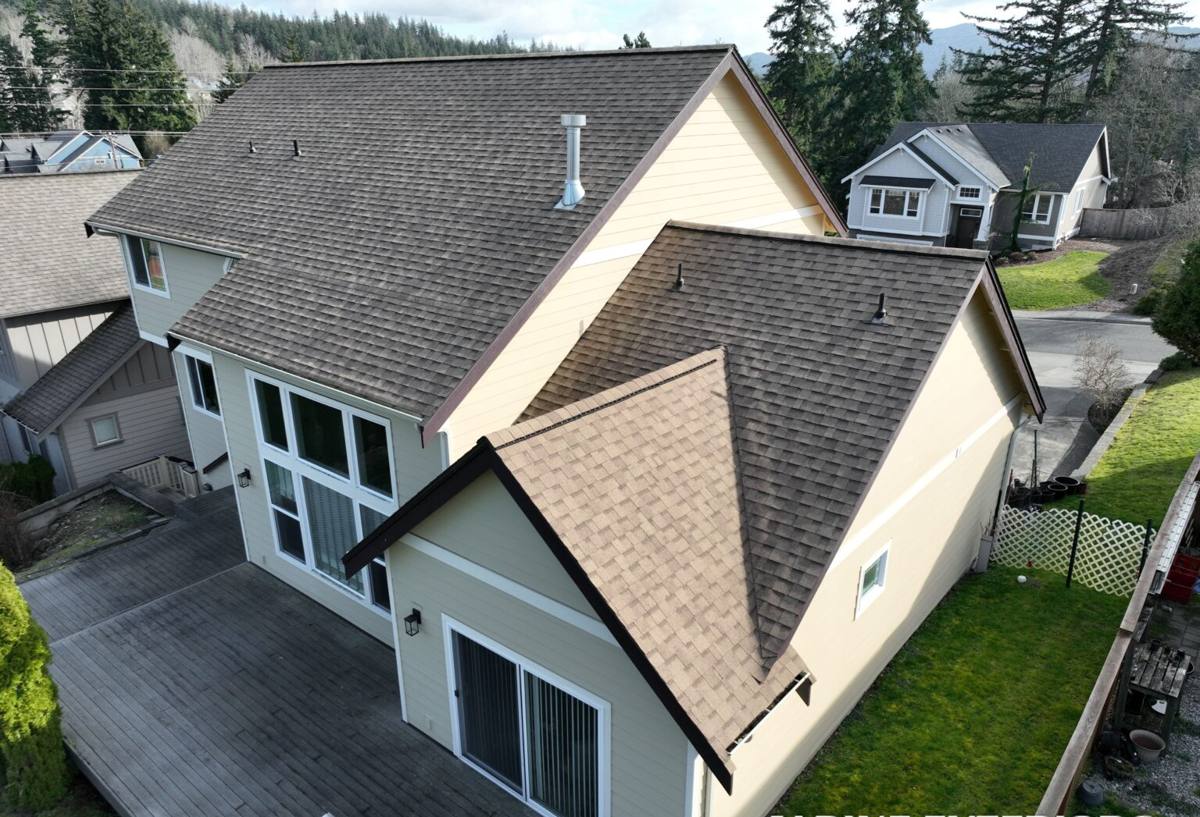
What Salt Air, Driving Rain, and Moss Season Do to a Window
Salt Air
Proximity to Bellingham Bay and the broader Puget Sound means airborne salt settles on exterior surfaces year-round, not just during storms. Over time, salt exposure accelerates corrosion on unprotected fasteners, hinges, and lower-grade hardware. It also breaks down cheap finishes on aluminum and vinyl trim faster than inland installations ever see. We select hardware and fastener specs with this in mind rather than defaulting to whatever ships standard.
Driving Rain
Wind-driven rain off the water pushes moisture horizontally into wall assemblies, not just straight down. A window opening that relies on caulk alone to keep water out will eventually leak during a hard westerly storm. Proper flashing — installed in the correct shingle-lap sequence with the water-resistive barrier — is what actually keeps water moving down and out instead of into your wall cavity.
Moss Season
Whatcom County's long wet season keeps shaded, north- and west-facing wall sections damp for extended stretches. That moisture supports moss and algae growth on sills, trim, and siding around window openings. Left unaddressed, trapped moisture behind poorly sealed trim contributes to wood rot at the window perimeter long before the moss itself becomes a real problem.
What a Correct Window Installation Actually Involves
A window installation done right is mostly invisible once it's finished — that's the point. Here's what should happen at every opening, whether it's a single replacement window or a whole-house project:
- Removal of the old window and full inspection of the rough opening for hidden rot, soft framing, or prior water damage
- Repair of any compromised framing or sheathing before a new window ever goes in — never install over a problem
- Correct sill pan flashing to direct any water that gets past the window back outside
- Proper integration with the house wrap or water-resistive barrier, using the correct shingle-lap order so upper layers overlap lower ones
- Air sealing and insulation of the gap between the window frame and rough opening — not just spray foam everywhere, but the right product in the right amount
- Exterior trim and caulking sized and sealed to shed water, not trap it against the sheathing
- A final water test or visual check of the seal before we consider the job done
Skip any one of these steps and you can end up with a window that looks fine for a year or two before a leak shows up as a stain on an interior wall or a soft spot in the siding.
Choosing the Right Window for a Bellingham-Area Home
There's no single "best" window for every house — the right choice depends on your home's exposure, age, and construction, plus your budget. What we can tell you honestly is what tends to hold up in this climate and what tends to cause problems.
| Frame Material | How It Performs Locally | Maintenance Consideration |
|---|---|---|
| Vinyl | Good moisture and salt-air resistance, no repainting needed, budget-friendly | Low maintenance; quality varies a lot between manufacturers |
| Fiberglass | Very stable in temperature swings and wet conditions, holds paint well | Low maintenance; higher upfront cost |
| Wood (clad exterior) | Attractive, traditional look; interior wood, exterior clad in vinyl or aluminum | Moderate — exterior clad protects wood from our rain, but seals must stay intact |
| Bare Aluminum | Prone to condensation and slower to insulate well; more exposed to salt-air corrosion over time | We don't recommend it for most homes in this specific climate zone |
We install a range of vinyl and fiberglass window lines that have a track record in wet coastal climates, and we're glad to walk you through the specific options and warranty structures during an in-home estimate rather than guessing over the phone.
Signs Your Bellingham or Lynden Home Needs New Windows
Window failure in this climate rarely announces itself with a dramatic leak. It usually shows up gradually:
- Fogging or condensation between the glass panes — a sign the seal has failed
- Difficulty opening, closing, or locking a window that used to operate smoothly
- Visible gaps, cracked caulk, or soft trim around the window frame
- A persistent musty smell or discoloration on the interior wall near a window
- Noticeable drafts or a cold spot near the window during winter storms
- Moss or dark staining building up on the sill or trim below the window
Any one of these on its own isn't necessarily an emergency, but a few of them together usually means moisture has been getting past the seal for a while.
Our Process for Bellingham and Lynden Homeowners
1. In-Home Assessment
We look at your existing windows, the condition of the surrounding trim and framing, and how your home is oriented relative to prevailing wind and rain. A home facing the water or open exposure gets a different conversation than one tucked behind other structures.
2. Honest Product Recommendation
We'll tell you what fits your budget and your home's actual exposure — not just the highest-margin option. If a lower-cost line will genuinely hold up fine on a sheltered wall, we'll say so.
3. Careful Removal and Opening Prep
Every opening gets inspected before the new window goes in. If we find rot or water damage from a prior installation, we address it rather than covering it up.
4. Installation to Manufacturer and Building Code Standards
Flashing, sealing, and insulation are done in the correct sequence, every time — not shortcuts that save an hour but cost you a repair in three years.
5. Cleanup and Walkthrough
We clean up the job site and walk you through the finished work so you know what was done and why.
Why Local Experience in Bellingham and Lynden Matters
A crew that mostly works inland or in drier parts of the state doesn't build the same instincts around flashing sequence, sill pan detailing, and material selection that a crew working Whatcom County day in and day out develops. We see the same failure patterns repeatedly on this side of the state — salt-corroded hardware, moss-trapped moisture at trim joints, driving-rain leaks at poorly flashed headers — and we build our installation process around preventing them, not just around getting a window to sit in an opening.
We also know the practical side of working here: navigating Whatcom County permitting where required, working around our long wet season to schedule installs during reasonable weather windows, and understanding which parts of Bellingham and Lynden see the harshest wind-driven rain versus more sheltered conditions.
Cost Factors to Expect
Window installation pricing varies based on several factors, and we'd rather explain them honestly than quote a number that doesn't hold up once we see your home.
| Factor | Why It Affects Cost |
|---|---|
| Frame material | Vinyl, fiberglass, and clad-wood windows carry different material costs |
| Number of openings | Whole-house projects typically have a lower per-window cost than single replacements |
| Condition of the rough opening | Hidden rot or framing repair adds labor and material beyond the window itself |
| Window size and configuration | Large picture windows, bays, or custom shapes cost more than standard sliders or single-hungs |
| Access and site conditions | Second-story or hard-to-access openings take more time and equipment |
We provide a written estimate after seeing the actual openings in person — broad ranges over the phone tend to be more misleading than helpful.
Maintaining Your Windows After Installation
A well-installed window still benefits from basic upkeep in this climate. Rinse salt residue off exterior frames periodically, especially if your home has direct exposure toward the water. Keep gutters and downspouts clear so runoff isn't concentrating near window headers. Check caulking annually, particularly after a hard winter, and address any cracking before it lets water behind the trim. Clear moss or algae buildup on sills and trim gently rather than letting it sit and hold moisture against the wood or frame.
If you're in Bellingham, Lynden, or anywhere else in Whatcom County and want a straight answer on whether your windows need attention, we're happy to take a look. Request a free, no-pressure estimate using the form below and we'll walk your home with you before recommending anything.