 Lynden Siding
 Bellingham's Weather Is Hard on Roofs
Bellingham sits right on Bellingham Bay, which means roofs here take on a combination of problems that inland homes rarely see all at once. Salt-laden air off the water accelerates corrosion on flashing, fasteners, and any exposed metal roofing components. Driving rain, pushed sideways by wind coming off the Salish Sea, finds its way into gaps that would stay dry in a calmer climate. And Whatcom County's long, wet moss season keeps organic growth active on north-facing and shaded roof slopes for most of the year. None of this is unusual for the area — it's just the baseline a roof has to survive, year after year, on top of whatever a storm throws at it.
Storm damage repair in this environment isn't just about patching what broke during one windstorm. It's about repairing the damage in a way that accounts for what the roof is going to keep facing afterward. A repair that ignores the salt air, the rain angle, or the moss cycle tends to fail again within a season or two, even if it looked fine the day it was finished.
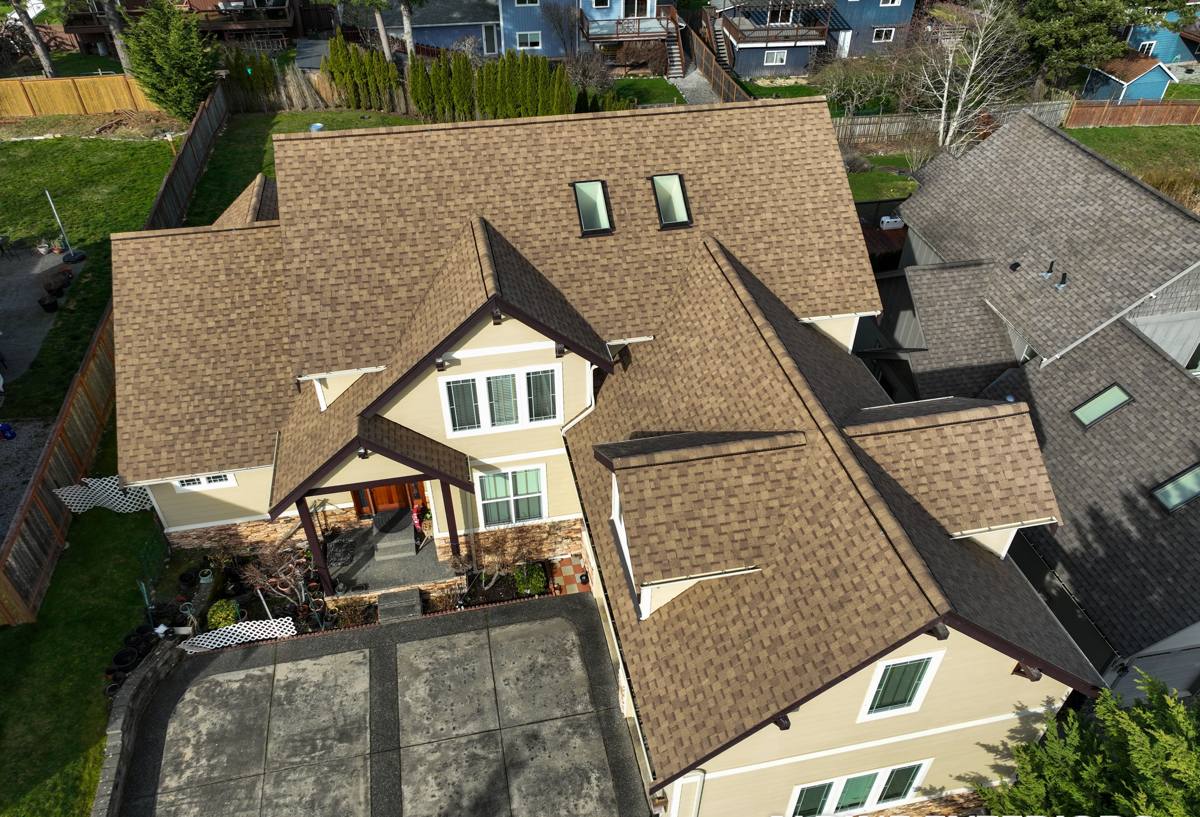
What Counts as Storm Damage on a Roof
Homeowners often picture storm damage as a hole punched through by a falling branch, and sometimes it is. But most storm damage we're called out for in Bellingham looks less dramatic and is easier to miss:
- Shingles lifted or creased by wind, even if none actually blew off
- Ridge cap or hip shingles loosened, letting wind-driven rain under the cap line
- Flashing pulled away from chimneys, skylights, or wall intersections
- Granule loss on asphalt shingles from hail or heavy, wind-blown debris
- Gutters and downspouts pulled loose, causing water to back up under the roof edge
- Punctures or splits from falling limbs, common after windstorms in tree-lined neighborhoods
The wind and driving rain combination matters more here than in a lot of other places, because a roof doesn't have to lose a shingle to leak. Rain forced sideways can get up under a shingle tab that's still technically in place, especially if the sealant strip underneath has already weakened from age or a prior storm.
The Damage You Can't See From the Ground
A roof can look intact from the driveway and still be actively leaking into the attic. This is the part of storm repair that separates a thorough job from a quick patch. Water that gets past a lifted shingle or a gapped flashing joint doesn't always show up as a ceiling stain right away — it can travel along the underlayment or decking for a while first, especially on a low-slope section or valley.
Moss adds another layer to this. A moss mat sitting on a shingle holds moisture against the surface far longer than open air would allow, which softens the shingle and its sealant strip over time. A storm that lifts a shingle edge on a mossy, shaded slope is starting from a weaker point than the same storm hitting a clean, sun-exposed slope. That's why a proper storm inspection here always includes a look at moss coverage, not just the obvious wind or impact damage.
What a Correct Storm Repair Involves
Inspection Before Anything Else
A repair estimate that's written from the ground, or from a couple of photos, is a guess. A correct inspection means getting on the roof (or using equipment that gives an equivalent close-up view), checking the decking for soft spots, and tracing any interior water marks back to their actual entry point — which is often several feet from where the stain appears on the ceiling.
Matching Materials, Not Just Covering the Gap
Shingles fade and weather unevenly over a few years, so a patch using new material next to old will often stand out. More importantly, mixing incompatible shingle profiles or nailing patterns can create a spot where wind can get underneath again. A correct repair matches the existing shingle type and lines up the exposure so the new section performs — and seals down — the same way the surrounding roof does.
Flashing and Underlayment Come First
Shingles get the attention, but flashing and underlayment are what actually stop water at the vulnerable points — valleys, chimneys, skylights, and wall-to-roof transitions. Given the salt air and wind-driven rain typical here, we replace compromised flashing rather than resealing it, since caulk over corroded or bent metal is a short-term fix at best.
Addressing Moss During the Repair
If moss contributed to the failure, we clear it from the repair area and the surrounding slope before closing anything up, and we talk through options for slowing regrowth. Repairing storm damage without touching the moss around it just resets the clock on the same problem.
Our Storm Repair Process
Stabilize First
If a roof is actively leaking or has an open puncture, the first priority is stopping water intrusion — typically a tarp or temporary cover — before we ever talk about the permanent repair. This step alone prevents a lot of secondary damage to decking, insulation, and interior finishes.
Document Everything
We photograph and describe the damage clearly, including its likely cause, in a format that's usable if you're filing an insurance claim. Good documentation at this stage tends to make the claims process faster and less frustrating.
Repair to Match, Not Just to Cover
Once the scope is clear, we repair using materials that match the existing roof and address the underlying cause — whether that's a flashing failure, wind-lifted shingles, or moss-softened material — not just the visible hole.
Follow-Up Check
Roof repairs, especially flashing and sealant work, benefit from a follow-up look after the area has been through a real rain event. We'd rather confirm it's holding than assume it is.
Repair or Replace? What We Actually Weigh
Not every storm-damaged roof needs to be repaired the same way, and not every damaged roof should be repaired at all. The table below covers the main factors we weigh when advising a homeowner one way or the other.
| Factor | Leans Toward Repair | Leans Toward Replacement |
|---|---|---|
| Age of roof | Under roughly two-thirds of its expected lifespan | Near or past its expected lifespan |
| Extent of damage | Isolated to one section or slope | Spread across multiple slopes or the whole roof |
| Decking condition | Solid, no soft spots found | Soft, delaminated, or water-stained decking |
| Moss history | Light, manageable growth | Heavy, long-term moss with visible shingle degradation |
| Material availability | Matching shingles still available | Discontinued shingle line, poor match likely |
We'll walk through these with you directly rather than defaulting to the more expensive option. A lot of storm damage really is a legitimate repair, and we'll say so.
Working With Your Insurance Company
Most storm damage claims move faster when the damage is clearly tied to a specific weather event and documented before any repair work covers it up. We provide the photos, notes, and scope of work adjusters typically ask for, and we're glad to walk an adjuster through what we found on the roof if that's useful. We don't handle the claim itself or promise a particular payout — that's between you and your insurer — but we make sure the roofing side of the paperwork is accurate and complete.
Keeping Moss From Undoing the Repair
Because moss is a year-round factor here rather than a seasonal nuisance, it's worth being proactive about it after any roof repair. A few habits go a long way:
- Keep gutters clear so water doesn't sit and feed moss growth at the roof edge
- Trim back overhanging branches to let more sun and airflow reach shaded slopes
- Have moss physically removed rather than left to build up, particularly before the wet season sets in
- Check flashing and repaired areas after the first heavy rain of the season
- Address small moss patches early — a thin layer is far easier to manage than an established mat
Why It Matters That We Already Work in Bellingham
Storm damage repair goes better when the crew doing it already understands what a given roof has been dealing with for years, not just what happened in the last storm. Working regularly in Bellingham and across Whatcom County means we're familiar with how the salt air, the wind direction off the water, and the moss cycle typically show up on roofs in this area — and we bring that context into every inspection, not just a generic damage checklist.
If a storm has left your roof leaking, missing shingles, or just looking worse for wear, we're happy to take a look and give you a straight assessment of what's actually going on — no pressure, no inflated scope. Reach out for a free estimate using the form below, and we'll get you a clear picture of what the repair involves and what it will take to do it right.