 Lynden Siding
 Roofing for Aldergrove Homes, From a Crew That Works This Corridor
Aldergrove sits in the Fraser Valley just north of the Whatcom County line, and homes here deal with the same weather pattern that shapes roofing decisions all along this corridor: long stretches of driving rain, marine-influenced air moving up from the Salish Sea, and shaded, tree-covered lots that hold moisture well into a normal dry spell. We're a Lynden-based crew, and this stretch of the border — from Whatcom County up into the Fraser Valley — is territory we already know. That matters more than it sounds like it should, because a roof that's correctly built for coastal Pacific Northwest conditions looks different, underneath the shingles, from one built for a drier climate.
This page covers asphalt shingle roofing specifically — what Aldergrove homes need from a shingle roof given the local climate, what a correct installation actually involves, and how we approach the job from first inspection to cleanup.
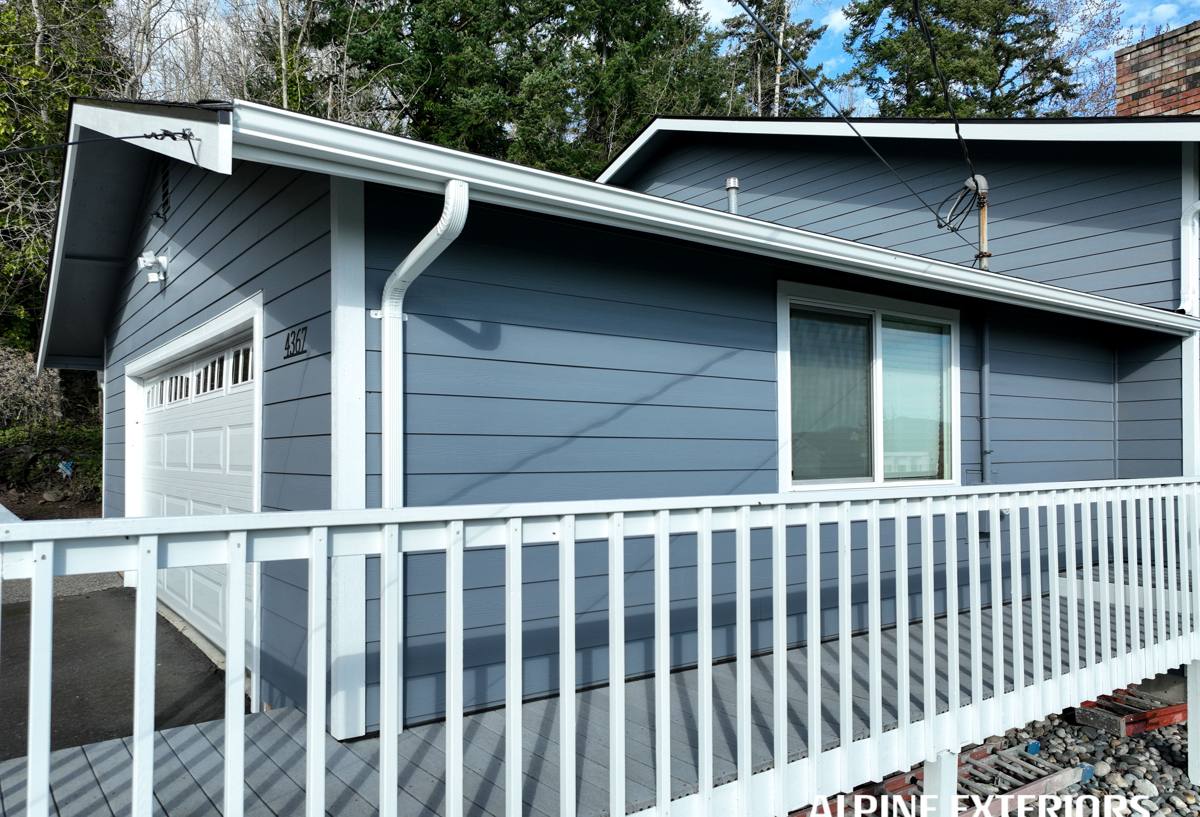
What Salt Air, Driving Rain, and Moss Actually Do to a Roof
Three things wear down asphalt shingle roofs in this region faster than they would somewhere drier, and each one calls for a different response in how the roof is built:
Driving rain
Wind-driven rain doesn't just fall straight down — it gets pushed sideways and can work its way under shingle edges, around flashing, and into any gap in the underlayment. A roof that would hold up fine in calm, straight-down rain can leak in the same storm if the flashing details and underlayment laps weren't done correctly. This is where most of the real-world leaks we get called out for actually start: not failed shingles, but weak points at valleys, chimneys, skylights, and roof-to-wall transitions.
Salt-tinged marine air
Air moving inland off the Salish Sea carries enough salt and moisture to accelerate corrosion on exposed metal — nails, flashing, vents, and fasteners. Standard galvanized fasteners can start showing rust streaks and losing holding strength years before they would in a drier inland climate. It's a slow process, but it's a real one, and it's a big part of why fastener and flashing material choice matters more here than the shingle brand does.
A long moss season
Shaded, tree-lined lots combined with a wet season that runs many months of the year give moss and algae a long window to establish. Moss doesn't just look bad — it holds moisture against the shingle surface, works its way under shingle tabs as it grows, and can lift edges enough to let water in underneath. Roofs with poor airflow and heavy shade need more attention here than roofs in open, sunny spots.
What a Correctly Built Asphalt Shingle Roof Includes
"Asphalt shingle roof" covers a wide range of actual builds — some correct for this climate, some not. The shingles themselves are only one layer. What's underneath and around them determines whether the roof performs for its full expected life or starts causing problems in year eight.
- Underlayment: A synthetic or self-adhering underlayment rated for wind-driven rain, lapped correctly so upper courses always overlap lower ones.
- Ice and water shield at vulnerable points: Valleys, eaves, and roof penetrations get a self-adhering waterproof membrane, not just standard felt or synthetic underlayment.
- Flashing: Step flashing at walls and chimneys, valley flashing, and drip edge — sized and lapped so water is directed off the roof rather than into a seam.
- Fasteners matched to the climate: Corrosion-resistant nails, especially near the coast-influenced air this region gets, so fastener failure isn't the thing that ends the roof's life early.
- Ventilation: Balanced intake and exhaust airflow through the attic, which controls moisture buildup, extends shingle life, and reduces moss growth by keeping the roof deck drier and closer to outdoor temperature.
- Shingle nailing pattern and exposure: Installed to the manufacturer's specification for wind rating, not just "close enough" — this is what actually determines wind warranty coverage.
Our Process
Inspection and estimate
We start by getting on the roof, not just looking at it from the ground. We check the current shingle condition, the state of the flashing and underlayment where visible, attic ventilation, and any signs of moss-related lifting or moisture intrusion. You get a straight assessment of whether you're looking at a repair, a partial re-roof, or a full replacement — we don't upsell a full roof when a repair will genuinely hold.
Tear-off and deck inspection
For a full replacement, we remove the old roofing down to the deck and inspect the sheathing for soft spots, rot, or water damage that wouldn't have been visible from above. Any damaged decking gets replaced before anything new goes down — covering a compromised deck with new shingles just hides the problem.
Underlayment, flashing, and shingle installation
We install ice and water shield at valleys, eaves, and penetrations, run underlayment rated for this climate, replace or upgrade flashing where needed, and install shingles to manufacturer spec for nailing pattern and exposure. Ventilation gets checked and corrected as part of this step, not treated as an afterthought.
Cleanup and walkthrough
We do a magnetic sweep for stray nails, clear debris, and walk the finished roof with you so you know what was done and what to expect from it going forward.
Comparing Asphalt Shingle Options
Most Aldergrove homeowners choose between three general tiers of asphalt shingle. None of these are wrong choices — the right one depends on how long you plan to be in the home, your budget, and how much you value wind and impact resistance in a wet, occasionally windy climate.
| Shingle Type | Typical Lifespan | Wind Performance | Best Fit |
|---|---|---|---|
| 3-tab (standard) | Shorter end of the range | Lower wind rating | Budget-focused projects, shorter ownership horizon |
| Architectural / dimensional | Mid-to-long range | Good wind rating, standard for most re-roofs here | Most homeowners — best balance of cost, durability, and appearance |
| Premium / designer | Longer end of the range | Highest wind rating available in asphalt | Homeowners prioritizing curb appeal and maximum durability |
We install architectural shingles on most Aldergrove-area jobs because they perform noticeably better than 3-tab in wind and hold up better to years of moss and moisture pressure, without the cost jump of premium designer lines. We'll walk you through the honest trade-offs for your specific roof rather than steering you toward one option by default.
Signs Your Roof Needs Attention
A lot of roof problems in this climate develop slowly and get missed until there's an active leak. Worth checking for, or having us check for:
- Moss growth on shingles, especially on shaded slopes or north-facing sections
- Shingle tabs that look curled, lifted, or cupped at the edges
- Granules collecting in gutters or at downspout outlets
- Dark streaking or algae staining across shingle courses
- Rust staining around nail heads or flashing
- Soft spots, sagging, or visible daylight in the attic
- Water stains on interior ceilings, especially after a heavy wind-driven rain
- Missing or damaged shingles after a windstorm
Catching these early is usually the difference between a repair and a full replacement. If you're not sure which category your roof falls into, that's exactly what the inspection is for.
Repair, Partial Re-Roof, or Full Replacement
Not every roofing problem needs a full tear-off. We look at three factors before recommending a scope of work: how much of the roof's expected service life is left, whether the underlying deck and flashing are still sound, and whether the damage is isolated or spread across the whole roof.
A roof with a handful of wind-damaged shingles and otherwise sound underlayment is usually a repair. A roof approaching the end of its shingle life with widespread moss damage or multiple flashing failures is usually a full replacement, because patching individual spots on an aging roof tends to just move the next leak somewhere else. We'll tell you plainly which situation you're in and why, so the scope of the job matches the actual condition of the roof — not the other way around.
Why a Local Crew Matters for Aldergrove
We're based in Lynden, and Aldergrove is close enough to the border that it's part of our regular service area rather than a special trip. That familiarity shows up in practical ways: we already know how this stretch of the Fraser Valley weather behaves through the wet season, we're used to the border-crossing logistics for crews and materials, and we're not guessing at how a roof detail needs to be built for this climate versus a drier one further inland.
Beyond climate knowledge, a local crew is one you can actually reach — before, during, and after the job — without dealing with a call center or a crew that's passing through the area once and won't be back. If a question comes up two years after the install, you're calling the same company that did the work.
Maintenance That Extends Roof Life Here
Given the moss and moisture pressure in this region, a small amount of regular attention goes a long way:
- Clean gutters at least twice a year so water isn't backing up under the shingle edge
- Trim back overhanging branches to reduce shade and debris buildup on the roof
- Address moss growth early, using methods that won't strip granules or damage the shingle surface
- Have the roof looked at after any significant windstorm
- Keep attic ventilation clear and unobstructed by insulation or stored items
None of this replaces a correctly built roof — it just protects the investment once it's in place.
If you're weighing a repair versus a full re-roof, or just want a straight read on where your roof actually stands, we're happy to take a look. Reach out for a free, no-pressure estimate using the form below.