 Lynden Siding
 Storm Damage Is Different in Acme Than It Is Twenty Miles Inland
Acme sits at the edge of the foothills east of Lynden, close enough to the Cascades to catch wind and rain patterns that don't show up the same way on the flatter parts of Whatcom County. Homes out here take a different kind of beating than a roof in town: gusts funnel down the valley, rain comes in sideways more often than straight down, and the tree cover that makes the area beautiful also means more limb strikes, more debris in the gutters, and more shade holding moisture on the roof deck long after a storm has passed. If you own a home near Acme, your roof is working harder than a roof in a more sheltered spot, whether it looks like it or not.
That's the reason a generic "storm damage repair" conversation doesn't quite fit here. The failure points we see on Acme roofs skew toward wind-driven water intrusion at ridges and valleys, moss and organic buildup shortening shingle life on shaded north- and east-facing slopes, and impact damage from falling branches during the same windstorms that lift shingles elsewhere. A proper repair has to account for all three, not just patch whatever's leaking today.
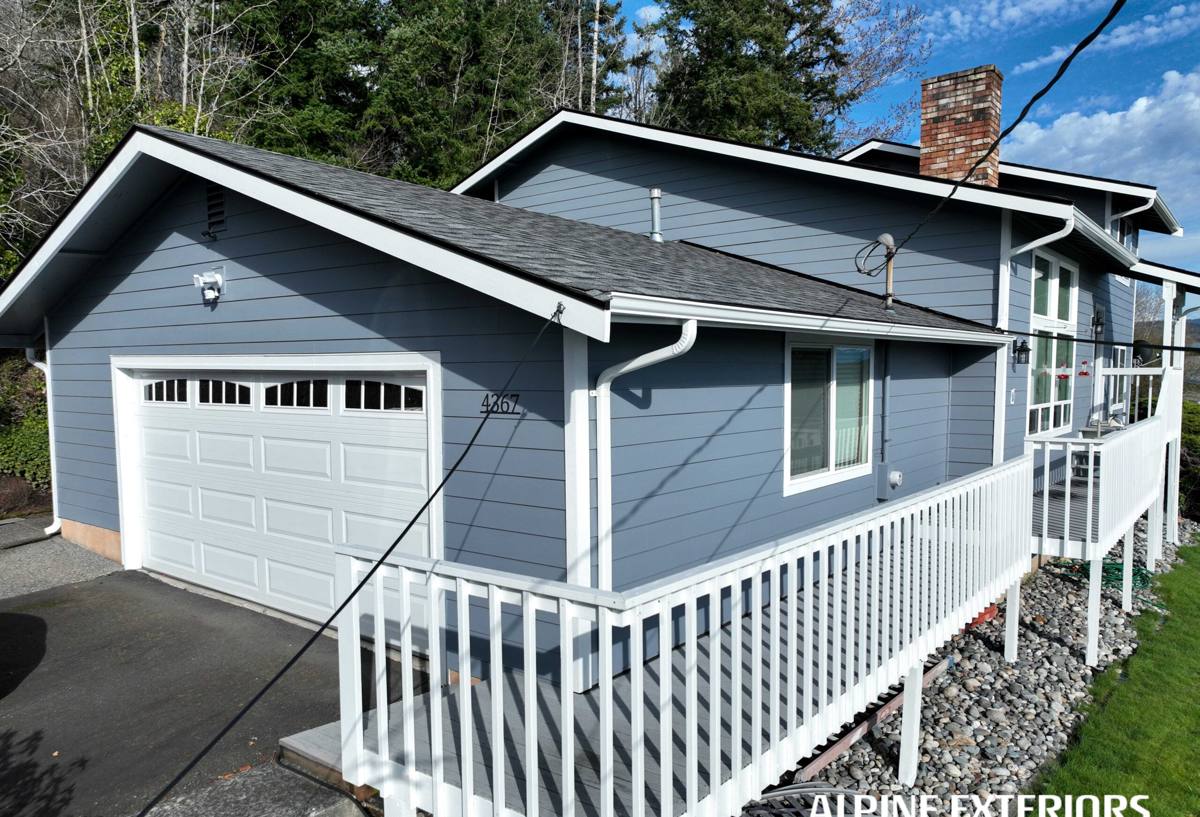
What Whatcom County Storms Actually Do to a Roof
Wind
Whatcom County doesn't get hurricanes, but it gets sustained fall and winter windstorms with gusts strong enough to lift shingle tabs, work fasteners loose, and peel back flashing at hips and ridges. Once a tab lifts even slightly, wind-driven rain gets underneath it on the next storm, and the damage compounds. A lot of what looks like "a leak that started out of nowhere" is actually a shingle that was partially lifted weeks or months earlier and finally let water through.
Driving Rain
Rain that comes in at an angle, rather than straight down, finds every weak point in a roof's water-shedding system: step flashing along walls and chimneys, valley metal, and the seal strips on shingles that have already lost some adhesive from age or moss growth. Driving rain is why a roof can pass a casual visual inspection from the ground and still be actively leaking into the attic.
Moss and Organic Growth
The long moss season here isn't just cosmetic. Moss holds moisture against the shingle surface, which accelerates granule loss, and moss mats that grow under shingle edges can physically lift them, creating the same kind of entry point wind damage does. Shaded roof planes near mature trees, common around Acme, are almost always the first place moss takes hold and the first place a storm-related leak shows up.
Falling Debris
Limb and branch strikes during windstorms are a leading cause of point-source damage on tree-lined properties. A strike doesn't have to punch a hole to cause a problem; it can crack a shingle, dislodge granules down to the mat, or knock flashing out of alignment in a way that's easy to miss without getting on the roof.
Signs Your Acme Home May Have Storm Damage
- Water stains on interior ceilings or upper walls, especially after a windstorm
- Granules collecting in gutters or at downspout outlets
- Shingles that look lifted, curled, or out of alignment from the ground
- Visible moss or dark streaking concentrated on shaded roof slopes
- Flashing that looks bent, separated, or missing around chimneys and vent pipes
- Daylight visible through the roof deck from inside the attic
- A musty smell in upper rooms or the attic that wasn't there before
- Debris, broken branches, or dented gutters after a recent storm
Any one of these on its own might be minor. Two or three together, especially after a named windstorm event, is worth a professional look before the next round of rain.
What a Correct Storm Damage Repair Actually Involves
A repair that only addresses the spot where water is showing up inside the house often misses the actual entry point, because water travels along the underside of the deck before it finds a way through drywall or insulation. A correct process starts wider than the visible symptom and narrows down.
1. Roof-Level Inspection
We get on the roof, not just look at it with binoculars from the driveway. That means checking every plane for lifted or missing shingles, examining flashing at every penetration and transition, and looking specifically at valleys and ridges where wind damage concentrates first.
2. Attic and Deck Check
Where access allows, we check the underside of the roof deck from inside the attic. Staining, soft spots, or daylight gaps here tell us where water is actually getting in, which isn't always directly above where it showed up on the ceiling below.
3. Documentation
We photograph and document what we find. If the damage is storm-related and you're planning to file an insurance claim, this record matters, and it's far easier to gather while the damage is fresh rather than after temporary patches have covered it up.
4. Repair Scope and Options
Depending on what we find, the fix might be a targeted shingle and flashing repair, a moss treatment and cleaning to stop ongoing granule loss, or, if damage is widespread across the roof's age and condition, a conversation about whether repair or partial re-roof makes more sense long-term. We'll tell you honestly which category your roof falls into rather than defaulting to the most expensive option.
5. The Repair Itself
Matching shingle repairs to existing material as closely as possible, re-securing or replacing damaged flashing with proper step and counter-flashing technique, and re-sealing transitions correctly rather than relying on caulk as a substitute for proper flashing work.
Repair vs. Replace: How We Help You Decide
| Factor | Leans Toward Repair | Leans Toward Replacement |
|---|---|---|
| Roof age | Under 15 years, general condition sound | Approaching or past typical shingle lifespan |
| Damage extent | Isolated to one or two areas | Spread across multiple slopes |
| Granule loss | Localized to the damaged section | Widespread, visible bare patches |
| Deck condition | Solid, no soft spots found | Soft, stained, or spongy deck sections |
| Moss history | Recent, addressable with cleaning and repair | Long-term, has already lifted multiple courses |
Most storm calls we run in this area end up as repairs, not replacements. Replacement only makes sense when the roof's overall age or condition means a repair would be a short-term fix on a system that's already near the end of its useful life.
Why the Long Moss Season Changes the Maintenance Math
In a lot of the country, roof maintenance is a once-a-year conversation. Around Lynden and out toward Acme, moss growth is close to a year-round factor because of the persistent moisture and shade many properties have from surrounding trees. That changes how we think about storm repairs: patching a leak without addressing the moss that contributed to it just means you're back on the roof again within a season or two. Where moss is a factor in the damage, we treat and remove it as part of the repair, not as a separate upsell, because leaving it in place undermines the repair itself.
Insurance and Storm Claims
Not every storm-related repair needs to go through insurance, and we won't push you toward filing a claim you don't need. But when damage is clearly storm-caused and significant enough to be worth it, documentation matters. We provide photos and a written description of what we found and what we did, which you can hand to your adjuster. We don't handle the claim for you, but we make sure you're not walking into that conversation without evidence.
Why a Crew That Already Works Acme Roofs Matters
Roofing crews unfamiliar with this specific stretch of Whatcom County sometimes miss the moss-and-shade pattern entirely, because it's less pronounced in more open, sunnier parts of the region. A crew that regularly works Acme and the surrounding Lynden foothills knows which roof orientations to check first, understands how salt air carried up from the coast interacts with driving rain to accelerate wear on metal flashing and fasteners, and isn't guessing at what "normal wear" looks like on a roof out here versus a roof in a different microclimate. That local pattern recognition is what separates a repair that actually holds through the next storm season from one that reopens in six months.
A Simple Pre- and Post-Storm Checklist
- Before storm season: clear gutters and downspouts so wind-driven rain has somewhere to go
- Before storm season: trim back branches that hang close to the roofline
- After any significant windstorm: do a ground-level visual check for lifted or missing shingles
- After any significant windstorm: check the attic for new staining, especially if you weren't home during the storm
- Ongoing: watch shaded roof slopes for moss buildup rather than waiting until it's visibly thick
- Ongoing: address small flashing or seal issues before the next storm, not after the next leak
What to Expect When You Call Us
We'll ask a few basic questions about when you noticed the issue and whether it lines up with a specific storm, then schedule a roof-level inspection. We're straightforward about what we find: if it's a minor repair, we'll say so and price it accordingly. If it's more serious, we'll walk you through why, show you what we saw, and lay out real options rather than a single take-it-or-leave-it estimate. Homes in and around Acme are part of our regular service area, so scheduling a look after a storm doesn't mean a long wait while you have an active leak.
If a recent storm has left you with a leak, missing shingles, or just an unsettled feeling about what's happening on your roof, we're glad to take a look. Reach out for a free, no-pressure estimate using the form below.