 Lynden Siding
 Siding for Abbotsford Homes, Installed by a Crew That Knows This Corridor
Abbotsford sits in the Fraser Valley, close enough to Lynden and Whatcom County that the two communities share a lot more than a border crossing — they share weather. Wet winters, a long wet-to-humid shoulder season, and stretches where a house barely gets a chance to fully dry out between rain events. Add in the marine-influenced air that moves through the valley off the Pacific and Georgia Strait, and you get a climate that is genuinely hard on exterior building materials. Siding here isn't just a cosmetic decision. It's the layer standing between a wood-framed house and a climate that pushes moisture into every gap, seam, and fastener hole it can find.
We're based in Lynden, WA, just south of the Sumas/Huntingdon crossing, and Abbotsford is part of the area our crews already work regularly. That matters more than it sounds like it should — a contractor who only occasionally crosses the border to bid a job doesn't have the same read on how houses in this specific corridor actually age.
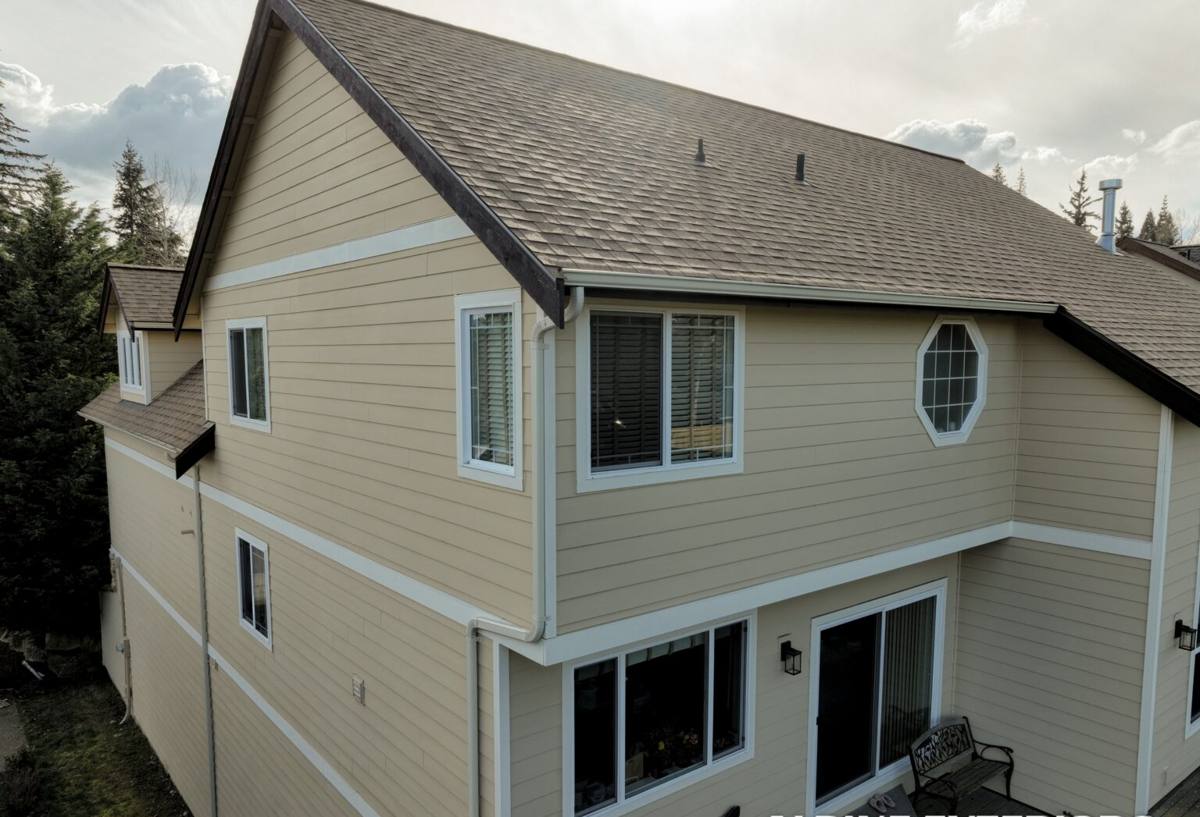
What the Fraser Valley Climate Does to Siding
A few regional factors show up again and again on the homes we work on in and around Abbotsford:
- Driving rain: Valley winds push rain sideways into wall assemblies, not just straight down onto roofs. Siding that isn't installed with correct flashing and drainage gaps traps that water against the wall sheathing.
- Long moss and algae season: Shaded elevations and north-facing walls stay damp for extended stretches, which is exactly the environment moss, mildew, and algae need to take hold on porous or poorly finished siding surfaces.
- Salt-influenced air: Even away from the immediate coastline, Pacific Northwest marine air carries moisture and salinity that accelerates corrosion on fasteners, flashing, and lower-quality trim.
- Freeze-thaw cycling: Valley winters aren't brutal, but they do dip below freezing after wet stretches. Water that's already absorbed into siding material expands when it freezes, which is where cracking and delamination start.
None of this means Abbotsford is an unusually harsh place to build. It means the margin for error on material choice and installation detail is smaller than it is in a drier climate, and small mistakes compound faster.
Why We Install Only James Hardie Fiber Cement
We don't install vinyl, LP SmartSide, primed spruce, cedar, or other fiber cement brands like Cemplank or Allura. That's a deliberate standard, not a sales pitch, and it's worth explaining honestly.
Vinyl is inexpensive and low-maintenance in the sense that it doesn't need painting, but it's a petroleum-based material that expands, contracts, and can become brittle with temperature swings — and in a wet climate it does nothing to actively resist moisture at the wall, it just hangs on the outside of it. Engineered wood products like LP SmartSide perform well when kept dry, but wood-based substrates are inherently more vulnerable if water gets behind them or if caulking and paint maintenance lapses, which is a real risk in a climate that stays damp for months at a time. Primed spruce and cedar are traditional and attractive, but they require an ongoing maintenance commitment — re-staining or repainting on a cycle, and vigilant caulk and moisture management — that most homeowners underestimate until the siding is already showing damage.
James Hardie fiber cement is cement, sand, and cellulose fiber. It doesn't rot, it isn't a food source for moss or insects, and it holds paint and factory finish far better than wood-based products over time. It's also non-combustible, which matters in a region that has seen more wildfire smoke and heat events in recent summers. We standardized on it because it's the product we're comfortable standing behind on homes that face this specific climate, not because it's the cheapest or the easiest to install.
Signs an Abbotsford-Area Home Needs New Siding
| What You See | What It Usually Means |
|---|---|
| Soft or spongy spots when pressed | Water has gotten behind the siding and is degrading the sheathing underneath |
| Persistent moss or dark streaking, especially on shaded walls | The surface is staying damp long enough for organic growth to establish — common on north and west exposures here |
| Paint that's peeling, bubbling, or chalking heavily | Moisture is pushing through from behind, or the original finish has simply reached the end of its life |
| Visible warping, cupping, or gaps opening at seams | The material itself is moving with moisture and temperature — common with wood-based and vinyl products |
| Rusty streaks below fasteners or trim | Fasteners are corroding, often from moisture combined with marine-influenced air |
What a Correct Installation Actually Involves
Fiber cement siding is only as good as the assembly it's installed into. A rushed or corner-cutting install can leave a house with the same moisture problems as bad siding, just hidden behind a better-looking material. On every Abbotsford-area job, our process includes:
Water Management Before Siding Goes Up
Correct weather-resistive barrier installation, properly lapped and taped seams, and flashing at every window, door, and penetration — installed so water is directed outward and down, never trapped against the sheathing. This step matters more in a driving-rain climate than almost anything that happens afterward.
Manufacturer-Spec Fastening and Clearances
James Hardie has specific requirements for fastener type, spacing, and butt-joint treatment, along with minimum clearances from grade, roof lines, and decks. Skipping these details is the single most common cause of premature siding failure, and it's invisible to a homeowner once the job looks finished.
Factory-Finished ColorPlus Where Possible
Factory-applied ColorPlus finish is baked on under controlled conditions and backed by its own finish warranty — a meaningfully more durable result than field-painting primed panels on-site, especially in a climate where paint needs to cure without rain interference.
Our Process, Start to Finish
- On-site assessment: We look at your home's exposure, existing moisture damage, and which HZ5 James Hardie products fit the specific walls and elevations.
- Written scope and estimate: Clear line items — no vague allowances that turn into surprise costs mid-project.
- Tear-off and sheathing inspection: Old siding comes off, and we inspect and repair sheathing before anything new goes on. This is the step that gets skipped on cut-rate jobs.
- Weather barrier and flashing installation: Done to spec before a single piece of siding is hung.
- Hardie installation: Fastened, spaced, and finished to manufacturer requirements to keep your product warranty valid.
- Final walkthrough: We go over the finished work with you directly.
Comparing Siding Materials for This Climate
| Material | Moisture Resistance | Maintenance | We Install It? |
|---|---|---|---|
| James Hardie fiber cement | Excellent — doesn't rot or absorb water like wood | Low — occasional wash, no repainting with ColorPlus | Yes |
| Vinyl | Passive only — doesn't manage moisture at the wall | Low, but prone to warping and fading over time | No |
| LP SmartSide / engineered wood | Good if kept sealed and dry; vulnerable if compromised | Moderate — caulk and finish upkeep required | No |
| Cedar / primed spruce | Natural material, moisture-sensitive | High — regular refinishing needed | No |
Cost Factors Homeowners Should Understand
Every Abbotsford-area home is different, so we won't quote a number without seeing the house, but the main drivers of cost are consistent: total square footage of wall area, the amount of tear-off and sheathing repair needed underneath the old siding, the complexity of the roofline and number of penetrations to flash, and which James Hardie profile and finish you choose (lap siding, shingle-style panels, or board-and-batten each price differently). Homes with existing moisture damage cost more because that damage has to be repaired properly before new siding goes on — it's not a step worth skipping to save money, since it's exactly the kind of problem this climate will find again.
Why a Crew That Already Works Abbotsford Matters
Coordinating a project across the border adds logistics that a purely local contractor doesn't have to think about — scheduling around crossing times, sourcing materials on the correct side of the line, and understanding that a Fraser Valley home faces the same core climate challenges as a Whatcom County home even though it's a different country. Because Abbotsford is already part of the area we regularly serve from Lynden, that coordination is routine for us rather than a one-off complication that gets passed on to you as delay or cost.
Simple Maintenance Checklist for Hardie Siding in This Climate
- Rinse siding annually, focusing on shaded and north-facing walls where moss and algae take hold fastest
- Walk the perimeter each fall and check caulking around windows, doors, and trim before winter rains set in
- Keep gutters clear so overflow doesn't run down siding surfaces repeatedly
- Trim back vegetation and shrubs so walls can dry between rain events
- Watch for any soft spots, cracking, or fastener staining and address them early rather than waiting
If your Abbotsford home is due for new siding, or you're just trying to figure out whether what you have now is holding up, we're happy to take a look and give you a straightforward, no-pressure estimate. Use the form below to get started.