 Lynden Siding
 Abbotsford, BC sits close enough to Lynden that our crews cross that stretch of the Fraser Valley regularly, and the decks on this side of the line take a similar beating to the ones we work on at home. Salt-tinged marine air moving up from the Salish Sea, driving rain that comes in sideways off Pacific storm systems, and a moss season that can stretch from October into May all put steady stress on outdoor structures. A deck that looks fine from the yard can be hiding real problems underneath, and repairing it correctly means understanding how this specific climate attacks wood, fasteners, and framing over time.
Why Abbotsford Decks Wear Out Faster Than You'd Expect
Decks fail from the inside out more often than from the top down. The boards you walk on are the last thing to show damage — by the time you notice soft spots or discoloration on the surface, the framing underneath has often been dealing with moisture for a year or more.
Moisture Is the Real Enemy
The Fraser Valley's marine-influenced climate means long stretches of damp weather rather than short, hard rains that dry out quickly. Water sits in joints, under boards, and around fastener heads for days at a time. That slow, repeated wetting is harder on wood and metal than an occasional downpour, because the material never fully dries between rain events for weeks on end.
Moss Isn't Just Cosmetic
A moss-covered deck isn't just a slip hazard, though it is that too. Moss holds moisture directly against the board surface and grout lines between boards, keeping wood wet long after the surrounding air has dried out. Left alone through a full moss season, that constant dampness accelerates rot in a way that a dry, sun-exposed deck in a different climate simply wouldn't experience.
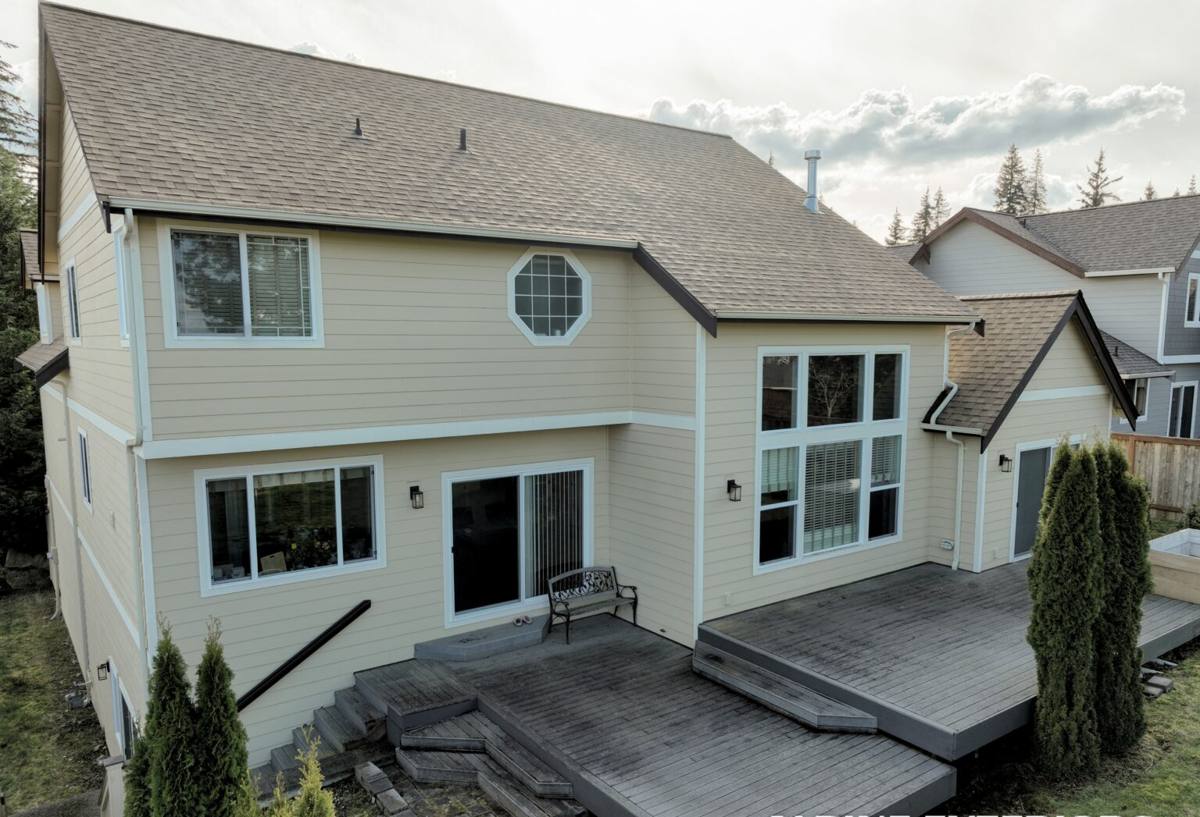
The Deck Problems We See Most Often in This Area
Most repair calls in this part of the Fraser Valley fall into a handful of recurring issues:
- Soft or spongy decking boards, usually near board ends or around fastener holes
- Rust streaks bleeding from screws or nails, a sign the fastener coating has broken down
- Wobbly railings or posts where the base connection has loosened or started to rot
- Ledger board separation or staining where the deck meets the house
- Cupping, splitting, or gapping boards from repeated wet-dry cycling
- Slick, moss-covered surfaces, particularly on shaded sections of the deck
None of these are unusual for the region, and none of them mean the whole deck needs to be torn out. But each one needs an honest look to figure out how far the damage actually goes.
What an Honest Deck Repair Actually Involves
A proper repair starts below the surface, not at it. Swapping out a few obviously damaged boards without checking the framing underneath is a common shortcut, and it's one of the reasons decks that were "fixed" a few years earlier show up on our repair list again.
A correct repair process checks the ledger board connection to the house, the condition of the joists and beams, the post bases where they meet footings or concrete, and the fasteners holding it all together — not just the boards you can see from the yard. Hidden rot at a ledger connection or a compromised post base is a structural and safety issue, not a cosmetic one, and it's exactly the kind of thing that gets missed when a repair only addresses what's visible on top.
Repair or Replace? How We Make That Call
Not every deck problem calls for the same solution. The table below outlines how we generally think through it, though every deck gets a hands-on inspection before we make a recommendation.
| What We Find | Usually Repairable | Usually Needs Replacement |
|---|---|---|
| Individual boards with surface rot or splitting | Yes, board-by-board swap | Only if rot has spread to most of the deck |
| Rusted or failing fasteners | Yes, re-fastened with corrosion-resistant hardware | Rarely, unless boards are also compromised |
| Ledger board rot at the house connection | Sometimes, if caught early | Often, since this is a structural connection |
| Soft or spongy joists and beams | Isolated sections can be sistered or replaced | Widespread framing rot usually means a rebuild |
| Loose or rotted railing posts | Yes, in most cases | If post base and surrounding framing are both compromised |
The short version: if the damage is limited to boards, fasteners, or a section of framing, repair is almost always the right call and the more cost-effective one. Once rot has worked its way through multiple structural members, patching becomes a short-term fix that costs more in the long run than doing it right once.
Our Deck Repair Process
We follow the same sequence on every repair job so nothing gets missed:
- Full inspection of decking, framing, ledger connection, posts, and railings
- Probing suspect areas to map how far rot or moisture damage actually extends
- Structural repairs first — framing, ledger, post bases — before any cosmetic work
- Replacement of damaged boards, hardware, and fasteners with corrosion-resistant materials
- Attention to drainage and airflow underneath the deck to reduce future moisture buildup
- Final walkthrough so you understand what was found, what was fixed, and what to watch going forward
We'd rather explain a problem clearly and let you make an informed decision than push a bigger job than the deck actually needs — or patch over something that's going to fail again in a year or two.
Decking Materials and Hardware Choices for a Wet Climate
Material choice matters more in a climate like this than in drier regions, and the right choice depends on your budget, your maintenance appetite, and how the deck is used.
Wood vs. Composite
Pressure-treated lumber is affordable and easy to repair board-by-board, but it needs regular sealing or staining to hold up through repeated wet seasons — skip that maintenance for a few years and moisture damage accelerates quickly. Composite decking costs more upfront and doesn't need staining, but it has its own installation sensitivities around ventilation and fastening, and not every composite product handles standing moisture the same way. We'll walk through the honest trade-offs for your specific deck rather than pushing one material as a universal answer.
Fasteners and Hardware
In this climate, standard fasteners corrode faster than most homeowners expect. We use hot-dip galvanized or stainless hardware appropriate to the decking material, since the rust streaking we see on repair calls is almost always traced back to fasteners that weren't rated for sustained damp exposure in the first place.
Why It Matters That We Already Work in Abbotsford, BC
A crew that's unfamiliar with this specific corridor is starting from zero on every job — figuring out local weather patterns, typical lot drainage, and construction conventions on the fly. Because we're already working this area regularly out of Lynden, we're not learning the region for the first time on your deck.
That familiarity shows up in practical ways: knowing what moisture damage typically looks like on decks in this part of the Fraser Valley, having the right corrosion-resistant hardware on hand rather than sourcing it after the fact, and being genuinely available for a follow-up visit rather than a one-time crew that's hard to reach afterward. We handle the logistics of working across the border as a normal part of how we operate, so it's not something that slows a project down or adds uncertainty for you.
Maintenance Checklist to Get More Years Out of Your Deck
Between repairs, a few habits go a long way in this climate:
- Sweep leaves and debris off the deck regularly, especially in shaded corners where moss takes hold first
- Check for standing water after heavy rain and confirm boards are draining rather than pooling
- Inspect fastener heads once a year for early rust staining
- Re-seal or re-stain wood decking on the schedule the product calls for — don't stretch it another season
- Keep gutters and downspouts clear so roof runoff isn't dumping extra water onto the deck
- Look underneath the deck occasionally for signs of moisture, mold, or soft framing
Catching small issues during routine checks is almost always cheaper and simpler than waiting for a problem to become obvious from the surface.
If your deck has soft spots, rust stains, a wobbly railing, or you just haven't had it looked at in a while, we're happy to come take a look. The estimate is free, there's no pressure, and you'll walk away with a clear picture of what your deck actually needs.